
Our readers keep the lights on and the garage heater humming. As an Amazon Associate, I earn from qualifying purchases.
Specs are compiled from manufacturer listings and verified buyer reviews and can change over time — please confirm the key details on the product page before buying.
A variable speed buffer’s low-end RPM control is what prevents burning clear coat on tight curves. The key is finding the model that balances control, power, and comfort for a safe, flawless finish. This guide ranks nine variable speed buffers, from budget rotaries to pro-grade DAs, to match your skill level and detailing tasks.
I’m Mo Maruf — the founder and writer behind GoCarLife. This guide is built by comparing the manufacturers’ published specifications and the patterns across verified customer reviews, so you get each pick’s real strengths and trade-offs instead of marketing spin.
The perfect variable speed buffer balances a slow-speed floor for safe correction with the power to finish large panels fast, and we have found the best ones here.
Our Picks at a Glance


How To Choose The Best Variable Speed Buffer
The first decision is the motion type. A rotary polisher spins the pad in a circle, which cuts fast and is aggressive. A dual-action (DA) polisher adds an orbital wobble that makes it much harder to burn the paint, making it the safer bet for most home users. After that, the speed range, power, and ergonomics decide how easy and how good the final result is.
Know Your Motion: Rotary vs Dual-Action
A rotary buffer is the pro’s choice for heavy correction on badly oxidized paint, but it demands practice. A dual-action (DA) polisher uses an eccentric motion — the pad spins and jiggles at the same time — which spreads the heat and reduces the risk of holograms and burnt clear coat. Beginners should lean DA; a rotary is for experienced hands chasing deep scratches.
Speed Range and the Low-End Floor
Look at the lowest RPM the machine can hold, not just the top speed. A buffer that idles too fast is dangerous for a novice. A low floor of around 600 RPM gives you confident, slow passes for wax application and light polishing. The top speed (like 3,500 or 5,500 RPM) matters for compounding, but the low end is what protects your paint job.
Power, Torque, and Electronic Speed Control
Watts and amps tell you how much grunt the motor has. A more powerful motor (think 1,100–1,200 watts) resists bogging down when you apply pressure on a curved panel. Equally important is an electronic speed control that maintains the set RPM under load — without it, the pad slows down as you press, leading to uneven results. A “soft start” is another plus, as it eases the tool to speed instead of jerking it in your hands.
Quick Comparison
| Model | Best For | Power | Speed Range | Motion Type | Amazon |
|---|---|---|---|---|---|
| DEWALT DWP849★ Best Overall | Pro-grade rotary correction | 12 Amps | 600–3,500 RPM | Rotary | Amazon |
| SPTA Mini DACompact Pick | Tight spaces & beginners | 780 Watts | 2,000–5,500 OPM | Dual-Action | Amazon |
| AVID POWER RotaryBest Value | Value rotary kit | 1,200 Watts | 1,000–3,500 RPM | Rotary | Amazon |
| BATOCA DA | Complete beginner kit | 1,100 Watts | 2,500–5,500 RPM | Dual-Action | Amazon |
| Meguiar’s MT300 | Safe paint correction | 4.5 Amps | — | Dual-Action | Amazon |
| Griot’s G9 | Ergonomic all-rounder | 1,000 Watts | 2,000–6,400 OPM | Dual-Action | Amazon |
| Milwaukee 2738-20 | Cordless rotary freedom | — | 0–2,200 RPM | Rotary | Amazon |
| Milwaukee 2684-20 | Pro cordless DA correction | — | 2,650–5,100 RPM | Dual-Action | Amazon |
| Makita 9227C | Indestructible rotary classic | 10 Amps | 600–3,200 RPM | Rotary | Amazon |
In‑Depth Reviews
1. DEWALT Variable Speed Polisher (DWP849)
Our pick — over 4.5★ from 950+ verified ratings; the strongest balance of quality and price.
The pro’s rotary workhorse with a feathering trigger that survives brutal daily abuse.
If you are restoring a boat gel coat or doing heavy paint correction for a living, this is the buffer the trades reach for. Its 12-amp motor is a full 20% more powerful than the AVID POWER rotary below, which translates to staying at speed even when you lean into a tough oxidation layer. The thumb variable speed lets you dial down to roughly 600 RPM for that critical slow pass on a motorhome panel.
Buyers report that a “professional boat detailer uses daily, 8+ hrs.” The smooth, predictable torque with a feathering trigger is the reason it can run all day without fighting you. It accepts different heads for bugging tools, and the included 2-position side handle and backing pad get you started immediately. Owners consistently praise the DEWALT’s build quality above all other features.
The trade-off is weight. It is a bit heavy, and a few owners note the speed adjustment can feel unreliable at the extremes. This is a pricey tool, but the build quality justifies the cost for anyone who polishes regularly. It is a rotary, meaning beginners must practice to avoid burning paint.
Why Pros Swear By It
- 12-amp motor holds speed under heavy load
- Thumb variable speed down to ~600 RPM
- Feathering trigger for torque control
Consider This First
- Carries noticeable weight during long sessions
- Rotary motion demands practice
Reach for this if: you are a professional or serious enthusiast who needs a rotary that can survive 8-hour days and delivers quality that owners single out above all else.
Learn the ropes first: rotary polishers burn paint fast if you linger — the low-speed floor is your safety net, not a substitute for technique.
2. SPTA Mini Orbital Polisher (780W)
A pocket-sized dual-action machine that slips into tight spots a full-size buffer cannot.
This one is built for the awkward jobs — motorcycle fairings, mirror housings, door jambs, and the tight curves of a trailer. The 3-inch pad is the defining feature here, letting you work in spaces where a 6-inch pad would never fit. Its 780-watt motor is 54% less powerful than the AVID POWER rotary at the top of this list, but in a DA package that is plenty for defect removal without the fear of burning through.
Owners mention it is a “great value vs Griots G8; more power, larger orbital path, soft start, lock-on switch.” The extended front grip and speed dial placed right above your thumb make it easy to adjust on the fly. The kit is stunningly complete, with polishing pads, wool pads, sanding discs, microfiber towels, a pad conditioning brush, and even a tool apron. Owners praise the SPTA’s build quality and its effectiveness in tight, hard-to-reach areas.
The balance is heavy for its size — owners note the weight — and the lock/start button can be fiddly. It is a dual-action polisher, which means it is safe for a beginner to master, yet it still provides professional-level results. This is the centerpiece of a complete car care system for anyone who details bikes or tight bodywork.
What Wins Owners Over
- 3-inch pad reaches tight, awkward areas
- Soft start and lock-on switch included
- Massive accessory kit in a storage bag
Trade-Offs to Know
- Noticeably heavy for a compact tool
- Lock/start button takes getting used to
Pick this for: motorcycle detailing or tight-bodywork cars where a compact 3-inch dual-action machine is the only safe way in.
Look elsewhere if: you plan to correct large flat panels all day — the smaller pad covers less ground per pass.
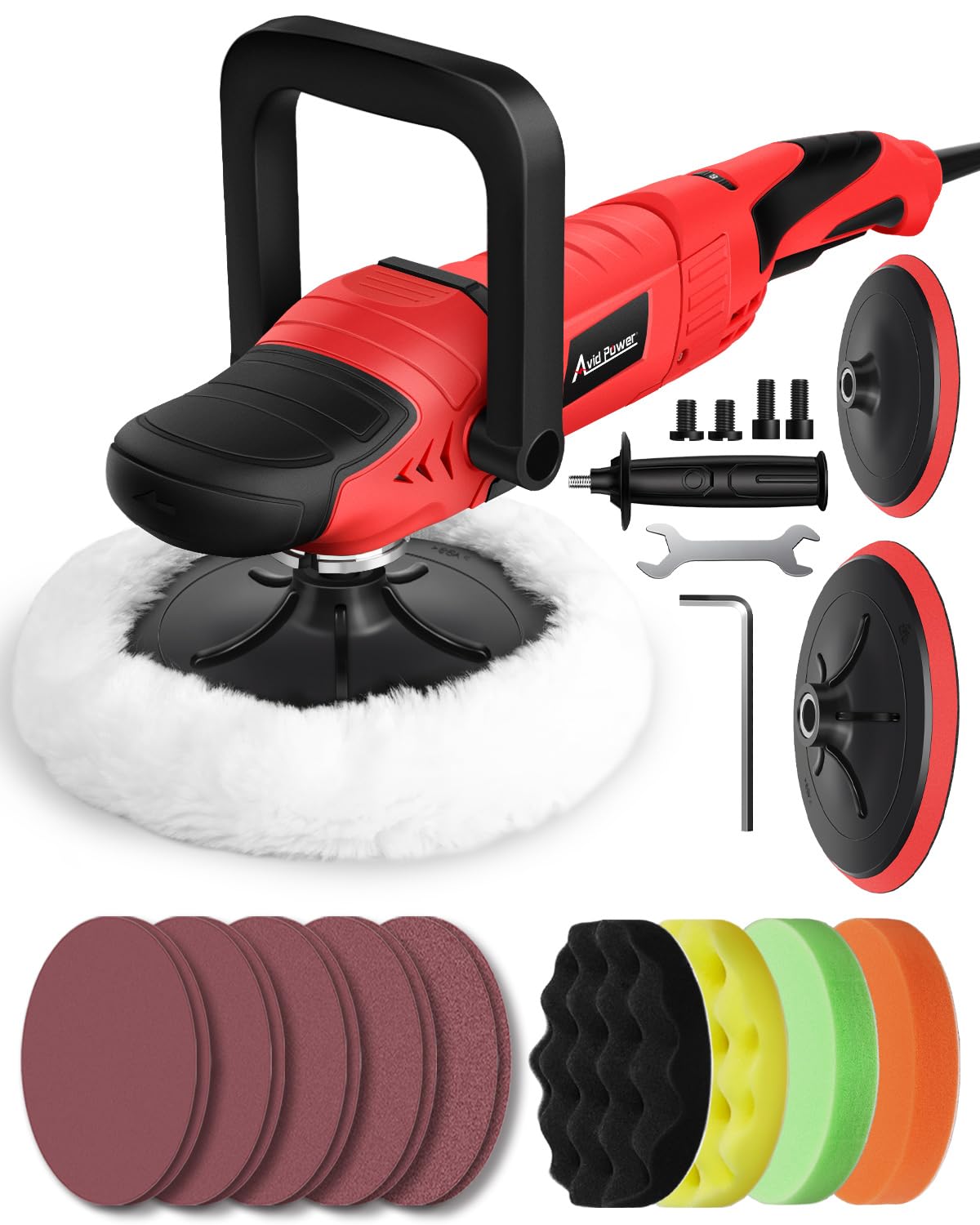
3. AVID POWER Car Rotary Buffer Polisher (1200W)
A 1,200-watt rotary kit that restored a 10-year-old boat gel coat and saved a shop quote.
This is the budget rotary that acts like a tool three times its price. The high-torque 1,200W pure copper motor is the most powerful in this comparison — 54% stronger than the SPTA mini — and it delivers consistent power for professional-grade results. Its 6-speed adjustment from 1,000-3,500 RPM adapts smoothly to waxing, polishing, and deep paint correction, making it versatile enough for cars, boats, furniture, marble, and metal.
Customers note it “restored 10-year-old boat gel coat, saving shop quote,” with a 22-foot boat taking about 3 hours. The thing that makes this kit stand out is the sheer completeness: 10+ accessories including sanding papers, wool pads, sponge pads, and both 6″ and 7″ backing discs. The advanced cooling technology prevents overheating, so you can run it for 2+ hours of continuous use. The quick-change Velcro system keeps your workflow fast.
The honest trade-off is ergonomics and speed maintenance. Some owners note speed settings can drift under heavy load, and the handle requires an Allen wrench to adjust. It is a rotary, so it demands a careful hand — this is not a first-timer’s paint-safe machine. But for the money, the value is outstanding.
The Powerhouse Kit
- 1,200-watt copper motor resists bogging
- 17-piece kit with backers, pads, sanding discs
- Cooling design for 2+ hour sessions
Know Before You Buy
- Handle adjustment needs an Allen wrench
- Some report speed drift under pressure
Buy this for: big-value rotary power on boats and oxidized paint where the included kit means zero extra spending to start.
Think twice if: you are a pure beginner — a rotary’s aggressive cut is riskier for your clear coat than a dual-action.
4. BATOCA Dual Action Polisher (1100W)
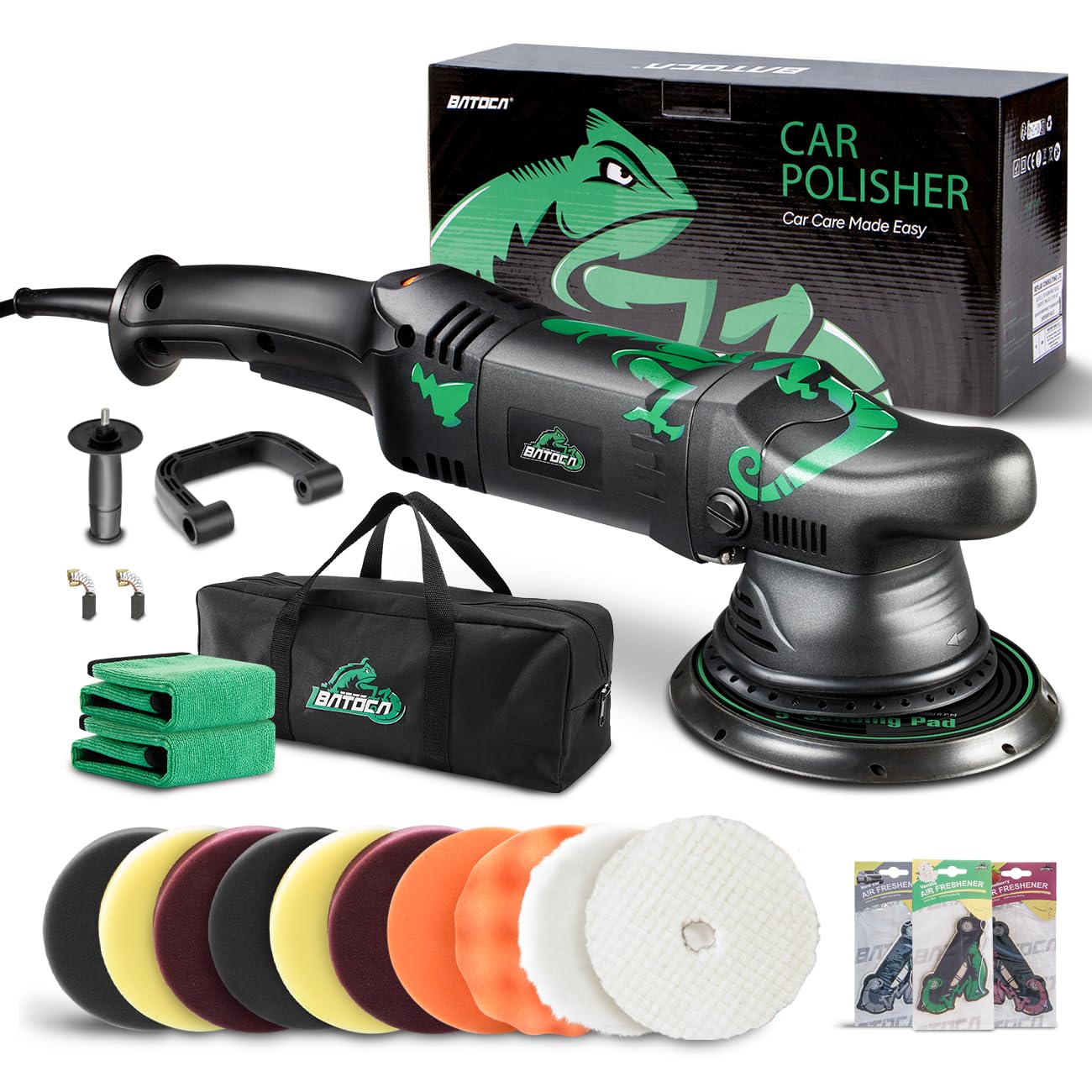
A dual-action beginner machine with a chameleon-green body and a constant-power motor that won’t quit mid-job.
For anyone nervous about ruining their paint on the first try, this DA polisher is built to be forgiving. The eccentric shaft design uses vibration polishing that safely absorbs wax into the paint, and beginners pick it up fast without hurting the clear coat. Its 1,100-watt pure copper wire motor delivers constant power, so you won’t hit that frustrating moment where the buffer stops working halfway through a panel.
The 6-speed variable control dial lets you adjust from 2,500-5,500 RPM without stopping — low speed for waxing, medium for polishing, and high for removing paint defects and oxidation. It is ideal for cars, boats, motorcycles, marble, and floors. The kit is genuinely professional: 6-inch flat foam pads, wool pads, polishing bonnets, sanding papers, a microfiber towel, a tool bag, and even a pair of carbon brushes for the recommended 6-month replacement.
Owners praise the BATOCA’s ease of use and the value of its complete kit. One note: the included pads are a little stiff and need breaking in before they perform at their best. Durability draws mixed feedback, so treat the head with care. The green chameleon design is an unmistakable style statement on the body.
Beginner-Friendly Wins
- Dual-action motion protects paint
- Adjust speed without stopping
- Spare carbon brushes included
Things to Note
- Included pads need a break-in period
- Head durability is mixed in feedback
Choose this for: first-time polishers who want a safe dual-action motion and a kit complete enough to detail three cars the day it arrives.
Manage expectations on: the pack-in pads — plan a quick break-in pass on an old panel before tackling your good paint.
5. Meguiar’s MT300 Variable Speed DA Polisher

The DA that electronically maintains its set speed under pressure, so you can lean in without burning the clear coat.
Meguiar’s is a name that carries weight in detailing, and the MT300 delivers on that reputation. Its Digital Torque Management electronically adjusts torque to maintain the loaded speed level, meaning consistent performance throughout the entire polishing process regardless of surface or pressure. This is the defining feature — it lets you apply pressure for cutting without the RPM bogging down and overheating the paint, a concern another owner noted about less capable machines.
The soft start technology is another safety feature, controlling the buffer on start-up to prevent splatter and excess wear on the motor. It corrected a 9-year-old weathered black clearcoat flawlessly, and owners note it is safer and easier than a high-speed buffer. The multi-position D-handle improves comfort for all skill levels, and the billet counterweight keeps vibration in check. Owners praise the Meguiar’s MT300’s quality, noting it makes waxing jobs genuinely easy.
The catch is that you need to buy a backing plate and pads separately — they are not in the box. Reliability is also mixed, with an occasional unit stopping after about 10 minutes of use, though most report it doing the job like a pro. It is lighter than the DEWALT rotary at 5.4 pounds, which helps during longer sessions.
Why It’s a Step Above
- Torque management keeps speed steady
- Soft start prevents pad splatter
- Lightweight at 5.4 pounds
Plan Around These
- Backing plate and pads sold separately
- A few units have failed after short use
Pick this if: you want pro-level control that lets you safely apply pressure for cutting — the torque management is a genuine edge over simpler DAs.
Budget for extras: the missing backing plate and pads add cost and a small delay before your first polish.
6. Griot’s Garage G9 Random Orbital Polisher (1000W)

A balanced, low-vibration DA that first-timers can run without the fear of burning paint.
Griot’s built the G9 around comfort and smoothness. The double-shot rubber grip and contoured shroud are designed for extended use — the exact pain point of long detailing sessions. Its fan-cooled counterbalance and premium bearing construction keep the operation smooth, and owners consistently note the minimal vibration. The 1,000-watt motor with constant speed control prevents bogging down under pressure, so the RPM stays where you set it.
The 6 variable speed settings range from 2,000-6,400 OPM (orbits per minute), giving you a wide window from gentle waxing to aggressive correction. The speed dial is accessible for both right- and left-handed users, a thoughtful touch. It ships with a 6″ vented backing plate, and you can convert to a 5″ pad system with an optional plate for tighter work. The 10-foot quick-connect power cord gives you real reach around a car.
Owners praise the Griot’s G9’s quality and performance, and beginners find it easy to use without burning paint. The one honest gripe is that heavy correction takes time — it is a DA, so it is safer but slower than a rotary at removing deep scratches. At 5.3 pounds, it is light enough for hour-long sessions, and owners call it a quality machine for a reasonable price.
The Comfort Factor
- Low vibration with fan-cooled counterbalance
- 10-foot quick-connect cord for reach
- Dual 5″ and 6″ pad compatibility
Be Patient With
- Deep scratch removal takes multiple passes
- 5″ backing plate sold separately
Reach for this if: comfort on long jobs matters most and you want a DA that a novice can run safely while still cutting like a pro tool.
Know its limit: if you need to remove heavy oxidation fast, a rotary will outpace it — the G9 trades raw speed for safety.
7. MILWAUKEE M18 Fuel 7″ Variable Speed Polisher (2738-20)
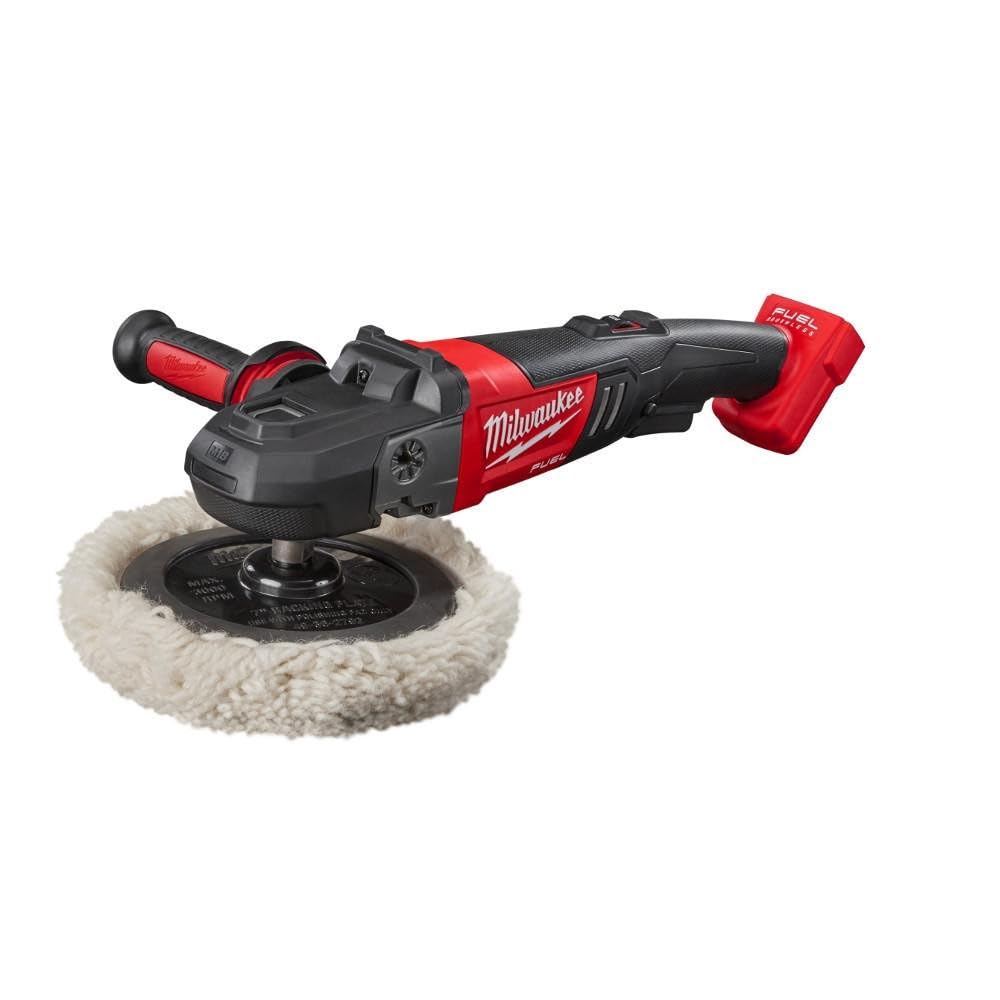
A cordless rotary that polishes a full-size car on one charge and cuts the leash for boat and RV work.
Freedom from the cord changes everything when you are working around a boat trailer or an RV — there is no outlet hunting and no extension cord tangling in your feet. This Milwaukee M18 Fuel runs on the brand’s batteries, and reviewers point out it can handle a full-size car on a single charge. The 7″ pad capacity covers large panels quickly, and the 0-2,200 RPM speed range includes a low floor that helps prevent burning.
Shoppers say it “removes saltwater/sun oxidation easily” and is lighter than a comparable corded Makita, making it less fatiguing for marine detailing. The progressive trigger gives you real control — a key feature when you are learning or working on delicate finishes. Owners who switched from other brands call it the best polisher they have used, and the build quality carries the Milwaukee reputation.
The honest catch is the minimum speed is still a bit fast for absolute beginners, so practice on an old panel first. It is a rotary, which cuts aggressively. Also, this is a bare tool — you must supply your own M18 battery and charger, which adds cost if you are not already in the Milwaukee ecosystem. Effectiveness draws mixed feedback, with a rare unit stopping after a few uses.
Cutting the Cord
- Full-size car on one battery charge
- Progressive, variable-speed trigger
- Lighter than comparable corded rotaries
Before You Commit
- Bare tool — battery and charger not included
- Minimum speed is fast for raw beginners
Pick this for: cordless convenience on boats, RVs, and anywhere an outlet is far away, especially if you already own M18 batteries.
Account for extras: a battery and charger are required purchases, pushing the real cost above the sticker price.
8. Milwaukee M18 Fuel 15mm Random Orbital Polisher (2684-20)

An 8-speed cordless DA with a 15mm throw that delivers a professional-grade finish with minimal effort.
This is the cordless DA that serious detailers rave about. The 15mm throw (the diameter of the orbital path) gives you a professional finish with less effort than a standard 8mm or 9mm machine — it cuts more aggressively while still being safe on clear coat. Its 8-speed dial ranges from 2,650-5,100 RPM, and the variable speed trigger gives you precise control mid-pass for defect correction.
The premium electronic motor feedback maintains speed and power under load, so you do not get that frustrating bog-down when pressure is applied. Buyers report it “makes long detailing sessions a breeze” and that a 6.0Ah battery did a whole track car on one charge. The lock-on switch reduces fatigue during extended use, a feature owners appreciate. Performance is the most-praised aspect by a wide margin, and it is compatible with all M18 batteries and chargers.
The trade-off is price and battery life. It is a premium tool, and while the battery life is impressive, some owners note it is not the absolute best — 2 batteries are recommended for all-day pro work. It is also a bare tool, so you need your own M18 battery and charger. But for the results achieved, owners consider it well worth the money. It is lighter and more sturdy than you might expect at 6 pounds.
The Pro Finish
- 15mm throw corrects faster and smoother
- Variable trigger plus 8-speed dial
- Lock-on switch for long sessions
Invest to Own
- Bare tool — M18 battery required
- Two batteries recommended for all-day work
Choose this for: pro or serious DIY correction where cordless freedom and a fast-cutting 15mm throw are worth the money.
Plan your power: a second M18 battery open up the full all-day capability owners love.
9. Makita 9227C 7″ Polisher

The industry-standard rotary that one owner ran for 25 years before it finally gave out.
This Makita is the polisher that defines the category — owners literally call it “the industry standard.” A powerful 10-amp motor delivers 3,200 RPM, with a variable speed control dial that matches the speed to the application. The constant speed control automatically applies additional power to maintain speed under load, which is critical for heavy-duty compounding. Its soft start suppresses start-up reaction for less fling-off, a difference you feel the moment you pull the trigger.
The durability track record here is the real story. One owner bought it for commercial gel coat polishing and ran it for over 25 years — “nearly indestructible” is how they describe it. It is quiet and smooth, with no RPM bogging under load, making it ideal for both concrete edge polishing with diamond tooling and fine paint finishing. The two-finger trigger switch is comfortable, and the rat-tail trigger includes a lock-on for extended passes.
The mixed feedback on durability mostly comes from isolated bad units — some report it falling apart after little use, though the overwhelming majority praise its longevity. It is a rotary, so again, technique matters. A flexible backing plate is recommended to extend pad life. It is the most expensive corded option here, but for a tool that can outlast a decade-plus of abuse, the cost is justified.
The Legend’s Strengths
- Constant speed control under heavy load
- Soft start suppresses fling-off
- Quiet, smooth, and proven over decades
Weigh These
- 10-amp rotary is aggressive for novices
- Isolated units fail early, unlike the norm
Buy this for: a buy-once, cry-once rotary that professionals trust for a lifetime of heavy compounding and concrete work.
Respect the power: this machine cuts fast — pair it with practice and a flexible backing plate for best results.
Understanding the Specs
RPM Range and Low-End Floor
The speed range, measured in RPM (revolutions per minute) or OPM (orbits per minute) for DAs, defines what the buffer can do. The low end matters most for safety — a machine that idles at 600 RPM lets you make slow, controlled passes on delicate paint. A buffer that only goes down to 2,000 RPM is riskier for a beginner. The top speed (3,200 to 6,400) determines how fast you can cut, but the floor is what protects your clear coat.
Motor Power in Watts and Amps
Power is stated in watts or amps, and higher numbers mean the motor resists bogging down under pressure. A 1,200-watt motor will hold its speed when you lean into a panel, while a weaker one slows down and produces uneven results. Amps, like the 10-amp and 12-amp figures you see on rotaries, tell a similar story. More power also usually means more weight, so consider your arm strength for long sessions.
FAQ
What is the difference between a rotary buffer and a dual action polisher?
What speed should I use to polish a car?
What is a soft start on a polisher?
Can I use a variable speed buffer to remove scratches?
Why does my polisher bog down when I press on the paint?
Is a cordless polisher as powerful as a corded one?
What backing plate size do I need for a car?
How long does a polisher motor last?
Final Thoughts: The Verdict
For most people, the variable speed buffer winner is the DEWALT DWP849 because its 12-amp motor and pro-grade build make it the most reliable rotary for serious work, backed by an owner base that pushes it daily. If you want a safer, beginner-friendly paint correction machine with torque management, grab the Meguiar’s MT300. And for cordless freedom around a boat or RV on a single charge, the Milwaukee M18 2738-20 is the one to reach for.
How We Picked
We do not accept paid placement. Every pick is matched to a real buyer and a real use-case; we do not hands-on test units.
Sources & Methodology
Specifications: manufacturer listings and product documentation. Review insights: verified customer reviews, as of August 2026. Pricing: not shown on this page (it changes often); check the current price via the retailer link.
As an Amazon Associate, GoCarLife earns from qualifying purchases. This does not affect which products we feature.