
Our readers keep the lights on and the garage heater humming. As an Amazon Associate, I earn from qualifying purchases.
Specs are compiled from manufacturer listings and verified buyer reviews and can change over time — please confirm the key details on the product page before buying.
At -20°F, a battery loses up to a third of its cranking power, often leaving you stranded. A vehicle battery heater is the simplest fix, warming the battery so your engine turns over like it’s a summer morning. This guide breaks down the best options, from silicone pads that slide under the battery to full wrap-around blankets, based on real owner experiences and the specs that actually matter.
I’m Mo Maruf — the founder and writer behind GoCarLife. This guide is built by comparing the manufacturers’ published specifications and the patterns across verified customer reviews, so you get each pick’s real strengths and trade-offs instead of marketing spin.
Whether you drive a diesel truck in Fairbanks or a commuter car in Minnesota, the right vehicle battery heater keeps your battery warm and your starts reliable all winter long.
Our Picks at a Glance

How To Choose The Best Vehicle Battery Heater
Before you buy a battery heater, you need to match it to your vehicle’s battery size and your climate. You also want one that shuts off automatically so it won’t overheat your battery or drain it overnight. Here’s what matters most when you compare options.
Wraps vs Pads
Battery heaters come in two main styles. A wrap-around blanket surrounds the battery’s sides and holds heat across a large surface, which helps retain the battery’s internal temperature evenly. A pad sits underneath the battery in the tray and warms it from below — easier to install since you just place it, but it delivers heat to less surface area. Think about your battery tray clearance and how much installation effort you want.
Wattage and Heating Speed
Wattage is the key number for how much heat a heater puts out. The most common options are 60-watt and 80-watt units. An 80-watt model like the GM Accessories blanket pulls more power and warms the battery faster than a 60-watt pad, which matters when you only have an hour before you need to leave. Most heaters plug into a standard household outlet, so no special wiring is needed in your garage or driveway.
Thermostat Control and Safety
A built-in thermostat makes the heater safer and more efficient because it shuts off automatically when the battery reaches a set temperature. Without one, you risk leaving the heater running too long, which can overheat the battery case. If you choose a heater without a thermostat, plan to use a timer or unplug it manually — many owners plug in for just 3-5 hours before starting.
Quick Comparison
| Model | Best For | Wattage | Style | Voltage | Amazon |
|---|---|---|---|---|---|
| Zerostart 2800063★ Best Overall | Overall cold-weather performance | 80 Watts | Wrap-around blanket | 120 Volts | Amazon |
| Kat’s 22200 WrapExtreme Cold | Extreme-cold reliability | 80 Watts | Vinyl wrap | 125 Volts | Amazon |
| GM Accessories 10952544Best Value | Affordable wrap for GM trucks | 80 Watts | Wrap-around blanket | — | Amazon |
| Facon Silicone Pad | Thermostat-controlled simple install | 60 Watts | Silicone pad | 120 Volts | Amazon |
| Silicone Pad 8.5″x7.9″ | High-rated versatile pad | 60 Watts | Silicone pad | 120 Volts | Amazon |
| Kat’s 22100 Wrap | Proven vinyl reliability | 60 Watts | Vinyl wrap | — | Amazon |
| Subaru J6010FS000 | OEM Subaru owners | 80 Watts | Wrap-around blanket | — | Amazon |
In‑Depth Reviews
1. Zerostart 2800063 Electric Battery Blanket
Our pick — over 4★ from 450+ verified ratings; the strongest balance of quality and price.
The 80-watt wrap that turns a -20°F deep freeze into a warm-day start.
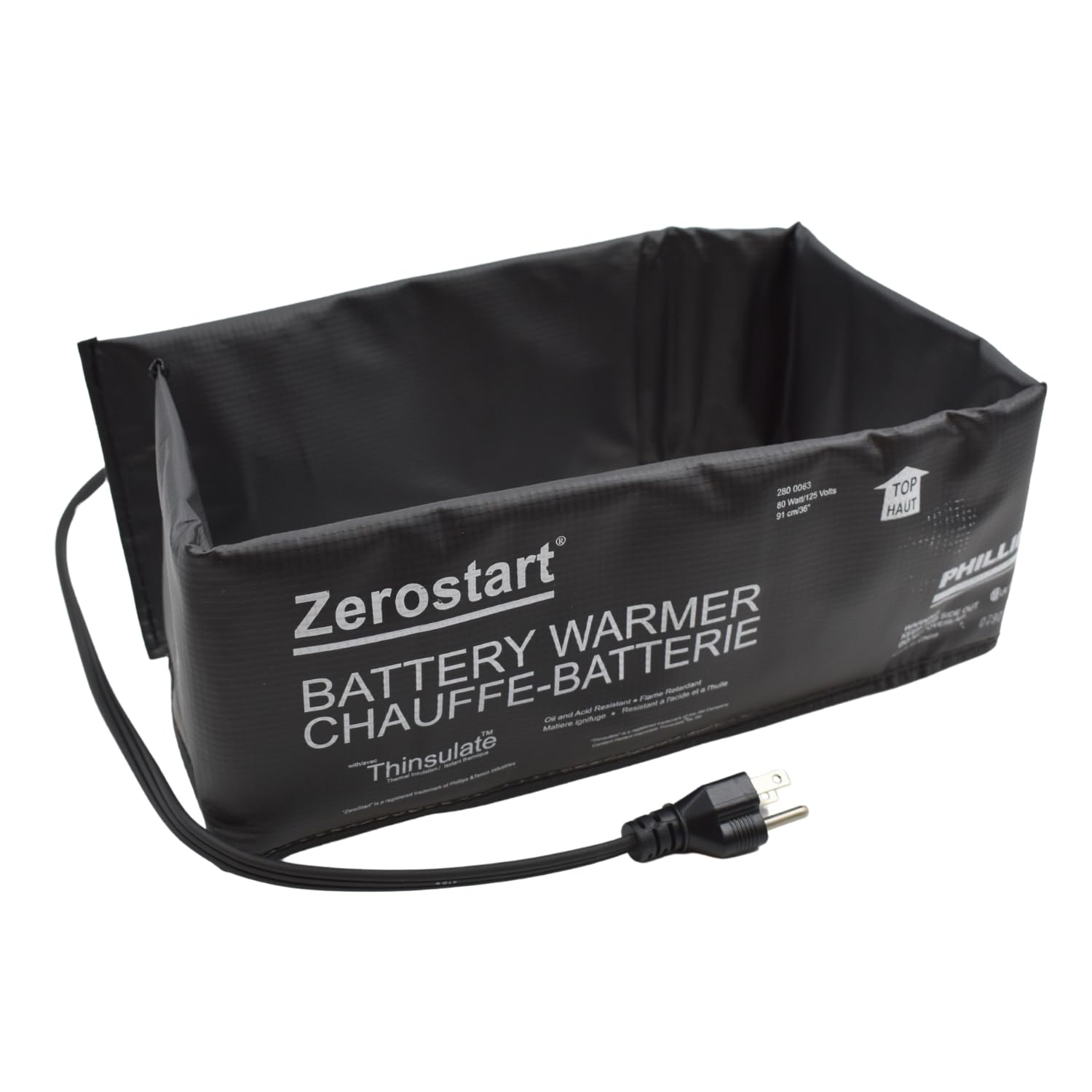
This is the heater that earns its “Best Overall” title through sheer real-world proof. Buyers report a 1998 F150 starting clean at -20°F, and another truck firing up like it was a summer day at -10°F while the battery held roughly 60°F above the ambient air. The 80-watt output on 120 volts is the reason, delivering enough heat through the 36-inch wrap to keep the battery core warm enough for quick starts.
Installation is genuinely easy on most vehicles — people have slid it on a 2000 Ford Ranger without unbolting anything. It’s CSA approved, so it meets recognized safety standards, and the Thinsulate insulation works to hold temperature in both warm and cold weather. The blanket resists oil and battery acid, which is essential for an engine bay. It also fits a huge range of battery sizes, from series 24 up through 35 and 38.
But there’s a recurring crowd complaint: the storage-cord twist ties and the included cord length. “Works great in MN cold” is the headline, yet the short cord is a genuine fitment issue for some — one Lexus RX350 owner found the plug barely reached the bumper. Owners mention replacing the twist ties with zip ties for a more secure hold. Durability draws mixed notes, so this is a heater to handle with care.
The Thinsulate insulation holds battery temperature stable, ensuring reliable starts in brutal cold.
Why owners rave
- Functionality is the top praise — dozens of owners confirm reliable starts in deep cold
- Keeps battery ~60°F above ambient for confident cranking
- Insulated, oil and acid resistant Thinsulate cover
- Fits a wide range of battery group sizes
The honest trade-offs
- Short ground cord can limit where you route the plug
- Twist ties are flimsy — plan on zip ties
- A few owners flag durability concerns over time
Reach for it if: you need proven, reliable cold-weather starts for a truck, SUV, or generator across a wide range of battery sizes.
Think twice if: your outlet is far from the battery, since the shorter cord may force creative routing.
2. Kat’s 22200 80 Watt 36″ Battery Thermal Wrap
The 125-volt vinyl wrap proven across three vehicles in -50°F Fairbanks winters.
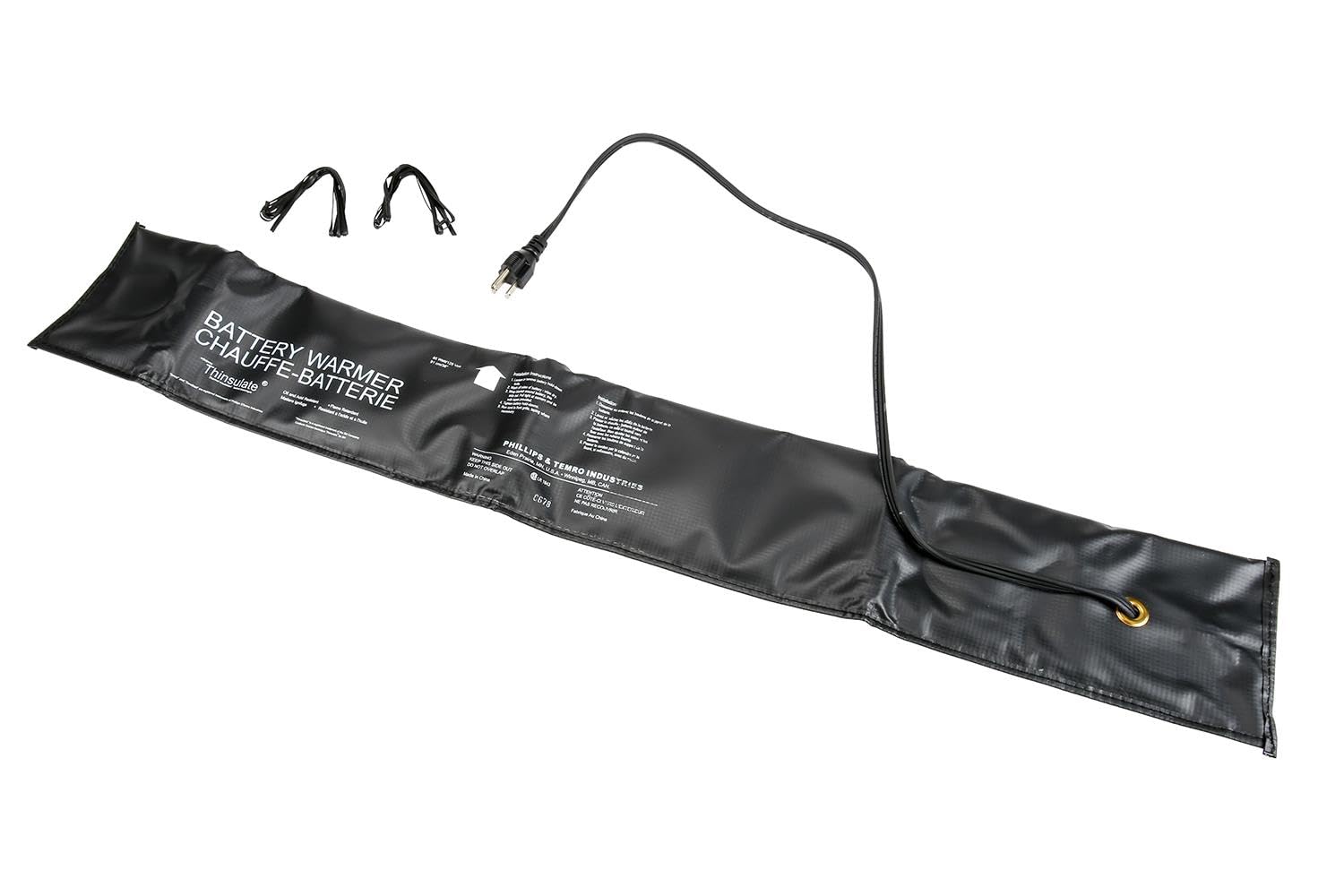
This is the heater for people who live where winter is a survival challenge. Reviewers point out running it on three vehicles — two on a single diesel — through -50°F Fairbanks cold, with every start turning over reliably using a timer. That reliability is the top praise from owners, and it’s backed by a vinyl cover that resists oil and acid for a longer life. The 80-watt output on 125 volts is a notch above the standard 120-volt heaters, and the 36-inch length wraps around most batteries to reduce cold-start strain.
The critical warning is the lack of a thermostat. Plug-in time should be limited to 3-5 hours before a start, and you must not leave it running above 30°F or constantly plugged in — owners note a real melting risk if you misuse it. This is a heater that demands discipline, not a set-and-forget device. Longevity is mixed too: some say it lasts for years, while others report failure within a month.
Installation draws mostly positive feedback, described as fast and easy, though wrapping around the battery can be tight in some engine bays. It’s priced mid-range, offering a solid value for its proven cold-weather reliability.
Reliability first: Built for brutal cold, and proven there — just respect its no-thermostat limits.
Who it’s for: northern-climate owners who will commit to a timer and short plug-in windows for reliable starts.
Who it’s not for: anyone who wants to plug in and forget about it in mild conditions.
3. GM Accessories 10952544 80-Watt Wrap Around Battery Blanket
The 80-watt GM-badged wrap that delivers OEM name recognition without the OEM price.
For GM truck and SUV owners, this is the easy call. It carries the GM Genuine Parts branding at a price that undercuts many alternatives, and buyers point that out directly. It pulls a full 80 watts to help engines start better when the mercury drops well below freezing, and it’s built to wrap around the battery. The catch in the reviews is uniform: it needs a velcro strap or a large wire tie to hold tight, because it ships with basic twist ties.
Comparing it to the Kat’s 22200, the GM blanket at 11.7 ounces is more than twice the weight of Kat’s 60-watt pad at 5.61 ounces — a 2.1x gap that shows its more substantial wrap construction. It shares the same 80-watt class as the Kat’s 22200, so heat output is comparable, but the GM version comes from China and is tuned for GM battery trays. One owner notes it didn’t fully encircle a group 31 battery, but it still got the job done.
Most buyers use it only when temperatures are well below freezing, pairing it with a wire tie and plugging in a few hours before needing the truck. The “GM name for half the price” verdict sums up the value play here.
At 11.7 ounces, it’s a substantial-feeling unit that stays put once secured.
Value angle: A genuine GM part at a budget-friendly price, if you accept the flimsy ties as a DIY fix.
Pick this if: you own a GM truck or SUV and want a proper 80-watt wrap without paying premium branding.
Be ready for: replacing the twist ties with a strap or wire tie for a secure fit.
4. Facon 8.5″ x 5.5″ Silicone Battery Heater Pad

A 1.8mm-thin 60-watt pad that warms your battery to 68°F and shuts itself off.
This pad solves the biggest complaint with battery heaters: the worry of leaving them on. The built-in thermostat heats the battery to around 68°F in 10-30 minutes, then automatically turns off. A 72-inch cord reaches nearby outlets with room to spare, and the waterproof silicone coating resists oil and acid. At just 1.8mm thin, it slides right into the battery tray with no tools required.
The heat output is where opinions split. Some owners see the battery warming up to 20°F above ambient and rave about it — one Midwest owner with a 10-year-old car in -5°F mornings got instant starts every day. Others report it barely works or doesn’t heat at all. That’s a real gamble. The manufacturer’s compatibility note is specific: it’s built for standard lead-acid and AGM batteries, not lithium-ion or Ni-Cd, and not for batteries with ABS plastic cases or inside an insulated battery box.
Its thin, flexible design earns consistent praise for quality and ease of installation. One clever owner sandwiched it between ceramic tiles to warm LiPO batteries evenly, and another sticks it to a tractor’s oil pan. For a truck or car with a lead-acid battery, it’s a solid, safe choice — just verify your battery type first.
Set-and-forget appeal: The thermostat is the killer feature — plug in, walk away, and it manages itself.
Best for: lead-acid and AGM battery owners wanting automatic shut-off and zero-install convenience.
Not for: lithium-ion batteries, plastic-cased batteries, or anyone unwilling to check their battery type first.
5. 8.5″ x 7.9″ Silicone Battery Heater Pad with Thermostat
The 60-watt pad with the smartest thermostat — on at 32°F, off at 122°F.
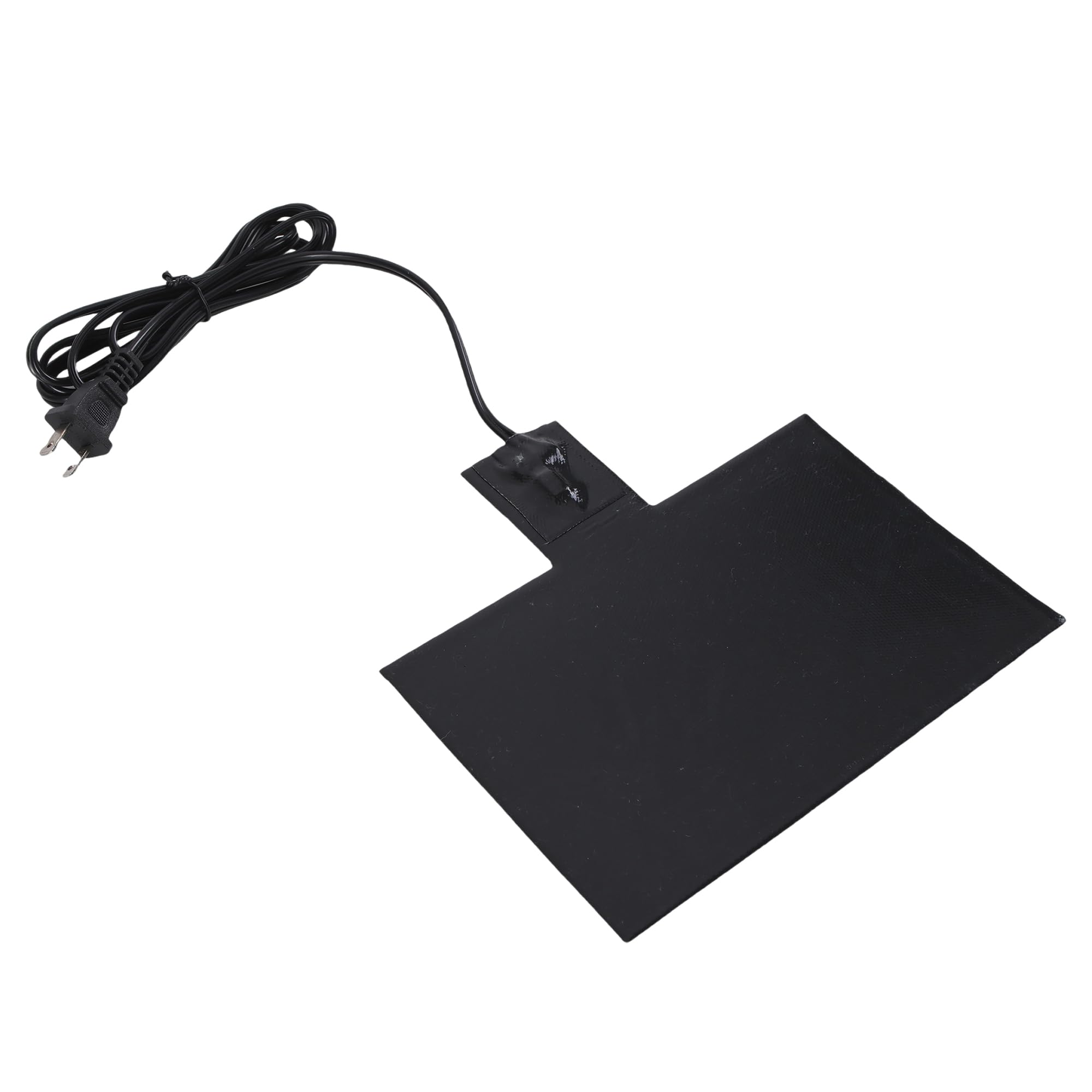
This is the highest-rated pick in the lineup, and its thermostat is the reason. It switches on at exactly 32°F (0°C) and off at 122°F (50°C), so it regulates itself and prevents overheating without any timers or babysitting. The silicone construction is durable and built for automotive use, measuring 8.5″ x 7.9″ to fit most standard batteries. One owner measured it with an IR thermometer, seeing it stabilize in the low 120°F range before the thermostat stepped in.
Owners have found creative uses beyond car batteries — wrapping it around a CO2 bottle to maintain optimum pressure, or mounting it on a utility tractor for easy winter starts. That versatility is the theme of the reviews, along with consistent “works as advertised” feedback. It’s a premium pick because of that thermostat intelligence and the dependability it delivers.
The honest limitations are minor but worth knowing. “Low heat” is one owner’s verdict, meaning it’s gentle rather than aggressive — fine for overnight battery warming but not a quick blast. Another owner notes the plug is made cheaply and plans to replace it. One person ran it all winter, unplugging only when driving or when temperatures rose above freezing, and it held up through the cold.
Smart heat: A precision thermostat plus silicone build = the safest, most hands-off battery heater here.
Choose this if: you want automatic temperature regulation and freedom from timers, for a car, tractor, or even a CO2 bottle.
Keep an eye on: the plug quality, which some owners say feels flimsy over time.
6. Kat’s 22100 60 Watt 28″ Battery Thermal Wrap
The 60-watt vinyl wrap that kept an RV battery warm all winter.
The larger brother to Kat’s 22200, this 28-inch wrap runs on 60 watts and delivers the same vinyl-covered, oil-and-acid-resistant build. Its standout trait is reliability — that’s what owners praise most — with one buyer keeping batteries warm all winter on an RV and another trusting it for a car that had been giving starting trouble. The vinyl cover is built to shrug off engine bay fluids, and installation is fast with secure wrap-around coverage.
Reviews are largely positive, but temperature retention and battery life show mixed results. Some owners say it keeps batteries warmer than freezing with even heat and no hotspots, while others report no warming effect at all. Fit is a variable too — one UTV owner needed a metal box spacer because the wrap was too long to overlap properly. That’s a reminder that a 28-inch wrap won’t suit every battery tray.
For a flooded car battery in a Group 26 or 26R, it’s a strong fit, holding battery temperature at 55-60°F with the thermostat. Fits wide battery sizes well, which makes it flexible if your tray has room.
Reliability build: A dependable vinyl wrap for RV and car batteries, with fit as the main variable to check.
Best for: RV, UTV, and car owners who want Kat’s proven vinyl durability in a 60-watt format.
Measure first: Make sure the 28-inch wrap matches your battery tray, or plan for a spacer.
7. Subaru 80W Battery Warmer J6010FS000
A genuine Subaru 80-watt warmer that fits like factory hardware and starts in negative temps.
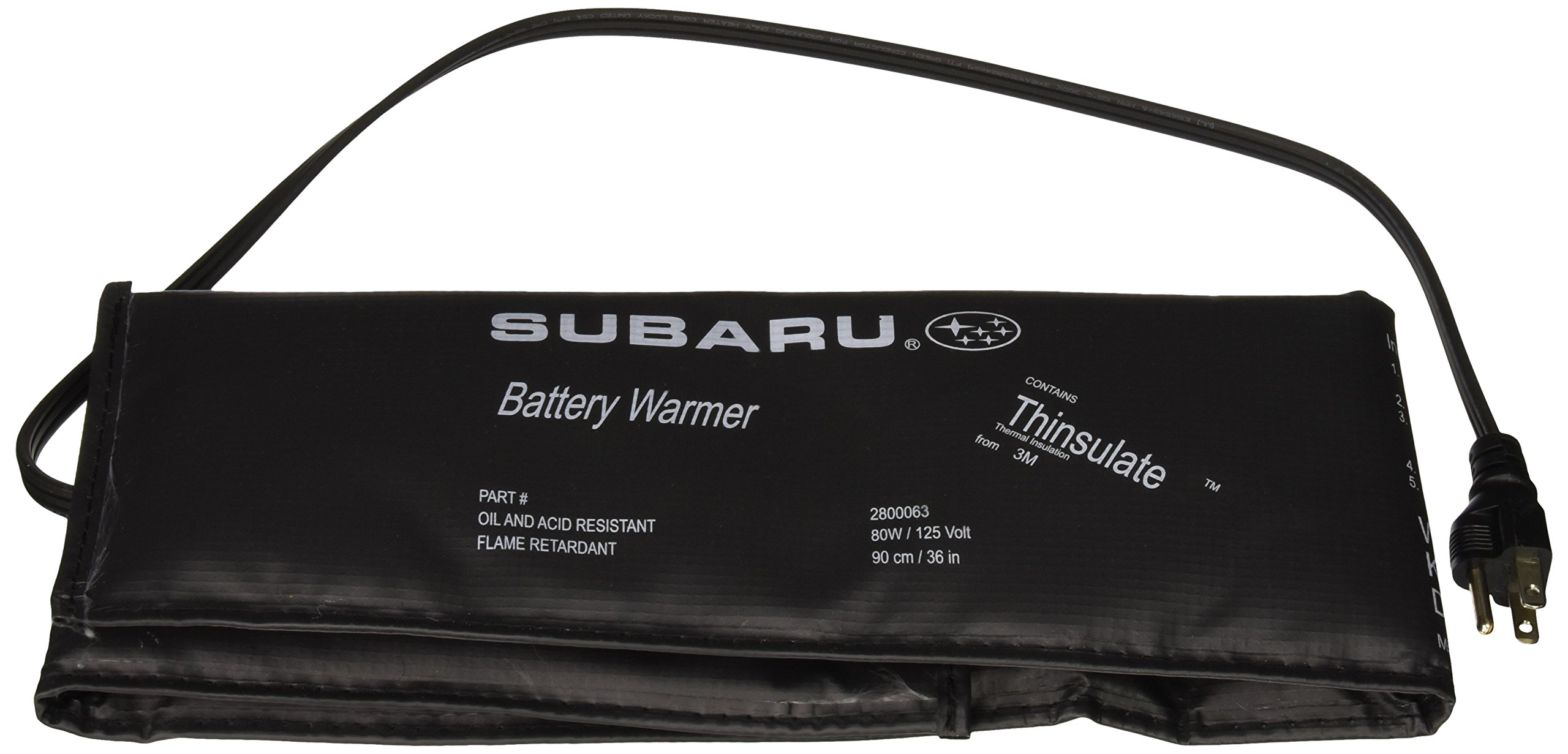
For Subaru owners, this is the no-guesswork OEM pick. It’s the genuine factory warmer, listed for the 1998-2026 Forester, 1995-2014 Legacy, 2000-2014 Outback, 1998-2016 Impreza, 1998-2015 WRX or STI, 2006-2014 Tribeca, and 2015-2016 Crosstrek (non-hybrid). That’s a huge compatibility net for Subaru fans. It plugs into any standard household outlet and pulls 80 watts to promote easier starts in extreme cold.
Installation is the recurring theme in the reviews — owners call it “easy as can be.” You lift the battery, disconnect the leads, wrap the blanket around it, and secure it with the supplied twist ties. One owner routed the cord over the radiator support and through the bumper slit for a clean setup. In an ’08 Outback, it fit perfectly and handled cold days “into the negatives and beyond.” That OEM quality is exactly what you’d expect, down to the machined exterior finish.
It’s the priciest unit here, and the compatibility list means it’s essentially Subaru-only. The review count is small but perfect — the highest average in this lineup at 4.9 stars. If you drive a Subaru and want factory-grade reliability, this removes all fitment guesswork.
Factory certainty: A genuine OEM warmer that fits a broad Subaru range and starts reliably in deep cold.
Buy it if: you own a compatible Subaru and want a guaranteed-fit, OEM-quality warmer.
Look elsewhere if: you drive a non-Subaru, since the fit and price are tuned specifically for Subaru models.
Understanding the Specs
Wattage and Heating Power
Wattage tells you how much electrical energy the heater converts into heat. A 60-watt pad warms gently and slowly, while an 80-watt wrap warms faster and holds more heat, which is valuable for larger batteries or shorter pre-start windows. Higher wattage also means the battery reaches a usable temperature sooner, so you can plug in closer to departure time.
Thermostat Control
A thermostat is a temperature switch that turns the heater on and off automatically. Without one, the heater runs continuously and you risk overheating the battery case if you leave it plugged in too long. Models with thermostats, like the Facon pad that shuts off around 68°F, are safer for overnight or unattended use. Heaters without thermostats, such as the Kat’s 22200 wrap, require a timer or manual unplugging — owners typically use a 3-5 hour window before a start.
FAQ
How long should I plug in a battery heater before starting my car?
Will a battery heater fit my specific battery?
Can I use a battery heater on a lithium-ion battery?
Is it safe to leave a battery heater plugged in overnight?
What’s the difference between a wrap and a pad heater?
Does a higher wattage battery heater work better?
Will a battery heater damage my battery?
Does a battery heater work for diesel trucks?
Final Thoughts: The Verdict
For most drivers, the vehicle battery heater winner is the Zerostart 2800063 because its 80-watt output, vast battery size range, and CSA approval make it the most proven answer to brutal cold starts. If you want automatic shut-off and zero babysitting, grab the thermostat-controlled silicone pad with its 32°F to 122°F regulation. And for a Subaru owner who wants guaranteed factory fit, the Subaru OEM warmer is the one to reach for.
How We Picked
We do not accept paid placement. Every pick is matched to a real buyer and a real use-case; we do not hands-on test units.
Sources & Methodology
Specifications: manufacturer listings and product documentation. Review insights: verified customer reviews, as of August 2026. Pricing: not shown on this page (it changes often); check the current price via the retailer link.
As an Amazon Associate, GoCarLife earns from qualifying purchases. This does not affect which products we feature.