
Our readers keep the lights on and the garage heater humming. As an Amazon Associate, I earn from qualifying purchases.
Specs are compiled from manufacturer listings and verified buyer reviews and can change over time — please confirm the key details on the product page before buying.
A bad battery cable shows up as a slow crank on a cold morning or a mysterious no-start that comes and goes. The right one is pure copper, properly crimped, and sized to your actual amperage draw — and this guide sorts the truly reliable sets from the ones that look fine until they aren’t. You will learn exactly which gauge to buy, which terminals fit your setup, and the quality tells that separate a decade of service from a season of frustration.
I’m Mo Maruf — the founder and writer behind GoCarLife. This guide is built by comparing the manufacturers’ published specifications and the patterns across verified customer reviews, so you get each pick’s real strengths and trade-offs instead of marketing spin.
You need a vehicle battery cable that handles your current without melting, so compare gauge, lug size, and copper purity before you order.
Our Picks at a Glance


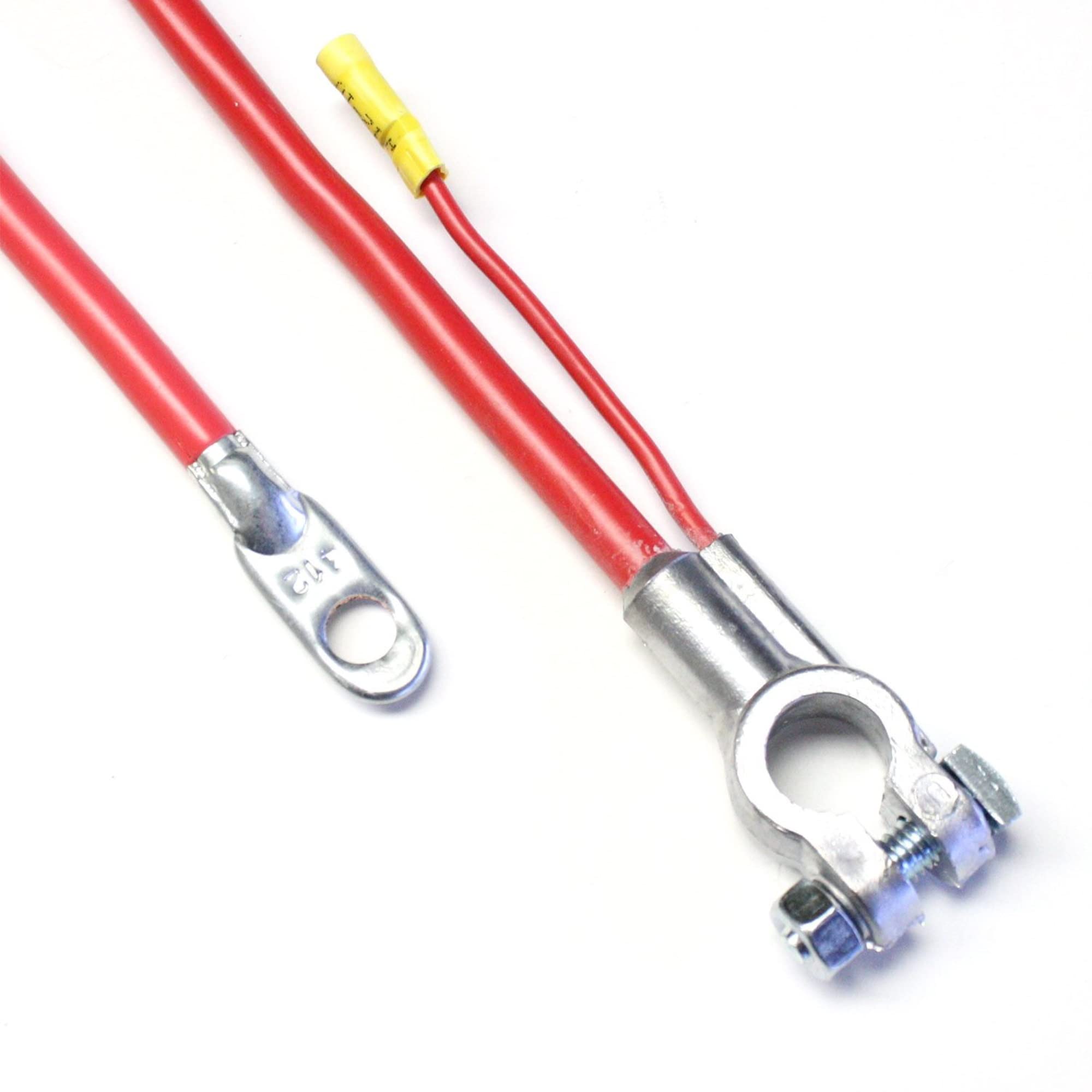
How To Choose The Best Vehicle Battery Cable
Battery cables are the veins of your electrical system — every amp your starter, inverter, or solar charge controller needs flows through them. Get the size right and you get full voltage at the other end; get it wrong and you get heat, voltage drop, and intermittent failures that are hard to chase down.
Match Gauge To The Job
Gauge is the wire’s thickness — the lower the number, the thicker the copper and the more current it carries. A 4 AWG cable suits most starter and inverter jobs, while a 2 AWG cable carries heavier loads for dual-battery banks and high-output inverters. Thicker also means heavier and stiffer, so there’s a real trade-off to plan around.
Check The Lug Size On Your Battery
The lug is the ring terminal at the end of the cable, and its hole diameter has to match your battery stud. A 5/16″ lug is the common standard for many setups, and a 3/8″ lug handles larger studs — buying the wrong one means filing the hole bigger or hunting for an adapter.
Demand Real Copper, Not Copper-Coated Aluminum
Pure copper (often sold as OFC, or oxygen-free copper) conducts far better than copper-clad aluminum, which is why buyers specifically call out real copper as a deal-maker. Tinned copper adds a corrosion-resistant coating that matters in marine and outdoor use, where salt and moisture attack bare copper.
Quick Comparison
| Model | Best For | Gauge | Length | Terminal | Amazon |
|---|---|---|---|---|---|
| 4 AWG Battery Cable Set★ Best Overall | Dual battery & inverter installs | 4 | 4 ft each | 3/8″ lugs | Amazon |
| ECO-WORTHY 2AWG Cable SetPremium Pick | RV battery banks & cut-off switches | 2 | 12 in each | 5/16″ lugs | Amazon |
| Deka East Penn Post Terminal CableFactory Fit | Factory-style replacement | 4 | 43 in | Post terminal | Amazon |
| 2 AWG Battery Cable Set (2 ft) | Inverter hookups in cars | 2 | 2 ft each | 5/16″ lugs | Amazon |
| ABIGAIL 4 AWG Cable Set (2 ft) | Connecting two batteries | 4 | 2 ft each | 3/8″ lugs | Amazon |
| 2 AWG Battery Cable Set (3 ft) | Parallel battery bridging | 2 | 3 ft each | 3/8″ lugs | Amazon |
| ACDelco Gold Negative Cable | GM factory replacement | OEM spec | — | Factory post | Amazon |
| iGreely 4 AWG Welding Cable Kit | DIY cuts & custom crimps | 4 | 10 ft each color | Lugs included | Amazon |
| NOVINO 4 AWG Marine Wire | Boat & outdoor corrosion resistance | 4 | 20 ft each color | Bare wire | Amazon |
In-Depth Reviews
1. 4 AWG Battery Cable Set
Our pick — over 4.5★ from 800+ verified ratings; the strongest balance of quality and price.
The crowd-pleasing 4-foot pair that handles most automotive and solar jobs without complaint.
This set gives you one red and one black cable at 4 feet each, with a solid copper 3/8″ lug already crimped on both ends and sealed with heat shrink tubing for insulation. The tinned coating on the lugs is there to fight corrosion, so your connection stays clean in a boat or an engine bay. Buyers report the quality is the thing that wins people over — hands down the most-discussed strength here — and the crimp quality gets called out specifically for how tight the connections feel.
At 0.71 kg, this is the heaviest of the short cable sets on this list — a physical sign of the thick copper inside. Compare that to the ECO-WORTHY 2AWG below at just 0.27 kg, and you get a sense of how much more conductor this 4-foot pair is carrying. It fits a wide range of uses: automotive, solar, marine, boats, RVs, cars, and motorcycles, plus solar battery collection systems where owners say it works particularly well.
The honest caveat is flexibility. Some buyers find these cables extremely stiff, which can make routing them around tight corners a bit of a workout, and there’s an open question about how the coating holds up in deep cold. As owners mention: “Works with dump trailer battery for a month, no issues.” That’s a solid sign for a budget-friendly cable that earns its keep.
What wins people over: Build quality and crimp tightness — owners specifically praise the solid connections and value for a dual-battery or inverter install.
The trade-off: Stiffness; plan your routing before you crimp it into place.
Reach for this if: you need a dependable 4-foot pair for a second battery, inverter, or solar hookup and want proven quality.
Look elsewhere if: you need to snake cable through tight, twisty passages where extreme flexibility matters more than thickness.
2. ECO-WORTHY 2AWG Cable Set
Short, thick 2-gauge jumpers built for serious current and RV battery banks.
This set pairs a 2-gauge tinned copper cable in red and black, each 12 inches long, with nickel-plated 5/16″ lug terminals that resist corrosion and keep conductivity stable. The tinned copper is the standout here — it delivers better power transmission than bare copper while holding up to the elements. Rated for a maximum operating current of 150 A across a temperature range of -76°F to 392°F, this is a cable that shrugs off harsh conditions.
What buyers mention most is functionality and value — it’s the perfect short jumper for connecting to a battery cutoff switch, and it accommodates two 200Ah batteries in a parallel setup without strain. The thickness is exactly what owners want: as they put it, “Well built short connection cables I used to connect an RV battery bank.” They’ve held up with no corrosion, though the stiffness is expected at this gauge.
At just 0.27 kg, these 12-inch jumpers are lighter than the 4-foot set above, which weighs 0.71 kg. They’re built for golf carts, vehicles, boats, and RVs where you need a fat, short bridge rather than a long run. Buyers do note you should measure carefully — “Make sure you know how long you need” — because 12 inches is a specific tool, not a general-purpose cable.
Why buyers choose it
- 150 A capacity handles serious inverter and bank loads
- Tinned copper resists corrosion in damp environments
- Perfect for battery cutoff switch or parallel connections
Who should pass
- 12-inch length is only for short jumps, not long runs
- 2 AWG stiffness makes tight routing harder
Grab it if: you need a heavy-duty short bridge for an RV bank, cutoff switch, or dual-battery setup.
skip it if: your run needs more than a foot of reach — measure your gap first.
3. Deka East Penn Post Terminal Battery Cable
A 43-inch red 4-gauge post cable that bolts on like factory equipment.
This is a different breed from the lug-terminal sets above — it’s a post terminal cable designed to replicate a factory replacement, in red, at 43 inches with a 4-gauge conductor. It’s built for direct replacement duty on vehicles that still use top post batteries, and buyers confirm the fitment is spot-on for classic trucks like the 1979 C10 and older Novas. Quality is the most-discussed strength, with the extra pigtail noted as genuinely useful for powering accessories like a radiator fan.
The defining question with a fixed-length cable is whether it reaches. One owner notes this was “just” long enough for a full-size truck, wishing for an extra inch or two — so measure your routing before ordering. It also reports success on a tractor, which speaks to its versatility beyond pickup trucks. For a 4-gauge post cable, the package weight of 3.15 pounds reflects the dense copper inside.
The key contrast with the ECO-WORTHY above is structural: a 4-gauge post cable like this one prioritizes OEM-style fit for a specific vehicle, while a 2-gauge lug cable prioritizes raw current capacity for custom installs. If you’re replacing a worn factory lead on a top-post truck, this is the more direct path; if you’re building a new bank, the lug sets give you more flexibility.
Perfect fitment: Customers note it works great on C10s, Novas, and tractors — quality and fit are the two things buyers praise most.
Measure first: At 43 inches, it fits full-size trucks but “just” barely — verify your route.
Best for: anyone swapping a tired factory battery cable on a top-post vehicle seeking a direct, quality replacement.
Think twice if: your truck needs a longer or shorter run — this is a fixed 43-inch cable.
4. 2 AWG Battery Cable Set (2 ft)
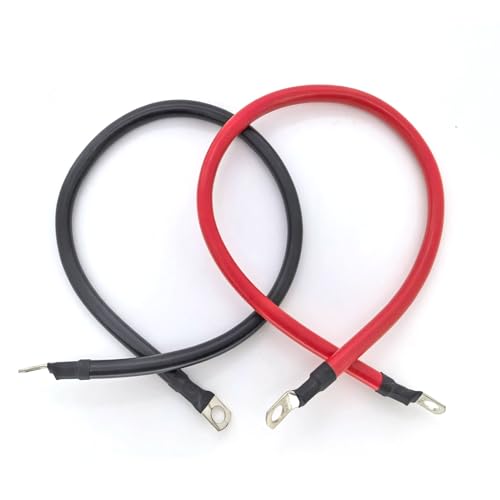
A flexible 2-foot 2-gauge pair that’s perfectly sized for car inverters.
This set is pure oxygen-free copper with a 5/16″ ring terminal on each end, wrapped in a flexible PVC insulator that’s wear-resistant, waterproof, and flame-retardant. The oxygen-free copper core is the engineering highlight — it boost conductivity while the tin-plated terminals minimize corrosion. Rated to 48 volts, it’s a versatile tool for cars, RVs, boats, and solar setups.
Buyers consistently call out the flexibility: “Well-made, very flexible just right for an inverter in my car.” That flexibility is the defining trait here, making it easier to route than stiffer 2-gauge competitors. It also works well with LiFePO4 battery terminals and shines in dual-battery setups, where owners use it to bridge connections cleanly.
Before you torque it down, confirm your stud size: one buyer had to file the lug hole slightly larger to match a bigger bolt. At 2 feet, it matches the ABIGAIL 4-gauge below in length, but this one uses a fatter 2-gauge conductor, so it carries heavier current without overheating. If your install needs high amperage in a short, flexible run, this is the balance.
Where it shines
- Flexible 2 AWG copper routes easily in tight car spaces
- 48 V rating covers RV, solar, and boat needs
- Works cleanly with LiFePO4 and dual-battery setups
Watch out
- Lug hole may need filing for larger bolts
- Measure your run — 2 feet is a short tool
Choose it for: inverter wiring in your car where flexibility and 2-gauge current both matter.
Not for: long battery-to-starter runs — that needs more than two feet of reach.
5. ABIGAIL 4 AWG Cable Set (2 ft)

A budget-friendly 2-foot 4-gauge pair with thick copper and rock-solid crimps.
This set gives you 4 AWG pure copper cables in red and black at 2 feet each, with 3/8″ ring terminals on both ends and heat shrink tubing sealing each termination. The tinned copper lugs add corrosion and oxidation resistance, and the flexible PVC jacket resists abrasion, water, and moisture while staying flame-retardant. It’s rated to 48 volts DC, making it a flexible workhorse.
Quality is the runaway most-discussed strength here, with owners praising the thick copper and solid connectors. Crimp quality gets called out specifically — “Well built and up to the job! Good Crimps” — and the fit is perfect for connecting two batteries. Compatibility is a recurring theme, with buyers using it across automotive, solar, marine, and golf cart applications.
Compared to the 2 AWG set above, this one drops a gauge but keeps the same 2-foot length and swaps the 5/16″ lug for a 3/8″ one, so it fits larger studs. It’s also the value play: you get genuine pure copper with tight crimps at an entry-level price point. If you need a short, clean 4-gauge bridge, this is a hard one to beat.
Built right: Thick copper, solid connectors, and tight crimps are what buyers praise most — plus genuine value for the price.
Keep in mind: 2 feet is short; it’s for bridging two nearby batteries or a tight inverter run, not long hauls.
Reach for this if: you want a no-fuss 4-gauge jumper with 3/8″ lugs for dual batteries or a small inverter.
Look elsewhere if: your terminals use the smaller 5/16″ stud — check the hole size first.
6. 2 AWG Battery Cable Set (3 ft)
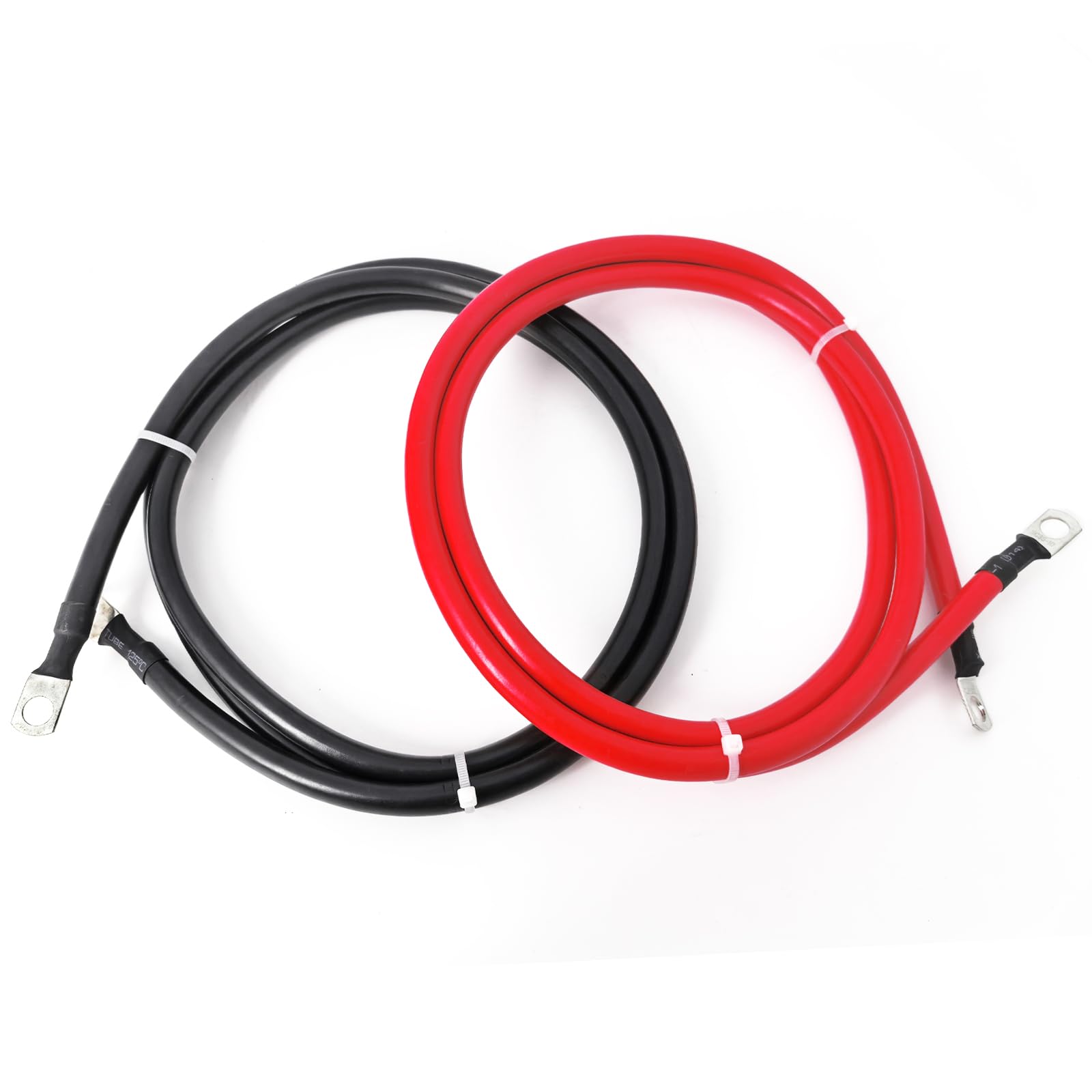
The 3-foot 2-gauge set that bridges parallel battery banks with ease.
This set steps up to a 3-foot length in 2 AWG pure oxygen-free copper, with a 3/8″ ring terminal at each end and heat shrink sealing the terminations. The flexible PVC sheath resists wear, water, and moisture while staying flame-retardant, and the 105-degree flame-retardant outer skin adds a layer of thermal protection. It’s built for automotive, truck, solar, RV, trailer, and golf car duty.
Buyers split their praise between functionality and quality — the two most-discussed strengths — and it earns repeat purchases from owners who’ve used several versions on many different products. It’s ideal for pop-up trailer battery-to-inverter setups and solar battery banks, and it shines at bridging parallel connections, like two 100Ah LiPo batteries in a bass tracker.
At 3 feet, it splits the difference between the 2-foot jumpers above and the 4-foot winner — enough reach to bridge batteries sitting side by side with room to spare. The 3/8″ lugs match larger studs, and the 2-gauge thickness handles serious current. If you’re wiring a trailer or parallel bank and want that extra foot of flexibility, this is the middle ground that just works.
Strengths
- 3-foot reach bridges parallel banks with room to spare
- 2 AWG copper handles heavy inverter loads
- True to size with quality ends and shrink wrap
Consider
- 3/8″ lugs won’t fit 5/16″ studs without an adapter
- 2-gauge stiffness returns in longer runs
Best for: pop-up trailer inverters and parallel battery banks needing a solid 3-foot 2-gauge bridge.
Think twice if: your studs are 5/16″ — you’ll need a reducer or different lug.
7. ACDelco Gold 2SD33XA Battery Negative Cable
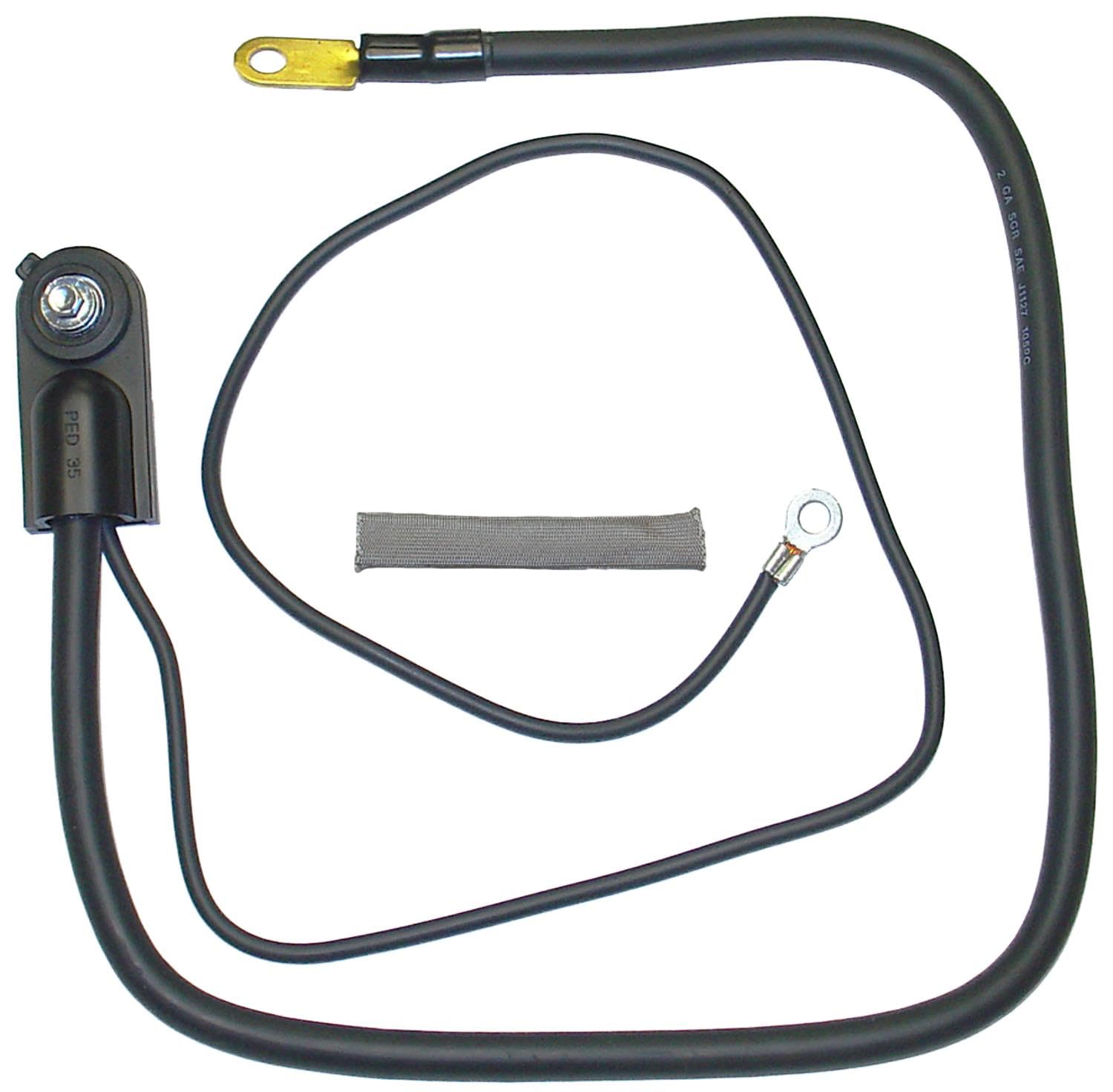
A GM-spec negative cable that bolts on like it left the factory yesterday.
This is a purpose-built negative battery cable with a cross-linked synthetic rubber insulator that fights corrosion, and copper conductors that deliver excellent conductivity. The overlapped casting and cable insulation add extra protection where corrosion usually starts. It’s made to meet expectations for fit, form, and function — and at 1.3 pounds, it’s a solid OEM-grade piece.
Quality and fit are the two things buyers praise most, and the use cases are specific: a 2004 Chevrolet Suburban 1500, a 2002 Silverado 4.8, and classic GM trucks all take it as a direct replacement. It famously fixed one owner’s intermittent no-crank-no-start — the kind of gremlin that a corroded ground cable causes. Owners call it “just like new” compared to factory parts.
The honest caveat is installation: some find it easy, others say it takes some work, and it’s not identical to the OEM part — one buyer notes the engine-mount end lacks the “stop” that prevents spinning while tightening. It’s also a negative cable, period — not a universal set. If you drive a GM truck with a failing ground, this is the targeted fix that skips the guesswork of universal cables.
Factory-grade fix: Reviewers point out it resolves electrical gremlins and fits GM trucks perfectly — quality and fit are the twin strengths.
Know before you buy: It’s a negative cable for specific GM applications, and install can take a bit of effort.
Grab it if: you drive a 2000s GM truck and want a clean, direct negative cable replacement.
pass on it if: you need a universal set with lugs — this is a specific OEM-style part.
8. iGreely 4 AWG Welding Cable Kit
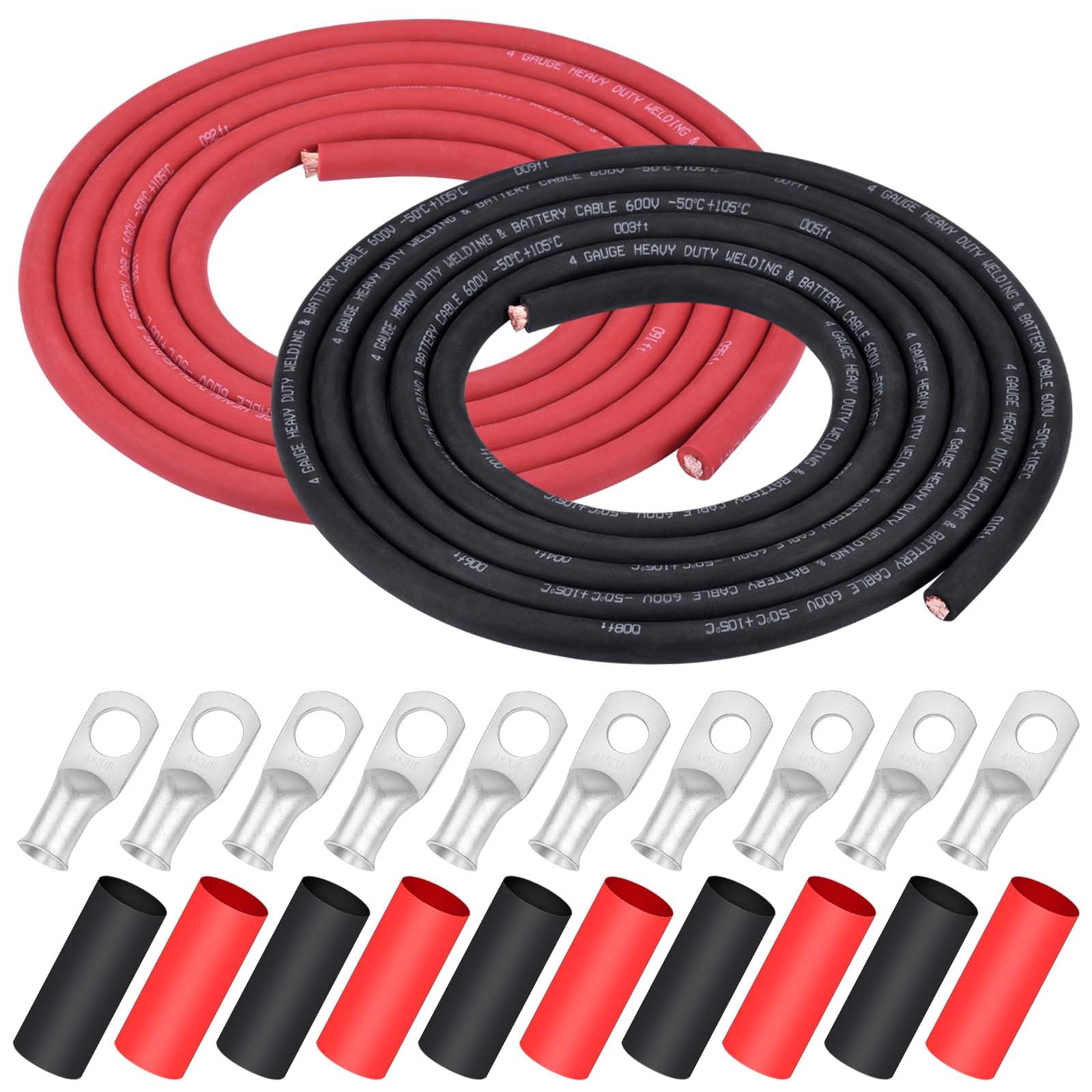
A 20-foot 4-gauge kit with lugs and heat shrink for DIY cable makers.
This is a build-it-yourself kit: 10 feet of red and 10 feet of black 4 AWG pure copper welding cable, plus 5pcs of 5/16″ and 5pcs of 3/8″ copper lug terminals and 10 pieces of heat shrink tubing. The cable is ultra-flexible OFC with a tough, solvent-resistant EPDM insulation jacket that can be re-straightened if needed — and with 673 strands of 0.2mm copper, it’s rated to 600 volts.
Quality is the runaway most-discussed strength, and the material is the second — buyers specifically confirm it’s real copper, NOT copper-clad aluminum, which is the cheap junk that underperforms. It’s been used successfully in a golf cart rewire and for solar battery and charge controller hookups. The flexibility gets praise too, with one owner finding it easy to crimp in a 12-volt van system.
The recurring gripe is an unpleasant odor that lingers on the cable — air it out before you install it in a vehicle. Some also note the outer shield mars or scratches easily, and the included lugs are aluminum rather than pure copper. This is the right pick if you want to cut custom lengths and crimp your own ends, rather than buying pre-made pairs.
Why it works
- Real OFC copper, confirmed by buyers — not CCA
- 600 V rating and ultra-flexible welding cable
- Lugs and heat shrink included for custom builds
What to expect
- Noticeable odor — air it out before install
- Soft outer shield mars and scratches easily
- Included lugs are aluminum, not copper
Best for: DIYers cutting custom 4-gauge runs and crimping their own ends at home.
Look elsewhere if: you want ready-to-bolt cables — this is a raw-material kit.
9. NOVINO 4 AWG Marine Wire Spool

Forty feet of tinned marine wire for boats and harsh outdoor wiring.
This spool gives you 20 feet of red and 20 feet of black 4 AWG tinned copper wire, built to UL 1426, SAE, and ABYC standards for marine environments. The tinned copper resists saltwater corrosion, and the thick protective insulation stands up to high temperature, oxidation, and abrasion. It’s rated to 600 volts with insulation good for 105°C dry and 75°C wet.
Quality is the most-discussed strength, with buyers running it from an engine battery to a helm for an amplifier install and noting the thick insulation and flexible feel. It’s also been used to mount dual batteries in a boat and relocate a trolling motor battery from bow to stern — a move that made the boat faster by shifting weight. The tinned copper is the key selling point for anyone in a saltwater environment.
The one mixed note is flexibility — some find these cables very stiff, so plan your bends before you commit. This is the premium, longest-run option here: 40 total feet of marine-grade conductor that you cut to size yourself. If you’re doing a full boat rewire or a long outdoor solar run where corrosion is the enemy, this is the definitive choice.
Built for salt: Tinned copper and thick insulation are what buyers praise most — ideal for boats and outdoor runs.
Plan ahead: Stiffness gets mixed feedback, so route carefully before securing.
Choose it for: boats, trailers, and outdoor solar projects where corrosion resistance is non-negotiable.
Not for: quick pre-made hookups — this is raw wire you cut and terminate yourself.
Understanding the Specs
Gauge and Current
Gauge is the wire’s thickness — the lower the number, the thicker the copper and the more current it can carry. A 4 AWG cable handles most starter and inverter loads, while a 2 AWG cable steps up for heavy dual-battery banks and high-output inverters. Thicker also means heavier and stiffer, so match the gauge to your actual amperage draw rather than buying the thickest you can find.
Copper Type
Pure copper (OFC) conducts better than copper-clad aluminum, which is a common way to cut cost at the expense of performance. Tinned copper adds a corrosion-resistant coating — essential for marine and outdoor use where salt and moisture attack bare copper. If a cable says CCA, it’s not the same animal as solid copper.
FAQ
What gauge battery cable do I need for my car?
Will a 5/16 inch lug fit my battery terminal?
What is the difference between pure copper and CCA?
How long do vehicle battery cables last?
Can I cut and crimp my own battery cables?
What terminal type do I need for my battery?
Is a thicker cable always better?
Why is tinned copper better for boats?
What is the maximum voltage rating I should look for?
Final Thoughts: The Verdict
For most buyers, the vehicle battery cable winner is the 4 AWG Battery Cable Set because it pairs proven build quality with the versatility of a 4-foot reach. If you need a heavy-duty short bridge for an RV bank or cutoff switch, grab the ECO-WORTHY 2AWG Set. And for a direct GM factory-style fix, the ACDelco Gold Negative Cable is the one to reach for — each serves a different job, so pick the one that matches your install.
How We Picked
We do not accept paid placement. Every pick is matched to a real buyer and a real use-case; we do not hands-on test units.
Sources & Methodology
Specifications: manufacturer listings and product documentation. Review insights: verified customer reviews, as of August 2026. Pricing: not shown on this page (it changes often); check the current price via the retailer link.
As an Amazon Associate, GoCarLife earns from qualifying purchases. This does not affect which products we feature.