
Our readers keep the lights on and the garage heater humming. As an Amazon Associate, I earn from qualifying purchases.
Specs are compiled from manufacturer listings and verified buyer reviews and can change over time — please confirm the key details on the product page before buying.
Choosing the right oil is the single most important decision you make for your engine’s lifespan. The wrong viscosity or a cheap blend can lead to sludge buildup, increased wear, and a noticeable drop in fuel economy.
I’m Mo Maruf — the founder and writer behind GoCarLife. This guide is built by comparing the manufacturers’ published specifications and the patterns across verified customer reviews, so you get each pick’s real strengths and trade-offs instead of marketing spin.
We’ve analyzed the top contenders to help you pick the best vehicle engine oil for your ride, whether it’s a daily commuter or a high-mileage workhorse.
Our Picks at a Glance
How To Choose The Best Vehicle Engine Oil
Before you buy, you need to know what your engine specifically requires. The owner’s manual is the ultimate authority, but understanding a few key terms makes the selection process much easier.
Viscosity: The “Weight” of Your Oil
The number on the bottle, like 5W-30, tells you how the oil flows. The number before the “W” represents winter (cold start) flow, and the number after represents high-temperature thickness. A 0W-20 oil is thinner at startup than a 5W-30, which helps it circulate faster in cold weather but may not be suitable for engines designed for thicker oil.
Synthetic vs. Conventional vs. Blends
Full synthetic oils are engineered from chemical compounds for maximum performance and longevity. Synthetic blends are a mix of conventional and synthetic oils, offering a middle ground. High-mileage oils contain special seal conditioners designed to reduce leaks and oil consumption in older engines, typically those with over 75,000 miles.
Certifications Matter
Look for stamps like API SP or ILSAC GF-7A on the bottle. These certifications guarantee the oil meets the latest industry standards for engine protection. Using a certified oil is crucial for maintaining your vehicle’s warranty and ensuring proper protection against wear and deposit buildup.
Quick Comparison
| Model | Best For | Viscosity | Volume | Type | Amazon |
|---|---|---|---|---|---|
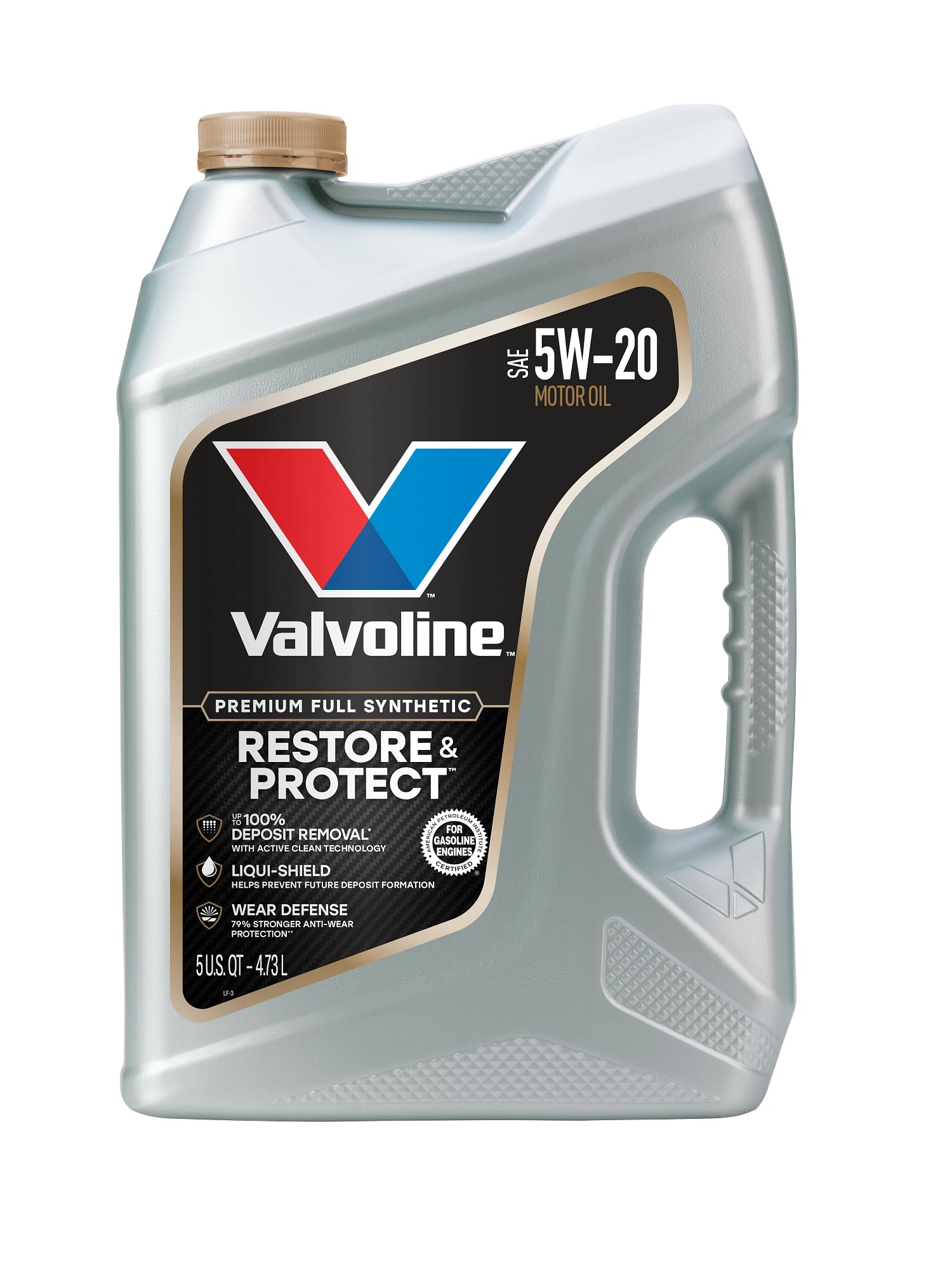
| Valvoline Restore & Protect★ Best Overall | Piston Cleaning | 5W-20 | 5 Quarts | Full Synthetic | Amazon |
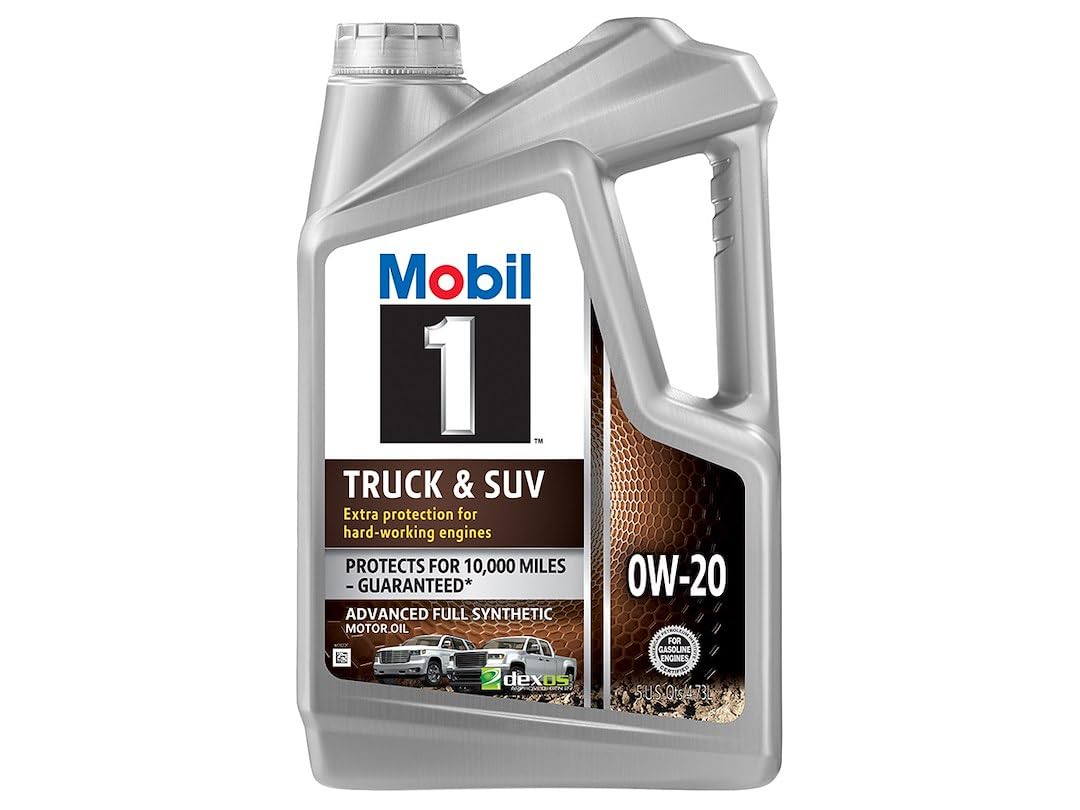
| Mobil 1 Truck & SUVTowing Pick | Towing & Hauling | 0W-20 | 5 Quarts | Full Synthetic | Amazon |
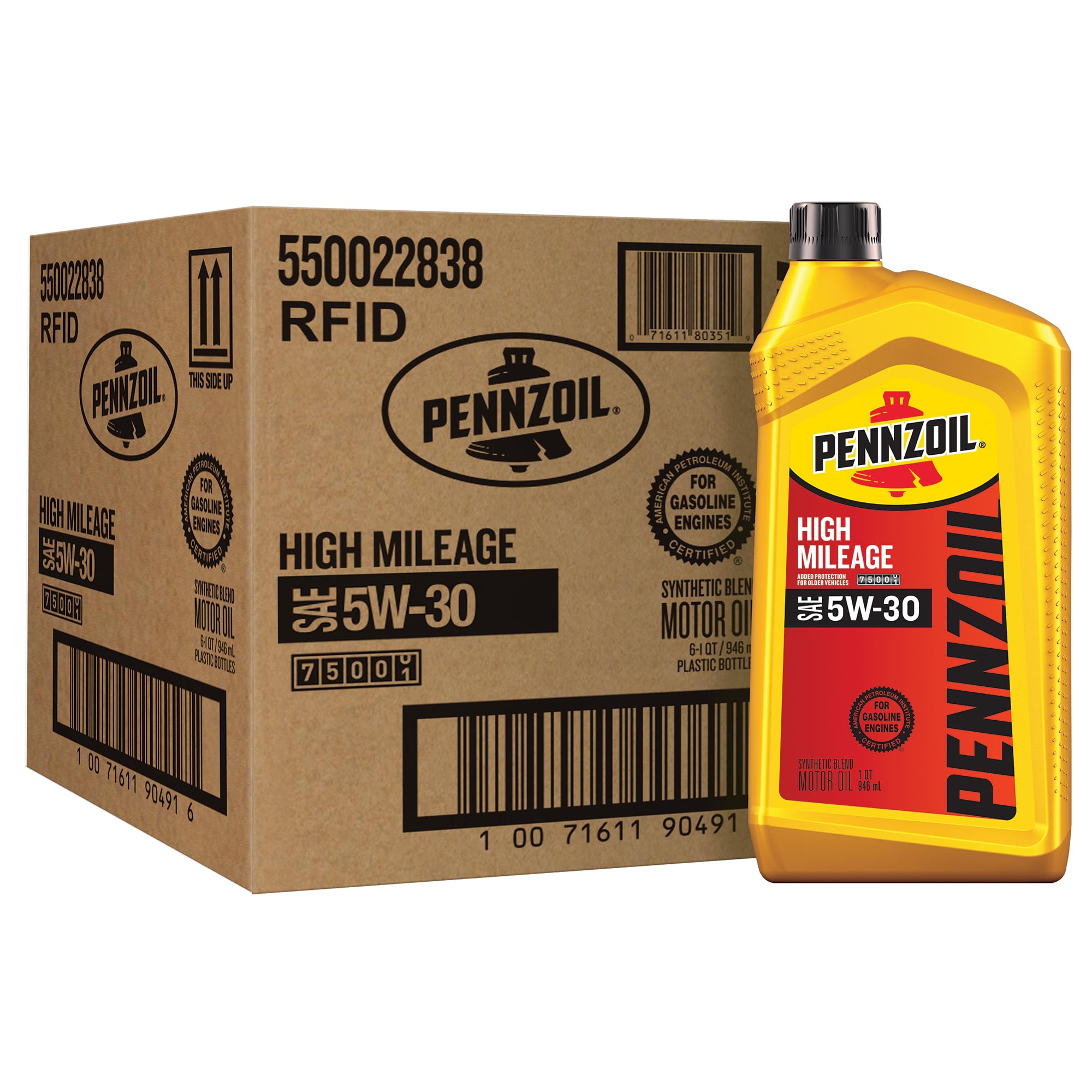
| Pennzoil High MileageLeak Stopper | Leak Reduction | 5W-30 | 6 Quarts | Synthetic Blend | Amazon |
| Mobil High Mileage | Sludge Prevention | 5W-30 | 6 Quarts | Full Synthetic | Amazon |
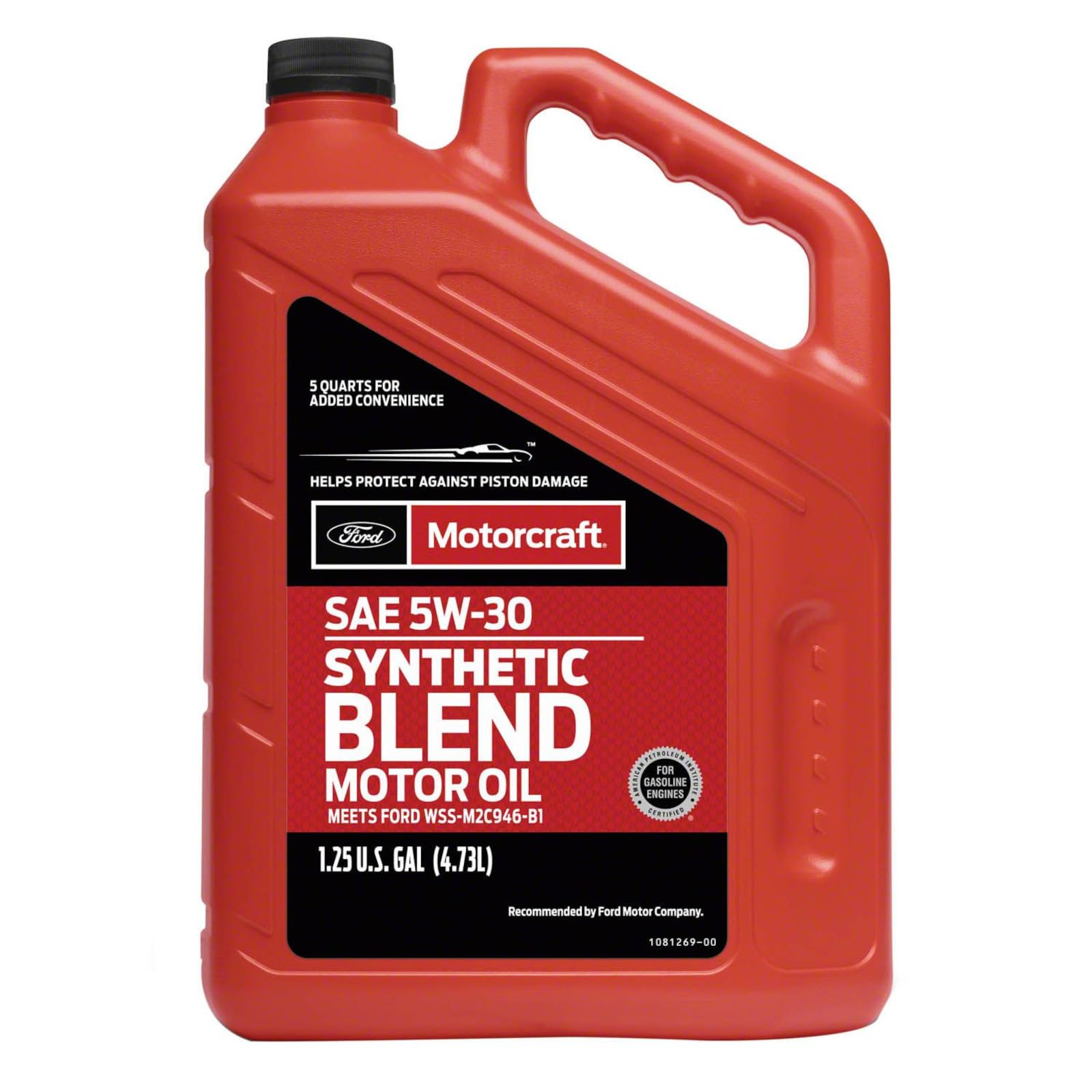
| Motorcraft | Ford Engines | 5W-30 | 5 Quarts | Synthetic Blend | Amazon |
| Liqui Moly Molygen | Cold Starts | 0W-20 | 5 Liters | Full Synthetic | Amazon |
| Liqui Moly Special Tec LL | European Cars | 5W-30 | 5 Liters | Full Synthetic | Amazon |
| Motul 8100 ECO-nergy | Fuel Economy | 5W-30 | 5 Liters | Full Synthetic | Amazon |
| Motul 8100 ECO-lite | Modern Engines | 0W-20 | 5 Liters | Full Synthetic | Amazon |
In‑Depth Reviews
1. Valvoline Restore & Protect Full Synthetic 5W-20
Our pick — over 4.5★ from 950+ verified ratings; the strongest balance of quality and price.
The self-cleaning oil that actively scrubs your engine’s internals with every mile.
This is the pick for anyone whose engine may have years of deposits hiding inside. Valvoline’s proprietary Active Clean Technology is claimed to return pistons to factory clean, removing up to 100% of deposits within four consecutive oil changes — a bold promise that resonates with owners of high-mileage vehicles.
The formula pairs that cleaning power with serious protection. It delivers 79% stronger anti-wear protection than GF-6 qualified oils, and the Liqui-Shield additive prevents future deposits from forming. This makes it a versatile choice for everything from a new car’s first oil change to an engine that has “gone the distance.”
Buyers report remarkable results, with one noting their 150k mile truck “gained 2mpg after the first 500 miles.” Another owner of a 200k Jeep calls it “perfect oil.” The bottle’s easy-pour design is a small but appreciated detail that makes DIY changes less messy.
Why It Wins People Over
- Actively cleans internal deposits rather than just preventing them.
- Meets the latest ILSAC GF-7A and API SQ/SP standards.
- Owners consistently note smoother, quieter operation.
Who Should Consider Otherwise
- 5W-20 viscosity may not suit every engine; check your manual.
- Full synthetic price point is higher than conventional blends.
Your best bet: If you want an oil that fights back against years of sludge while protecting a new engine, this is the definitive choice.
Check first: Verify your engine calls for 5W-20, as this won’t be the right viscosity for all vehicles.
2. Mobil 1 Truck & SUV Full Synthetic 0W-20
Duty-built for hardworking trucks that tow, haul, and face brutal conditions.
When your truck works for a living, it needs oil that won’t break down under stress. Mobil 1’s Truck & SUV formula is specially engineered for towing and hauling, using the brand’s signature Triple Action Formula to deliver protection, cleanliness, and proven performance.
The thermal resilience is the standout spec here. This oil protects against internal heat up to 500°F while flowing at -40°F. It resists oxidation and holds viscosity for up to 10,000 miles between changes.
It’s the “value for money” angle that wins people over, with owners appreciating that a full synthetic at this price point performs flawlessly in daily driving. The 5-quart jug (160 fluid ounces) is a convenient size for a standard oil change on most light trucks.
Built for the grind: The extreme temperature range makes this a reliable partner for fleet trucks and weekend tow rigs alike.
The trade-off: The 0W-20 grade is thinner than traditional truck oils, so it’s only correct if your manufacturer recommends it for your specific engine.
3. Pennzoil High Mileage 5W-30 (6 Pack)
The budget-friendly blend that helps worn engines seal up and stop drinking oil.
High-mileage engines are a different beast, and Pennzoil acknowledges that with this specific formula. Designed for vehicles with more than 75,000 miles, this synthetic blend is engineered to help stop leaks and reduce oil consumption in worn engines — a common frustration for owners of older cars.
Beyond sealing, it helps prevent sludge and other damaging deposits while providing proven wear protection. It’s also suitable for modern turbocharged engines that require low-speed pre-ignition protection, making it more versatile than typical high-mileage oils.
The 6-quart case (192 fluid ounces) is a value play for anyone who does their own changes, and owners describe it as a “durable lubricant” that makes their car run smooth and “leakage free.” The recurring praise centers on getting a quality product for a great price per quart.
Perfect for the daily beater: This is the smart, money-saving choice for a car with over 75,000 miles that you just need to keep running reliably.
Keep in mind: As a synthetic blend, it doesn’t offer the same extreme-temperature resilience as a full synthetic.
4. Mobil Full Synthetic High Mileage 5W-30

A full synthetic upgrade for high-mileage engines that need extra seal conditioning.
If you’re driving a vehicle with over 75,000 miles on conventional oil, switching to this full synthetic is a significant upgrade. Mobil’s High Mileage formula lasts 1.5X longer than their conventional and blend oils, enabling 7,500-mile intervals.
The key differentiator here is the extra seal conditioner in the balanced additive system. This is specifically designed to help prevent oil leaks, sludge, and deposit formation, reducing overall engine wear. It maintains oil viscosity at high operating temperatures, offering excellent resistance to breakdown.
Owners of classic cars and high-mileage trucks appreciate the value, with one noting their F150 “runs fantastic” and another praising it for keeping their GM motor running strong. The 6-quart pack is ideal for vehicles that require 6 quarts per change, like many full-size trucks.
The Upgrade Path
- Full synthetic means better high-heat performance than blends.
- Extra seal conditioner actively targets existing leaks.
- Extended 7,500-mile interval reduces maintenance frequency.
Not For
- Engines that are not yet past the 75,000-mile mark.
- Vehicles requiring a viscosity other than 5W-30.
Grab it for: A high-mileage car or truck where you want the best protection available without switching to an exotic brand.
Double-check: Ensure your engine doesn’t require a thinner 0W-20 for winter starts.
5. Motorcraft 5W-30 Engine Oil
The OEM-spec oil that Ford owners trust to keep their engines quiet and happy.
When you’re particular about your vehicle, using the brand that built the engine makes sense. Motorcraft is Ford’s official parts brand, and this 5W-30 is the go-to choice for many Ford and Lincoln owners, including those with the popular 2.7 EcoBoost engines.
Its 446°F flash point resists high-temperature breakdown, which indicates excellent resistance to high-temperature breakdown and oil consumption. As the factory-fill spec, it guarantees the right formulation for Ford’s specific engine tolerances and seal materials.
Loyalty to this oil runs deep, with owners noting their engines feel quieter and run “smooth with no issues.” One Lincoln owner says, “I always use Motorcraft,” reflecting the confidence the brand inspires. The easy-pour jug design is a practical touch that DIYers mention.
Ford’s stamp of approval: For any Ford or Lincoln, this is the safe, guaranteed-correct choice that won’t void your warranty.
Stay in the family: If you drive a non-Ford vehicle, a universal oil with broader certifications is a better fit.
6. Liqui Moly Molygen New Generation 0W-20

High-tech German oil with a built-in green UV tracer for spotting leaks.
Liqui Moly brings a unique a neat extra to the table: this oil is green. The Molygen formula includes a UV tracer dye that glows under a UV light, making it incredibly easy to pinpoint the exact source of any oil leak on your engine.
Beyond the visual gimmick, the 0W-20 formula is engineered for instant lubrication after a cold start, which is critical for reducing wear during those first crucial seconds. It maintains optimum oil pressure under all operating conditions and is ideal for engines with turbochargers and catalytic converters.
The performance speaks for itself, with owners of quiet engines swearing by it. The green dye is described as “a super useful bonus” for leak detection, and the oil is miscible with all commercially available motor oils, meaning you can switch without a full flush.
The Molygen Advantage
- Instant lubrication at startup reduces cold-start wear.
- UV tracer dye is a genius tool for DIY leak diagnosis.
- Specific compatibility with GM, Ford, and Honda models.
Worth Noting
- Priced as a premium import, it’s a significant step up from budget synthetics.
Best for: Enthusiasts who appreciate advanced additives and want a diagnostic edge with their oil changes.
Consider the cost: You’re paying a premium for the brand and the UV tracer, so it’s not the most economical choice for high-mileage burners.
7. Liqui Moly Special Tec LL 5W-30

The long-life formula that European car owners trust for quiet, smooth miles.
If you drive a BMW, Audi, or other European marque, you know they demand specific oil specs. This Liqui Moly Special Tec LL 5W-30 is a direct replacement for BMW’s Long-Life (LL) specification, and owners of everything from a 750i to a tuned X5 swear by it.
It’s a “Synthesis Technology” oil, meaning it’s a high-quality synthetic blend engineered for extended drain intervals that European manufacturers require. The formula is designed to keep engines clean and maintain stable oil pressure over long periods, which is crucial for turbocharged engines.
Owners mention that even tuned engines with extra boost run “smooth and quiet years later.” The value proposition is strong, as it’s often cheaper than the BMW OEM oil in a BMW-branded bottle. One owner noted it helped an older X5’s engine run quieter with less misfiring.
The Euro go-to: This is the right oil for European cars requiring the LL spec, delivering OEM-grade protection at a better price.
Not universal: Domestic cars don’t need the LL spec, so a more general-purpose oil is a cheaper alternative.
8. Motul 8100 ECO-nergy 5W-30
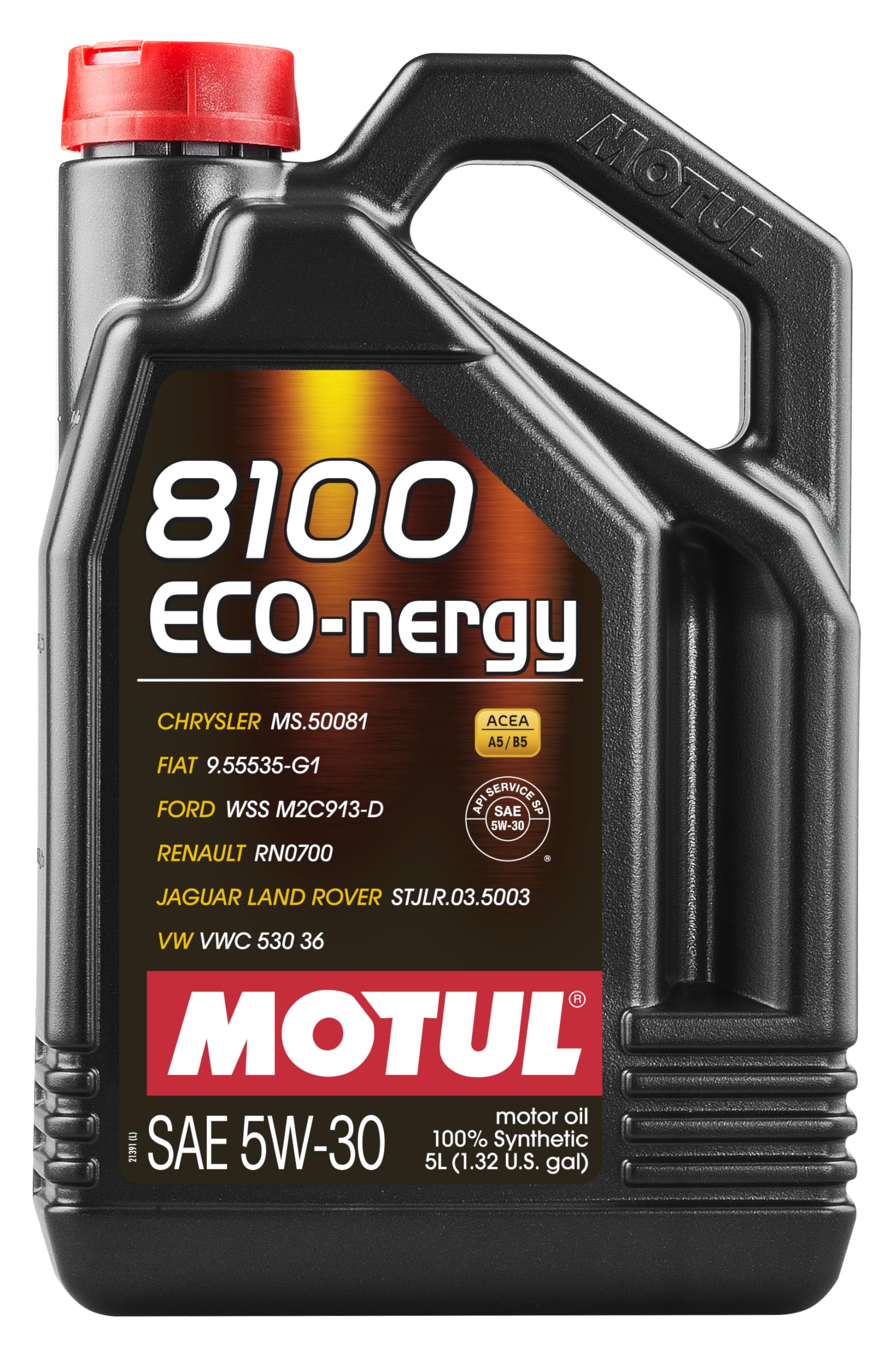
A low-friction synthetic that can deliver noticeable fuel economy gains.
Motul built its reputation on racing, and the ECO-nergy line brings that engineering focus to fuel efficiency. This 100% synthetic 5W-30 uses an advanced low-friction formula to reduce internal drag, which can translate to real-world MPG improvements.
It’s a “universal fit” oil suitable for all types of gasoline or diesel engines, with approvals for ACEA A5/B5 and API SP. This makes it a solid choice for European applications like Ford, Jaguar Land Rover, and VW, while also finding a home in Japanese performance cars like the Subaru STI.
The fuel economy claims are backed by owner reports of impressive gains. The review consensus mentions improvements of 5-10% in gas mileage, with one owner saw their Hyundai Palisade jump from 19 to 24 mpg. It also eliminates oil burn-off in LS motors and quiets valvetrain noise.
The efficiency pick: If you’re looking to squeeze every mile out of a gallon, this low-friction formula delivers measurable results.
Track-ready: It also holds up to aggressive driving, making it a favorite for modified Subarus.
9. Motul 8100 ECO-lite 0W-20
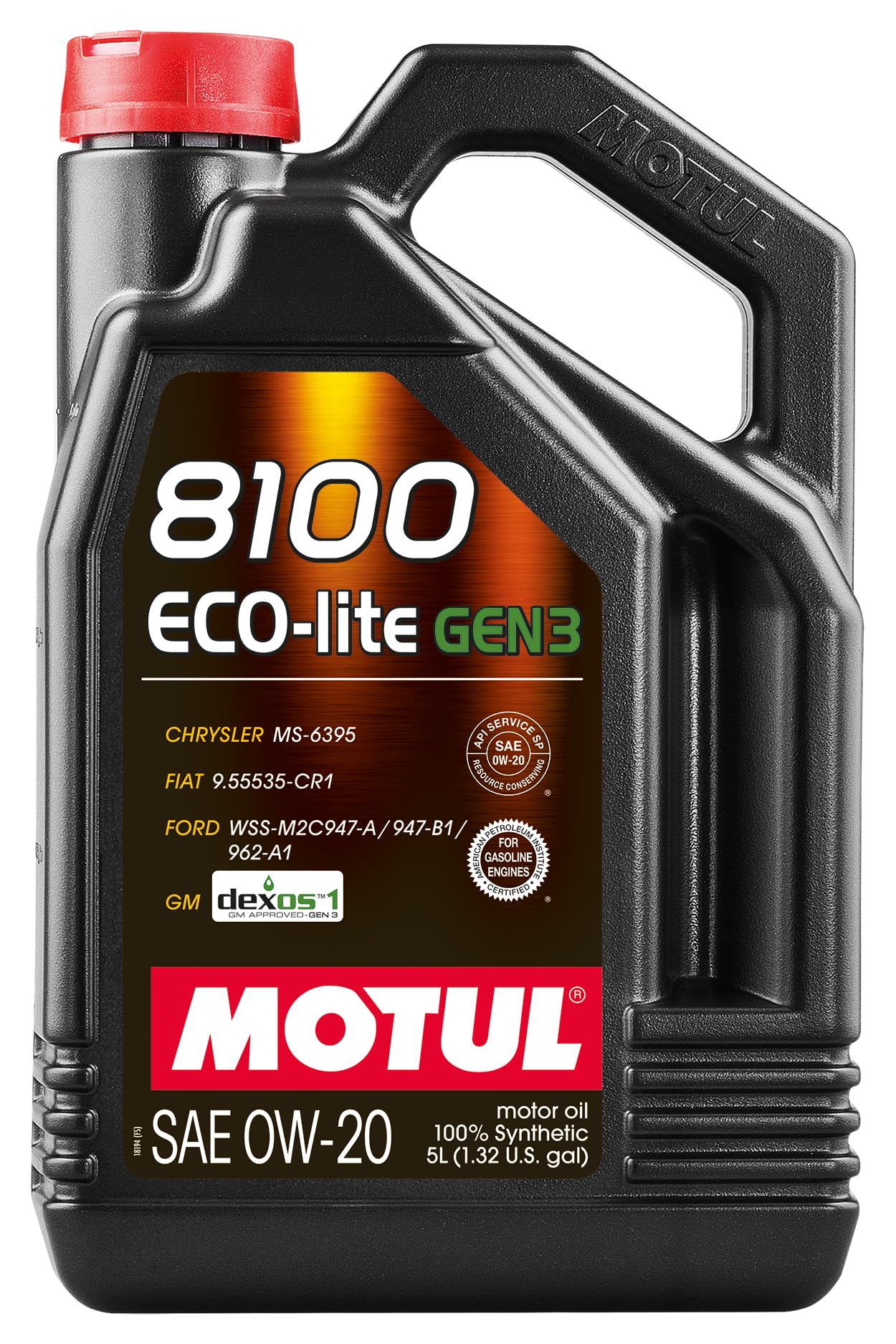
Future-proof protection for turbocharged, direct-injection engines of today.
Modern engines are more complex than ever, with turbochargers and direct injection creating new stress points. This Motul 8100 ECO-lite is a 100% synthetic 0W-20 specifically designed for these modern designs, offering faster lubrication at startup and stable protection under demanding conditions.
It’s certified to the latest API SP standard and GM dexos1 Gen3 requirements. This certification is key, as it means the oil is engineered to help protect against low-speed pre-ignition (LSPI) — a condition that can damage turbocharged engines — as well as timing chain wear and deposit formation.
Owners of modern Mazda, Subaru, and Honda vehicles report significant improvements. One owner gained 3 MPG in city driving, and another noted the oil is still clean (amber vs. black) at 6,000 miles. It’s described as a “genuine full synthetic” that outperforms standard US synthetics.
Premium protection: For a new car with a turbo or direct injection, this is top-tier insurance against premature wear.
The premium cost: This is the most expensive option here, and the MPG gains are modest for daily drivers.
Understanding the Specs
Viscosity Grade (SAE J300)
This is the most critical spec. The “W” number (0W, 5W, 10W) refers to cold-weather flow, with lower numbers meaning the oil is thinner and pumps faster in freezing temperatures. The number after the “W” (20, 30, 40) is the oil’s thickness at normal operating temperature, with higher numbers providing a stronger film at high heat. Always match the grade your manufacturer specifies.
API & ILSAC Certifications
These are industry quality stamps. The American Petroleum Institute (API) ‘SP’ rating is the current standard for gasoline engines, indicating protection against LSPI and timing chain wear. ILSAC GF-7A is the latest fuel-economy standard. Choosing an oil with these certs ensures it meets the strictest requirements for modern engines and protects your warranty.
FAQ
What does 5W-30 mean and will it fit my car?
Is full synthetic oil worth the extra cost?
When should I use a high-mileage motor oil?
Can I switch from conventional to full synthetic oil?
What is the difference between 0W-20 and 5W-30?
How often should I change my oil with full synthetic?
Is Motorcraft oil only for Ford vehicles?
Can engine oil improve my gas mileage?
What does the “LL” spec mean on Liqui Moly oil?
Why is the Liqui Moly Molygen oil green?
Final Thoughts: The Verdict
For most drivers, the winner is the Valvoline Restore & Protect because its active cleaning technology fixes the root cause of most engine wear. If you drive a truck that tows and need extreme heat protection, grab the Mobil 1 Truck & SUV. And for a pure fuel-economy boost in a modern engine, the Motul 8100 ECO-nergy is the one to reach for, provided your budget stretches that far.
How We Picked
We do not accept paid placement. Every pick is matched to a real buyer and a real use-case; we do not hands-on test units.
Sources & Methodology
Specifications: manufacturer listings and product documentation. Review insights: verified customer reviews, as of August 2026. Pricing: not shown on this page (it changes often); check the current price via the retailer link.
As an Amazon Associate, GoCarLife earns from qualifying purchases. This does not affect which products we feature.