
Our readers keep the lights on and the garage heater humming. As an Amazon Associate, I earn from qualifying purchases.
Specs are compiled from manufacturer listings and verified buyer reviews and can change over time — please confirm the key details on the product page before buying.
Nothing ages a car’s cabin faster than faded, grayed-out plastic and cracked, discolored upholstery. The right spray restores that factory-fresh look in an afternoon, and the secret is matching the paint to the surface you’re covering—vinyl, plastic, leather, and carpet each behave differently. This guide breaks down the best formulas on the market, what prep work actually matters, and which finishes hold up to sun, heat, and daily use.
I’m Mo Maruf — the founder and writer behind GoCarLife. This guide is built by comparing the manufacturers’ published specifications and the patterns across verified customer reviews, so you get each pick’s real strengths and trade-offs instead of marketing spin.
Restoring worn door panels or recoloring a whole seat starts with picking the right vehicle interior paint—your choice depends on the surface type, the finish you want, and how much wear the part will see.
Our Picks at a Glance


How To Choose The Best Vehicle Interior Paint
Interior paint isn’t one-size-fits-all. The first question you need to answer is what surface you’re painting: hard plastic and metal trim take a different coating than flexible vinyl or soft fabric. Spray the wrong formula and you’ll get cracking, peeling, or a rough texture that ruins the look.
Match the Paint Type to Your Surface
Hard plastics and metals want a paint labeled for “trim” with good adhesion to those materials. For seats, door panels, and other flexible vinyl, you need a vinyl dye or fabric paint that bends without cracking. The data shows buyers get the best results when they stick to the surface the can was designed for.
Decide on the Finish Before You Spray
Interior trim almost always looks best in satin — that subtle sheen that reads as factory stock rather than painted-over. Gloss finishes stand out and can look aftermarket. If you want a true OEM look, the data repeatedly points to satin black as the crowd favorite across brands.
Prep Work Is Half the Battle
Every high-rated option in this list rewards thorough surface prep. That means degreasing, sometimes sanding with fine grit, and letting each coat flash off before the next. The reviews that complain about peeling almost always skipped the prep step — the ones that follow the directions report finishes that last for years.
Quick Comparison
| Model | Best For | Surface | Finish | Can Size | Amazon |
|---|---|---|---|---|---|
| SEM 39143 Trim Black★ Best Overall | Hard trim & plastic | Plastic, Metal | Satin | 15 oz | Amazon |
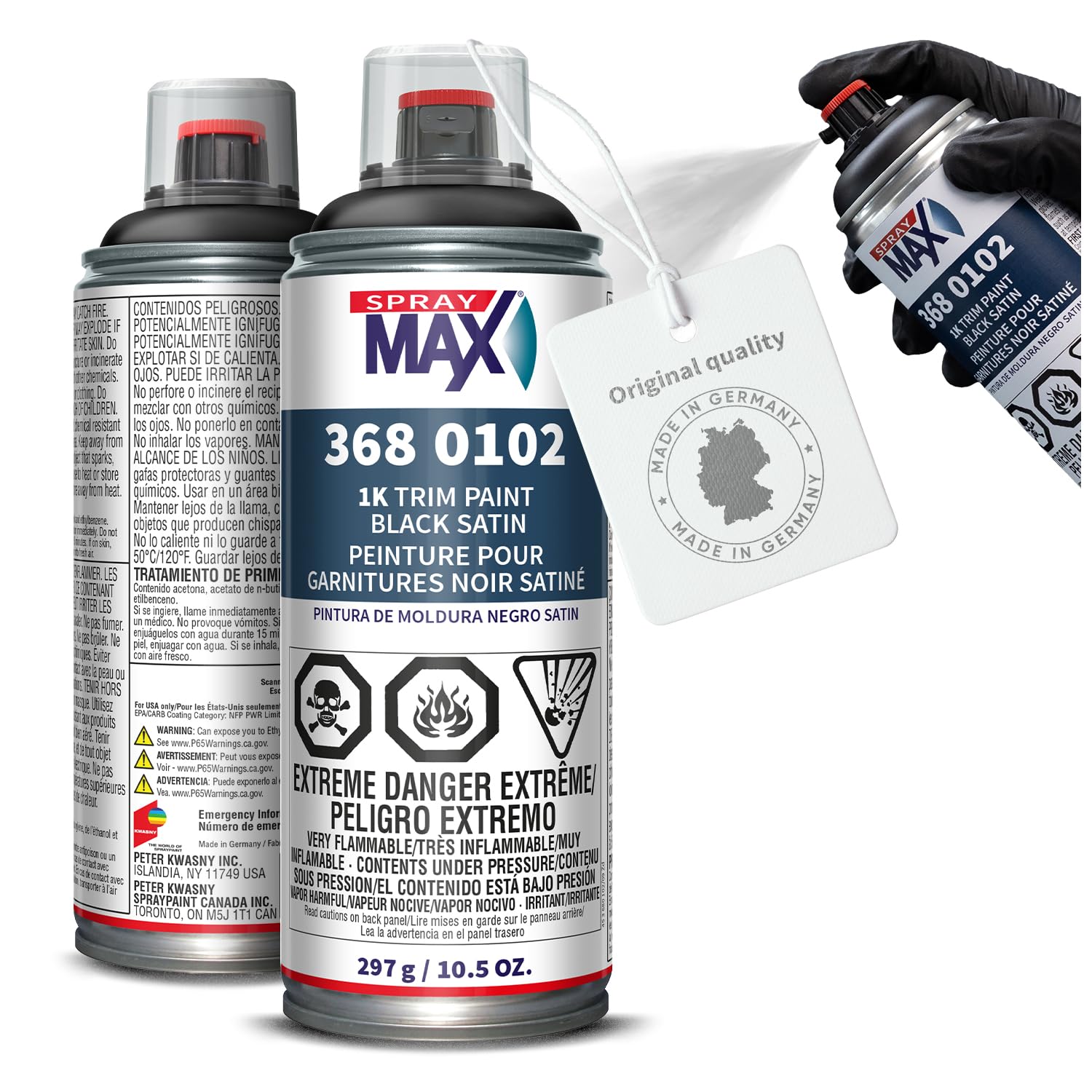
| SprayMax 1K Trim PaintPro Grade | Quick-cure trim & metal | Plastic, Metal | Satin | 10.5 oz | Amazon |
| HI-TECH Big Can Spray DyeBest Value | Carpet & upholstery | Fabric, Vinyl | — | 15 oz | Amazon |
| Rust-Oleum Fabric & Vinyl | Seats & door panels | Fabric, Vinyl | Gloss | 11 oz | Amazon |
| NADAMOO Trim Black | Bumpers & outdoor trim | Rubber, Plastic | Satin | 13 oz | Amazon |
| SEM 15393 Medium Gray | Gray color matching | Vinyl, Plastic | Gloss | 12 oz | Amazon |
| HI-TECH Light Beige Dye | Multi-surface recoloring | Leather, Vinyl | Satin | 11.25 oz | Amazon |
| SEM 49143 Trim Black Ultra | Steel & aluminum trim | Metal, Plastic | Satin | 14.5 oz | Amazon |
| Dupli-Color Charcoal Gray | Headliners & fabric | Fabric, Vinyl | Satin | 11 oz (2-pack) | Amazon |
In-Depth Reviews
1. SEM 39143 Trim Black Aerosol – 15 oz.
Our pick — over 4.5★ from 950+ verified ratings; the strongest balance of quality and price.
The gold standard for faded plastic that needs a permanent, factory-satin resurrection.
This is the can that DIYers and pros alike keep coming back to, and the 4.8-star crowd favorite status is earned the hard way — through years of consistent results. The satin black matches factory trim so closely that buyers report neighbors borrowing the can for Hondas, Toyotas, Rams, and BMWs, all coming out looking new. At 15 ounces you get enough for a full set of plastic trim, and owners mention it sprays evenly and levels out to a smooth, permanent coat.
Prep is the one non-negotiable: surfaces need a thorough clean and the reviews make clear that skipping panel prep means a weaker bond. With proper prep, the finish holds up remarkably well — the data shows a front door handle restoration that “saved me over since I didn’t replace the handles” and was still holding up great after six months. It dries to the touch in about 10-15 minutes between light coats, and a can will cover a spoiler lip twice at three coats each with plenty left over.
The recurring tip from owners is patience: this paint scratches more easily until it’s fully cured, which takes about 36 hours, so let it sit before reinstalling parts. That minor caveat aside, the depth of positive experience here — professional-grade results from a single spray can — is why it leads this list.
Owner verdict: The thing everyone raves about is the finish — a true satin that reads as factory stock, not painted-over trim.
The trade-off: It demands real prep work and a 36-hour cure before it reaches full hardness, so it’s not a 15-minute fix.
Reach for this if: you want a permanent, professional-looking restoration of faded plastic, dash frames, and mirror housings in a true satin black.
Think twice if: you can’t commit to the cleaning, multi-coat, and full-cure process — this one rewards patience.
2. SprayMax 1K Trim Paint Black Satin
A single-component topcoat that cures rock-hard in hours, not days.
This one is for the restorer who wants professional depth without a multi-day cure schedule. The 1K aerosol system means one component — just shake and spray — with dust-dry in 15 minutes and full cure inside 3 hours at room temperature. That speed is the standout: owners describe an engine bay restoration coming out immaculate because the paint hardens fast enough to handle reassembly quickly.
What wins people over is the wide spray nozzle and the consistent, deep satin surface it lays down. The formula’s high solids content gives strong adhesion across plastic, metal, wood, and even glass, and the color is a dead-on satin black match for factory trim and wheel touch-ups. Buyers also note it can be lightly sanded and polished after curing, just like an exterior coat, for fixing small defects.
The honest catch is that coverage opinion splits — one buyer found it thin and unimpressive, while the majority report the spray pattern and quick drying make for professional results. The hardness after 24 hours is the recurring highlight, which makes this a strong pick when you want durable results on a faster timeline.
Standout quality: The rock-hard cure — owners describe the paint hardness after 24 hours as “amazing,” letting parts go back together sooner.
Coverage caveat: A few owners wanted more opacity per pass, so plan on multiple light coats for best results.
Choose it if: you want a fast-curing satin black that handles plastic, metal, and trim with a professional, durable finish.
skip it if: maximum coverage per can is your top priority — this one favors finish quality over raw opacity.
3. HI-TECH Big Can Black Spray Dye – 15oz
The big-can dye that sinks into fabric to revive carpets and seats, not just coat them.
If your problem is faded carpet, stained upholstery, or a sun-bleached seat, this is the black dye to reach for. The 15-ounce can holds 33% more dye than standard spray dyes, which keeps the cost per ounce down for big jobs. What makes it different from a paint is that it penetrates into the fibers — buyers describe it as exactly that: “Penetrates deep. Solid, long lasting color. Easy to apply.”
The snorkel-style nozzle with an adjustable fan pattern is a genuine usability win, letting you target small spots or sweep large panels without blotches or overspray on textured materials. Owners have used it to completely transform faded black outdoor pillows back to like-new, and to refresh seats that now look new out of the can. It’s formulated for carpet, fabric, vinyl, and plastic, making it a versatile single-can solution for mixed-material interiors.
The texture is where buyer feedback splits — some surfaces come out feeling stiff or crusty compared to the original softness, and not every plastic accepts the dye (hard-shell cases were the exception noted). Color stability also draws mixed comments, so treat it as a refresh solution for high-wear fabrics rather than a permanent recolor.
What owners praise
- True dye penetration that restores faded color deep into fibers
- Adjustable fan nozzle gives precise, blotch-free coverage
- Extra 5 ounces of product per can cuts cost per job
Know before you spray
- Texture can come out stiff on some fabrics — a trade-off for the deep color
- Not every hard plastic accepts the dye, so test an inconspicuous spot first
Best fit: carpets, seats, and upholstery that need deep color restoration, especially across large surface areas.
Not for: hard-shell plastics where a dye’s penetration can’t take hold — use a trim paint there instead.
4. Rust-Oleum 248922 Fabric & Vinyl Spray Paint – 11 oz, Gloss White

The flexible vinyl and leather re-coloring that’s saved more restored interiors than any other can.
Rust-Oleum’s reputation rests on real restoration results: a ’78 Mustang interior was revived across tan, blue, and red panels using three light coats plus a heavy final coat, with no chips, scratches, or runs, and the original grain kept intact. The 11-ounce can dries to the touch in as little as 10 minutes and covers up to 12 sq ft, so you can finish a door panel quickly. Its any-angle spray technology (a nozzle that works even upside down) with a comfort tip makes reaching door panel contours genuinely easier.
This is specifically a vinyl, simulated leather, and fabric product, and it delivers on those surfaces. The gloss sheen is the defining characteristic — if you want a reflective, show-car look rather than a factory satin, this is the pick. Buyers have used it to change the color of heated leather seats between vehicles, and it holds up to sitting without cracking.
Adhesion is the real variable: the data shows it works beautifully on fabric and leather, but some customers note it doesn’t take to every vinyl formulation. Durability also splits — some see years of service, others see cracking on high-flex areas. Treat it as a color-change specialist for seats and panels, and prep the surface well for best results.
The strengths
- Preserves vinyl grain and texture through a full recolor
- Dries in 10 minutes so multi-coat jobs move fast
- Any-angle nozzle eases awkward door panel spraying
Watch for
- Gloss finish, not factory satin — a look choice, not a flaw
- Some vinyl surfaces resist adhesion, so test first
Made for: seats, door panels, and dashboards in vinyl, simulated leather, and fabric where you want a durable, glossy recolor.
Consider another can if: you need a true satin factory match on hard plastic trim.
5. NADAMOO Trim Black Spray Paint for Plastic – 13 oz
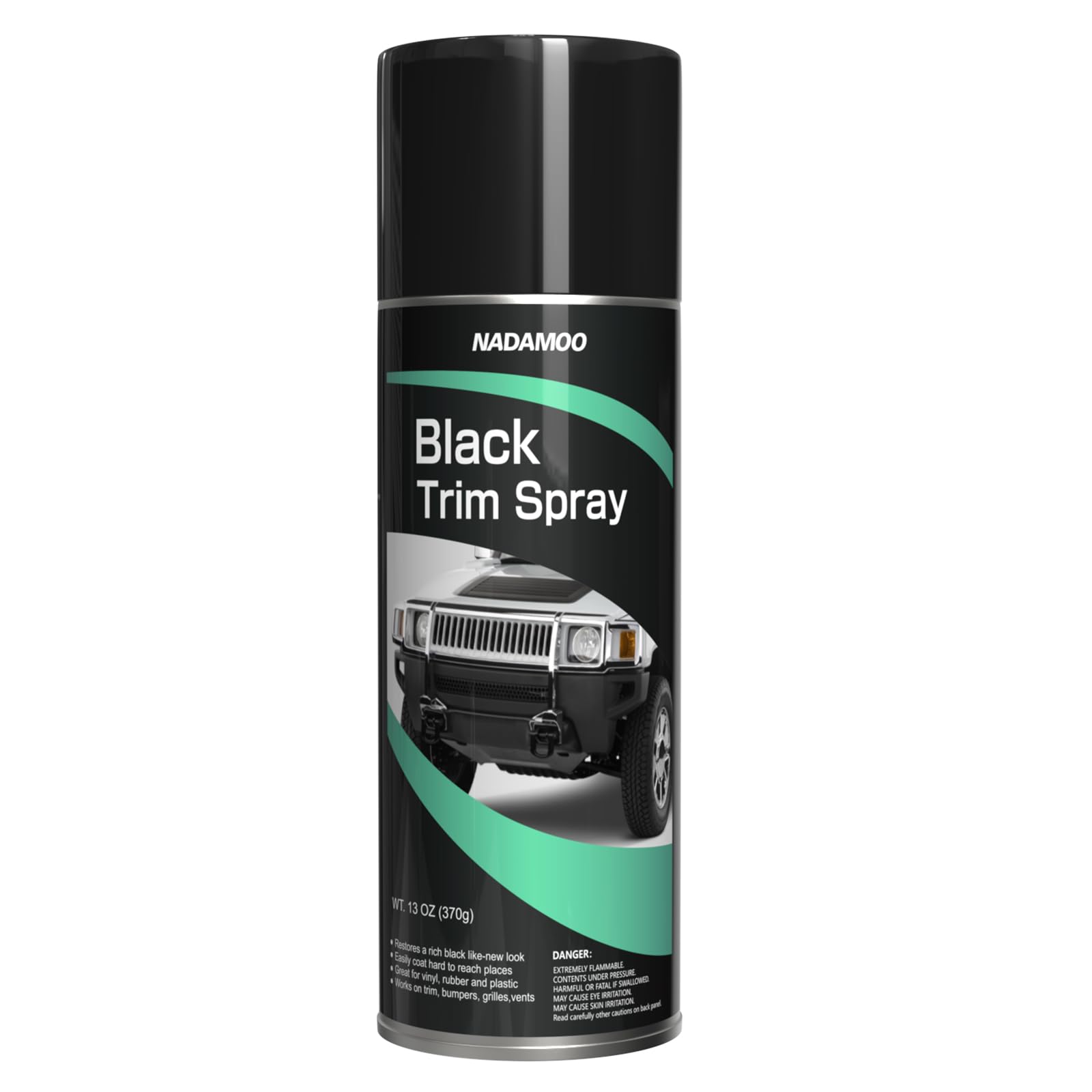
The satin black engineered to shrug off brutal heat and relentless sun.
This pick is built for the sunbelt. The UV-resistant formula survives from -40°F to 150°F, which is the spec that matters when your car bakes in a Texas parking lot all summer. Owners confirm the real-world result: “It hold up in extreme Texas heat and sun” and a 1998 GMC grill redo showed no visible chips or damage after several months of daily driving and road trips.
The 13-ounce can (450ml) covers about 10-12 sq ft for two light coats, and the satin finish comes out looking OEM-like — buyers describe it as having that “nice OEM-like finish” that makes vehicles look new. It’s engineered for rubber, vinyl, and plastic, but also bonds to metal, wood, and ceramic, which makes it handy for reviving faded patio furniture or appliance panels alongside bumper and grill work.
The chemical resistance is a meaningful bonus: the coating forms a barrier against cleaners, oils, salt, and acidic contaminants, so it doesn’t wash off or degrade with routine cleaning. The only mixed feedback is on long-term durability and value perception, but for a budget-friendly satin black that takes real punishment, this is a solid performer.
Defining strength: The 150°F heat tolerance and UV resistance — this is the trim paint for hot, sunny climates.
Fair note: Long-term durability feedback is still building, so it’s a proven short-to-midterm fix rather than a decades-old track record.
Pick this if: you live somewhere hot and sunny and need a satin black that resists fading on bumpers, grills, and outdoor trim.
Pass if: you need a guaranteed match for a specific factory color — this is black, full stop.
6. SEM 15393 Medium Gray Color Coat – 12 oz.

The gray color coat that GM truck owners hunt down for flawless factory matching.
This is the specialist’s can for gray interiors, and it has a devoted following among GM and Ford truck owners. The data shows a flawless match to the 96 Impala SS interior, and a near-perfect match to GM Trim color code 13D (a factory gray used on 95-99 GM trucks)—the kind of factory-color accuracy that’s nearly impossible to find in a spray can. At 12 ounces, it’s sized for focused jobs like door panels or dash repairs, not whole-interior overhauls.
The professional approach pays off here: reviewers point out using adhesion promoter, primer, and a clear satin topcoat with wet-sanding at 800 grit between stages, landing a hard finish with no chips or scratches after 24-48 hours of curing. The gloss finish is the spec to note — this is a Color Coat with a gloss sheen, which reads differently than the satin trims elsewhere on this list. On the right interior, that gloss looks spectacular and clean.
Color match is the consistent theme, and it’s where opinions diverge. The medium gray is a touch lighter than some factory codes — notably GM’s medium dark pewter (code 92) — so you must verify your car’s specific trim code before committing. For the right vehicle, this is the closest you’ll get to a factory-gray recolor.
Owner praise: The factory color matching — a flawless fit for 96 Impala SS interiors and GM trim code 13D.
Color caution: Not a universal gray — it runs lighter than GM’s medium dark pewter, so check your trim code first.
Reach for it when: you’ve confirmed this medium gray matches your factory interior code and you want a durable, pro-grade recolor.
Look elsewhere if: you’re working from a photo match — this one rewards knowing your exact paint code.
7. HI-TECH Vinyl, Plastic, Carpet Dye – Light Beige (1 Pack)

The fast-drying beige refinisher that flexes with vinyl while covering golf cart seats and carpets.
This one earns its spot for color versatility and genuine flexibility. The light beige shade opens up restoration jobs that black-only cans can’t touch — think tan interiors, faded beige carpet, or a discolored golf cart seat. Owners describe the coverage as great and the finished surface as “flexible like the original,” which matters on vinyl that has to bend every time you sit down.
The quick-drying formula is the practical highlight: it dries to the touch in seconds and adheres within minutes, so you can layer coats fast and get the part back in service the same day. It’s formulated for a broad surface list — car seats, vinyl tops, dashboards, floor mats, leather, carpet, ABS plastic, PVC, acrylic, fiberglass, and recycled plastics — making it a true multi-surface tool for mixed-material interiors.
The risk here is color fidelity, and the data is genuinely split on it. One owner hit a perfect match on their carpet; another found the can came out darker than the beige label suggested and was unhappy with the result on their carpet. If you’re working on a large, visible surface, buy a small test area first, and plan for up to three coats.
The crowd favorite: Flexibility — a dyed seat that stays supple and feels like the original vinyl, not stiff paint.
The risk: Beige color can run darker than expected on some surfaces, so test before committing to a big job.
Choose it if: you’re restoring a beige or tan interior across multiple surface types and want fast-drying, flexible results.
Be cautious if: you need a guaranteed exact beige match — spot-test first, and budget for multiple coats.
8. SEM 49143 Trim Black Ultra – 14.5 oz

The true jet-black satin that adheres to steel and aluminum as easily as plastic.
This is the trim black for the metal-and-plastic jobs that stump other cans. The “Ultra” formula is designed for plastic, aluminum, steel, stainless steel, TPO, and PP — so it handles everything from a steel grill to plastic light bezels and mirror arms in one pass. Owners describe the result on those applications as “looks like factory” with a satin finish that’s perfect. The 14.5-ounce can covers 4-5 square meters, which is generous for exterior trim work.
The finish is the star here: a true, jet-black satin that sprays smooth for an OEM-like (factory-original) appearance, and the data backs it up—a grill that lives outside in the sun was “holding up fantastic” and looked brand new a year after proper application. The transfer efficiency (the percentage of paint that lands on the surface instead of drifting away as overspray) is a documented selling point, meaning less waste and more paint where you aim it. That efficiency, plus its metal adhesion, makes it a clean upgrade for anyone restoring a mix of plastic and metal parts.
The honest trade-off is the 24-hour dry time — this is not a quick-touch-up can. Owners also note occasional sputtering in the spray, a minor inconvenience on an otherwise excellent applicator. If you want the deepest, most durable black and can wait a day for full cure, this is the premium pick.
The strengths
- True jet-black satin finish that reads as factory stock
- Adheres across plastic, aluminum, steel, and stainless steel
- Efficient transfer means less overspray waste
The limits
- 24-hour dry time before parts should be handled
- Occasional nozzle sputtering mid-can
Best for: mixed-material jobs — steel grills, aluminum trim, and plastic bezels — where one can must do it all in a deep satin black.
Skip if: you need results today; the 24-hour cure makes this a slow-and-steady play.
9. Dupli-Color HVP111 Charcoal Gray Vinyl and Fabric Spray – 11 oz (2 Pack)

The two-pack that turned a sagging headliner into a factory-looking charcoal finish.
This pick earns its spot with among the most impressive documented use cases in the data: a full headliner and grab handle recolor. An owner removed the sagging cloth, masked the area, and sprayed directly over the foam underneath—no brushing off—and the result “looks like a factory liner. No fuss, no miss.” That’s the kind of easy, forgiving application that makes this a first-timer favorite.
The 2-pack format is the value story: two 11-ounce cans give you enough coverage for larger jobs like a full headliner or all four door panels without a mid-project store run. The flexible self-priming formula resists cracking, flaking, and peeling, and the satin charcoal color sits nicely between black and gray for interiors that want something softer than a pure black. The EZ Touch Conical Nozzle keeps the spray even and run-free when you take your time.
The durability on high-wear surfaces is the honest concern. Shoppers say it wears on vinyl seats after just a few uses, with underlying color showing through, and the finish can dry stiff before softening with use. It’s best on headliners, door panels, and grab handles — surfaces that get touched, not sat on and rubbed constantly.
Why it’s popular
- Two cans cover large jobs like a full headliner
- Self-priming formula sprays on even and run-free
- Charcoal satin gives a softer look than pure black
The weak spot
- Vinyl seats wear through after repeated use
- Fresh finish feels stiff before it breaks in
Reach for it if: you’re recoloring a headliner, door panels, or grab handles and want a forgiving satin charcoal with 2-can coverage.
Choose something else if: the part gets constant friction — seats are better served by a dedicated vinyl dye.
Understanding the Specs
Finish Type: Satin vs. Gloss
Finish type is the single biggest visual decision you’ll make. Satin gives a subtle, low-reflective sheen that matches most factory interiors — it’s the crowd favorite across the data for trim and door panels. Gloss is shiny and reflective, which can look aftermarket or show-car sharp, but it stands out against a stock cabin. Pick satin for an OEM look; choose gloss only when you want that shine.
Dry Time and Cure Time
These are not the same, and the difference matters more than most buyers realize. Dry time is when the paint stops feeling tacky — usually 10-15 minutes between coats. Cure time is when the paint reaches full hardness and can handle real use, and it ranges from 3 hours on the fast-curing SprayMax formula to 24-36 hours on the SEM options. If you reinstall parts too early, you risk scratching a finish that looked perfect.
Coverage Area per Can
Coverage tells you how far a can goes before you’re making another store run. The data spans from about 10-12 sq ft per can on the NADAMOO trim paint to 4-5 square meters (roughly 43-54 sq ft) on the SEM Ultra. For a full interior you’ll likely need multiple cans; for a grill, spoiler, or door panel, one can usually finishes the job. Always buy a little extra — running dry mid-coat is the classic DIY failure.
Surface Compatibility
The most important spec to check before buying is which surfaces the formula actually bonds to. Trim paints are engineered for hard plastic, metal, and rubber. Fabric and vinyl paints are built to flex and absorb into fibers. Spray a trim paint on a vinyl seat and it cracks; spray a fabric dye on a hard dashboard and it won’t bond. The data is clear: matching the paint type to the surface is what separates a lasting restoration from a flaky mess.
FAQ
What is the difference between trim paint and vinyl dye?
How long does vehicle interior paint last before it needs redoing?
Do I need to sand plastic before spraying interior paint?
Will interior spray paint work on leather seats?
How many coats of interior spray paint should I apply?
Can I use exterior trim paint on the interior of my car?
How do I match the exact factory color of my interior?
Why does my painted interior crack or peel after a few weeks?
Is it cheaper to repaint interior trim than to buy new parts?
What’s the best way to apply spray paint to interior panels without runs?
Final Thoughts: The Verdict
For most buyers, the vehicle interior paint winner is the SEM 39143 Trim Black because it delivers the most consistent, factory-looking satin results across the widest range of plastic and trim jobs, backed by the deepest pool of owner experience. If you want fast-curing durability for plastic and metal, grab the SprayMax 1K Trim Paint. And for restoring faded carpets and seats with deep dye penetration, the HI-TECH Big Can Spray Dye is the one to reach for.
How We Picked
We do not accept paid placement. Every pick is matched to a real buyer and a real use-case; we do not hands-on test units.
Sources & Methodology
Specifications: manufacturer listings and product documentation. Review insights: verified customer reviews, as of August 2026. Pricing: not shown on this page (it changes often); check the current price via the retailer link.
As an Amazon Associate, GoCarLife earns from qualifying purchases. This does not affect which products we feature.