
Our readers keep the lights on and the garage heater humming. As an Amazon Associate, I earn from qualifying purchases.
Specs are compiled from manufacturer listings and verified buyer reviews and can change over time — please confirm the key details on the product page before buying.
Your family’s tablets, your work laptop, and your RV’s smart TV all need a steady signal while you’re on the road. A vehicle mobile hotspot delivers that, but the real question is which connectivity features actually matter when you’re miles from the nearest tower. You need to know which one is worth buying before you spend your money.
I’m Mo Maruf — the founder and writer behind GoCarLife. This guide is built by comparing the manufacturers’ published specifications and the patterns across verified customer reviews, so you get each pick’s real strengths and trade-offs instead of marketing spin.
Whether you prioritize raw 5G speed, global roaming reach, or the simplest no-SIM setup, the right vehicle mobile hotspot turns your car, truck, or camper into a mobile office.
Our Picks at a Glance
How To Choose The Best Vehicle Mobile Hotspot
Your first decision is how you get network access: bring your own SIM card, use built-in eSIM technology (an electronic SIM built into the device), or skip carrier paperwork entirely. After that, you’ll weigh power and how many devices the hotspot can handle at once.
Match the Cellular Network to Your Routes
If you’re a cross-country trucker, a device locked to one carrier’s bands is a gamble. Look for an open up device that plays nice with AT&T, T-Mobile, or Verizon so you can move between providers. For international road trips, the frequency bands your device receives become the deciding factor — a global-focused unit pulls signals from local carriers to avoid pricey roaming fees.
Battery Life Versus Full-Time Vehicle Power
A hotspot with a 3,000mAh battery (a common capacity for these portable routers) is perfect for a day of camping, but a dedicated vehicle setup might run better plugged into a USB charger full-time. Check whether the device can run while charging without overheating, since some models prefer to operate on battery alone.
Quick Comparison
| Model | Best For | Connectivity | Battery | Max Devices | Amazon |
|---|---|---|---|---|---|
| JICICUXI 4G LTE Mobile Hotspot★ Best Overall | Budget-friendly daily driving | 4G LTE (300Mbps) | 3000mAh | 12 | Amazon |
| STATELINKER S2No-SIM Pick | No-contract North America travel | 4G LTE (WiFi 6) | 15 hours | 8 | Amazon |
| BNBDE T8 Global Pocket WiFi | Global connectivity from the start | 4G LTE (eSIM) | 3500mAh (15 hours) | 8 | Amazon |
| GlocalMe UPP | Prepaid data bundles for road trips | 4G (200+ countries) | 3000mAh (13 hours) | 8 | Amazon |
| TravlFi JourneyGo | U.S. coverage for RV living | 4G LTE (eSIM) | Long battery life | — | Amazon |
| NETGEAR Nighthawk M6 Pro | Raw 5G speed for power users | 5G mmWave (8Gbps) | 5040mAh | 32 | Amazon |
| GlocalMe Numen Air 5G | Fastest global 5G roaming | 5G (2.5Gbps) | ~6 hours | 16 | Amazon |
In‑Depth Reviews
1. JICICUXI 4G LTE Mobile Hotspot Router
Our pick — 5.0★ from 40+ verified ratings; the strongest balance of quality and price.
The budget-friendly router that turns any SIM card into a rolling office.
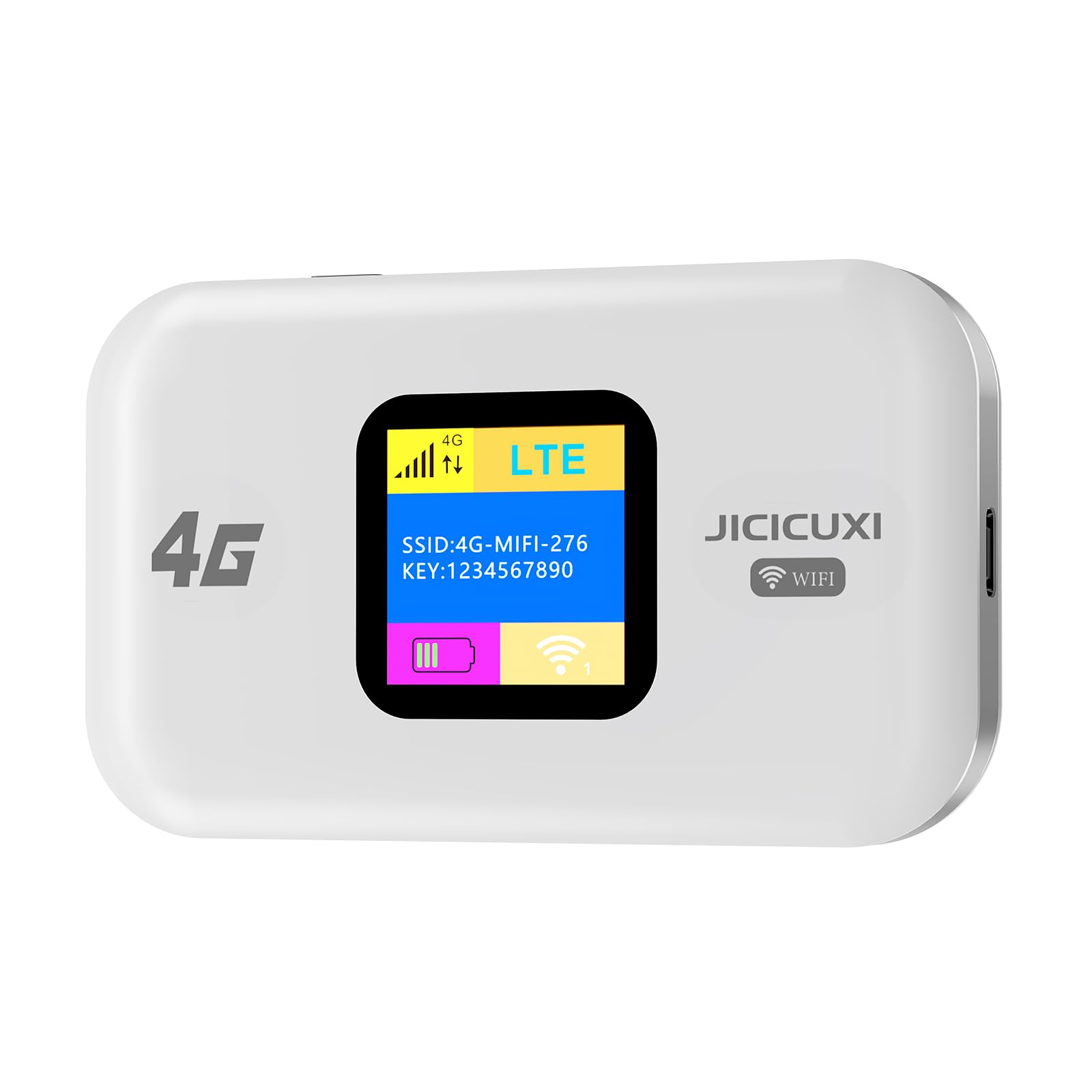
This little Ice White unit is the sensible starting point if you already have a data SIM and just need a box to broadcast it. It pushes up to 300Mbps over 4G LTE, which is plenty for a couple of laptops streaming and a phone running navigation all at once. The crowd favorite detail is that it juggles up to 12 devices simultaneously, so the whole car stays online without kicking anyone off.
Buyers report the quoted 5-7 hour battery is honest — cross-country flights and long hauls come up in the feedback. It supports the usual LTE bands like B2/B4/B5/B7, so most U.S. carriers work. There’s an insulating strip on the battery you must peel before first use, and it doesn’t come with a SIM, so bring your own data card.
What’s on the screen matters too: it shows real-time signal strength, battery level, and connected user count, which is rare at this price point. The one thing to know is the SIM ejector tool means you’re managing a physical card, not an app-based eSIM.
Everyday reliability: Owners love that it stays steady for work and gaming without fuss, and the long-range coverage gets consistent praise.
Setup caveat: You’ll want your APN settings (the network access point name) from your carrier before you hit the road, since the setup assumes you know them.
Perfect for: Budget buyers who want a simple, 12-device hot spot on their own SIM plan.
Look elsewhere if: You’d rather not source and manage a physical SIM card.
2. STATELINKER S2 WiFi Hotspot
A pocket-sized 4G box that skips the SIM hunt and starts with 10GB of free data.
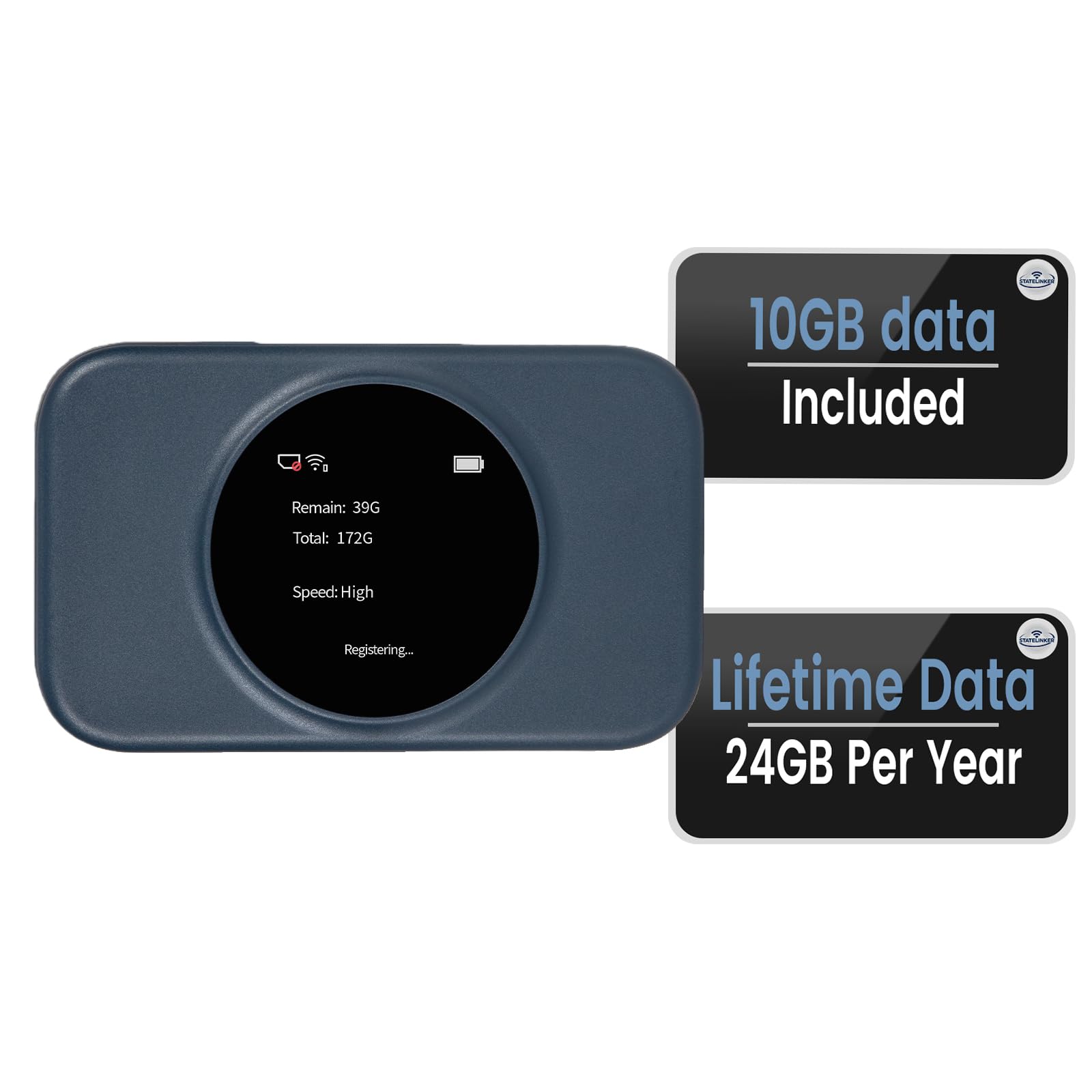
This one flips the script on setup: no physical SIM card to buy or insert, because the data lives on the device itself. It comes with 10GB of complimentary data valid for 30 days, and then a free 2GB every single month that rolls over if unused. That’s a big deal for a trucker or weekend camper who just wants the thing to work the moment the box opens.
At just 3.5 ounces, it slips into a back pocket, and the battery delivers up to 15 hours of continuous use — an honest full day of driving. It uses WiFi 6 technology, which helps keep the connection fast when multiple devices are demanding bandwidth at once. Up to 8 gadgets can connect.
Reliability gets mixed feedback across the board, so treat it as a solid domestic companion rather than a guaranteed lifeline in dead zones. And note the “2GB every month” requires you to contact support for the first activation — an extra step, not fully automatic.
Plug-and-play freedom: Owners mention setup under a minute and solid 4G speed for everyday use, even from an Alaska campground in no-reception territory.
Data plan honesty: The monthly 2GB accrual isn’t fully automated, so budget your expectations around the initial 10GB.
Reach for this if: You want zero carrier contracts and instant out-of-box data for a North American road trip.
Think twice if: You need guaranteed uptime in remote rural areas — performance varies by location.
3. BNBDE T8 Global Pocket WiFi
eSIM wizardry that auto-connects in 140+ countries with zero SIM cards.
This is the answer for the border-crossing traveler who’s tired of hunting for local SIM cards. Using eSIM technology — a digital SIM programmed into the device — it automatically connects to the best available local network in over 140 countries and regions. It’s plug-and-play internet, plain and simple.
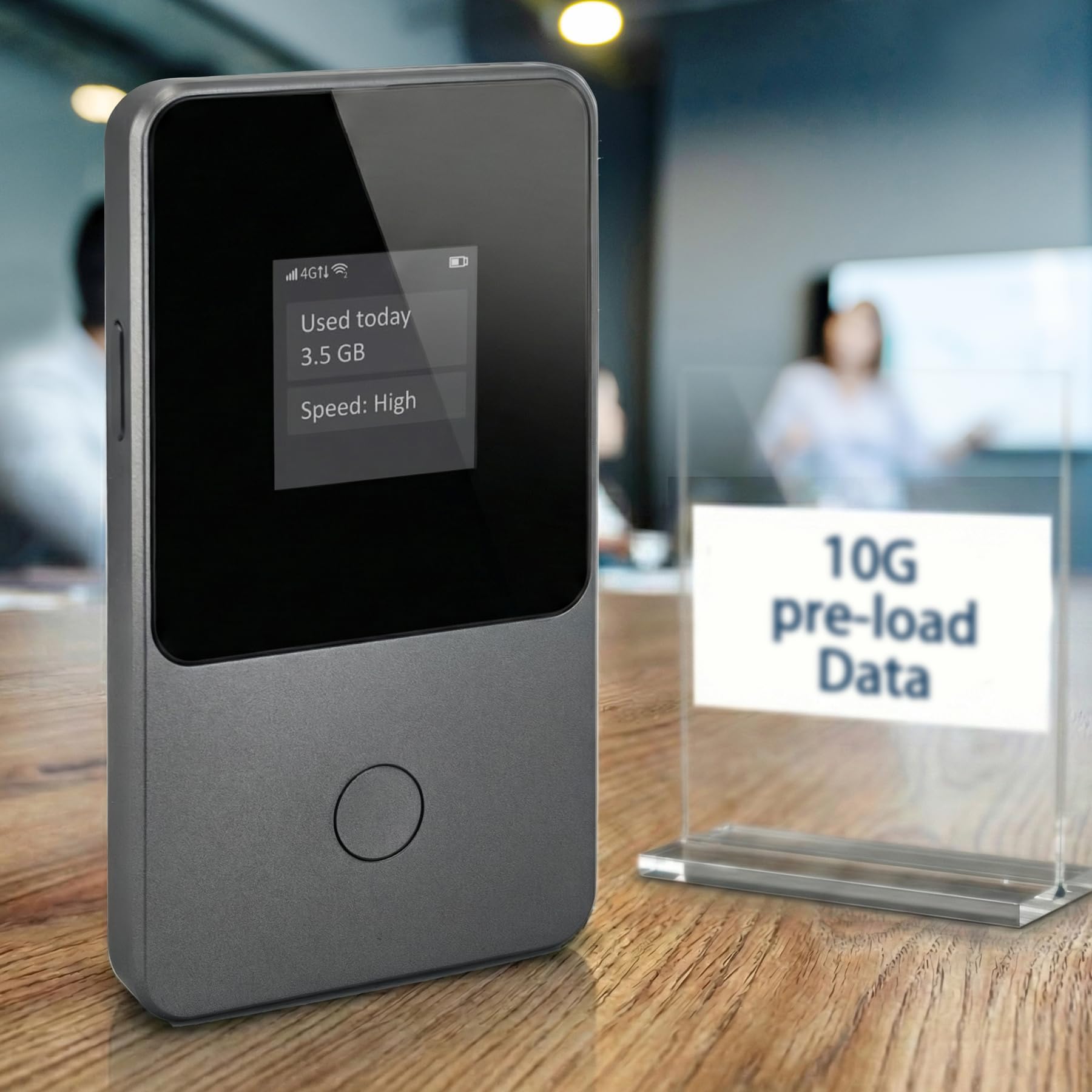
The T8 ships with 10GB of preloaded U.S. data ready to go, and the 3500mAh battery (a high-capacity pack) runs up to 15 hours on a single charge. At just 100g and 4.33 inches long, it’s phone-sized and pocket-friendly. A companion app lets you buy flexible data plans and monitor usage in real time from your phone.
Here’s the honest limit: this is 4G, not 5G, so speed tops out where 4G LTE does. In mountain terrain or rural areas, the connection can be spotty — one buyer on a rural California camping trip reported the device connecting but showing “No Internet connection.” It works well in cities and towns, but deep in the pines you may lose your signal.
Travel convenience: Owners find it works better than their phone data with no dropped service, and it supports Wi-Fi calling in a pinch.
Terrain reality: Remote mountain coverage is the recurring gap, so pair it with offline maps for backcountry trips.
Best for: International road-trippers who want one device that follows them across borders.
skip it if: Your route is strictly deep wilderness — cell signal geography still applies.
4. GlocalMe UPP 4G Mobile Hotspot
A preloaded data machine that skips the SIM and covers 200+ countries.
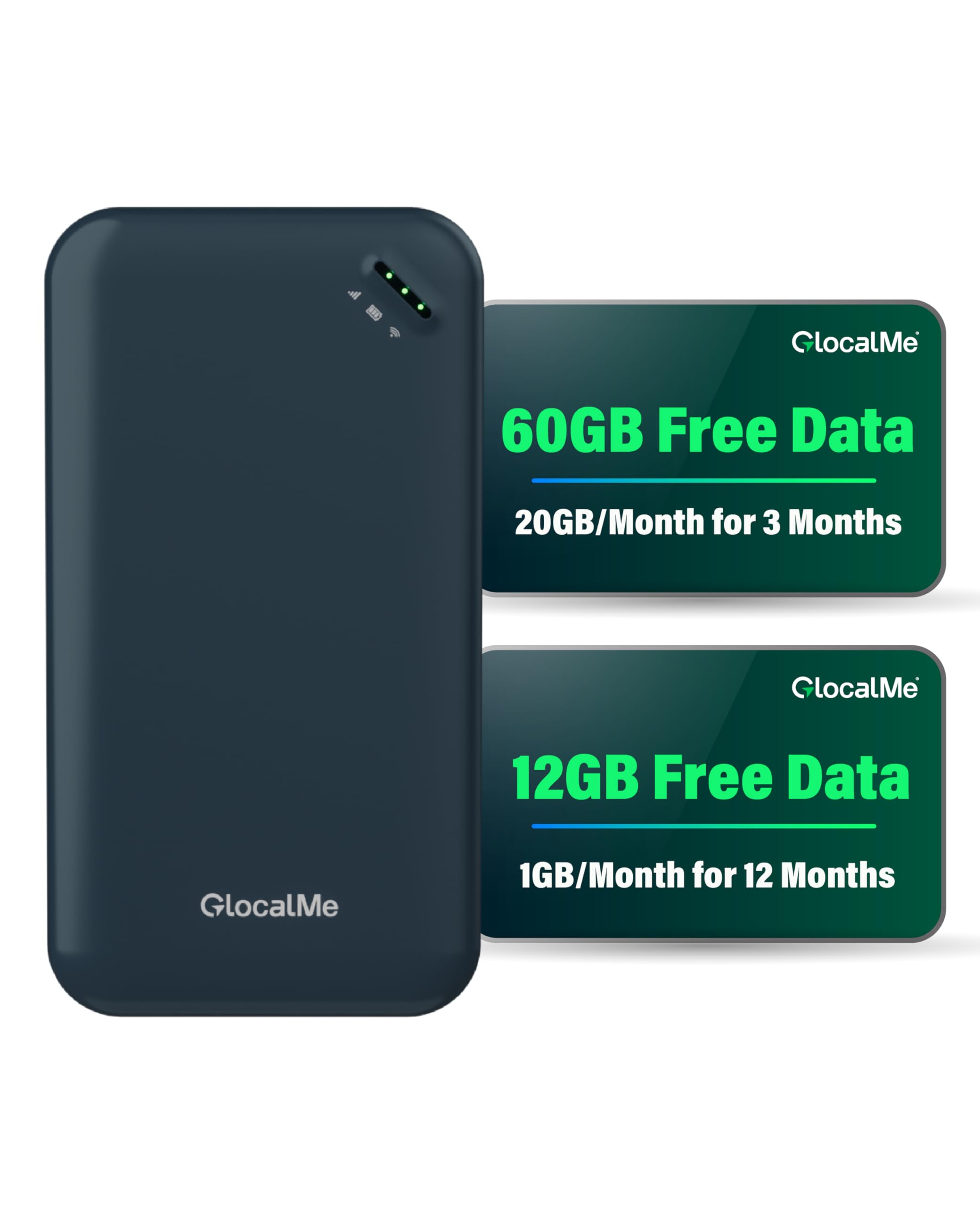
This one attacks the “data anxiety” problem head-on: it’s preloaded with 72GB total — 20GB of U.S. data monthly for the first 3 months and 1GB of global data monthly for 12 months. You register through the GlocalMe APP, and it’s ready from the start with no SIM card or extra purchase needed.
The UPP taps into 390+ global carriers across 200+ countries and automatically picks the strongest local signal. Inside, a 3000mAh battery delivers over 13 hours of continuous use, which comfortably covers a long haul. Up to 8 devices can hang on simultaneously, and it doubles as a safe private network so you avoid sketchy public WiFi at truck stops.
Customers note it works reliably for email, maps, video calls, and light streaming — and handles a Jamaica trip well. The honest trade-off: it needs daily charging if you’re running it hard, so carry a portable charger. Also, the 13-hour claim assumes moderate use; heavy streaming will drain it faster.
Travel reliability: Set-up takes minutes, the password is printed on the back, and owners call it more dependable than house WiFi.
Power management: Daily recharging is the norm — treat it like your phone and it’ll treat you well.
Reach for this if: You want a generous preloaded data bundle with flexibility to buy by day, month, region, or GB.
Look elsewhere if: You need multi-day battery endurance off-grid without a charger.
5. TravlFi JourneyGo LTE Wi-Fi Hotspot
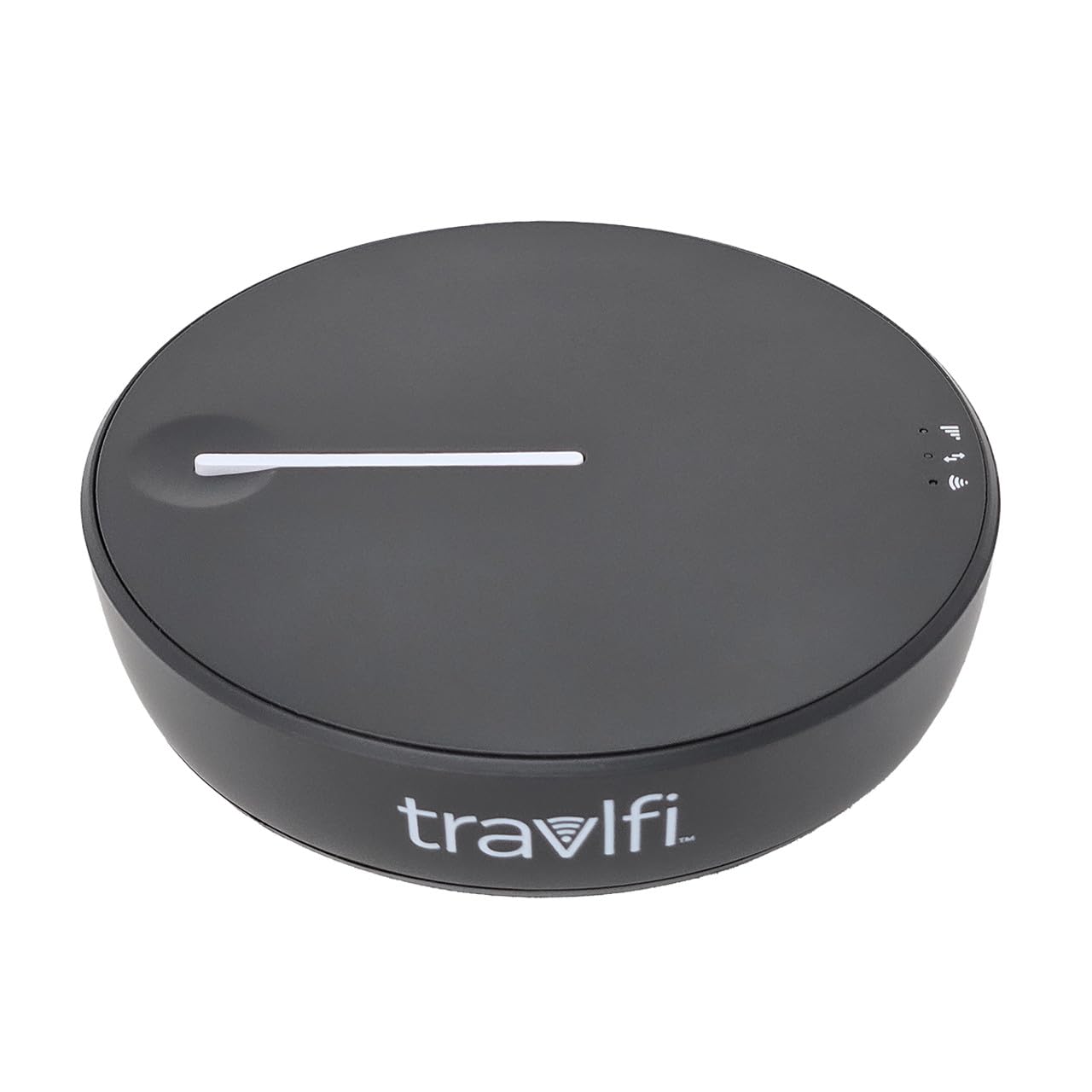
The RV favorite that swaps SIM cards for flexible prepaid data plans.
If you live in an RV resort for the summer, this is the hotspot the neighbors keep talking about. The JourneyGo needs no SIM card — it uses eSIM technology to pull from nationwide cellular networks, and data plans start from as little as 2GB up to unlimited. You prepay month by month, so you’re never locked into a contract when your travel schedule changes.
Reliability is the standout here, with strong praise from buyers who use it at home and camping. It connects to any cell service tower quickly, and the battery lasts a long time, which matters when you’re parked somewhere with no hookup power. It’s pocket-sized enough to slip anywhere in the RV.
The trade-off is speed consistency — some owners rave about excellent signal, while others in weak tower areas report slow connections. The device itself supports 2.4GHz, which is the more common, longer-range band but not the fastest WiFi option.
RVer approval: Reviewers point out easy setup, solid streaming on all TV apps, and good phone service once connected.
Signal geography: Speed depends heavily on the tower you lock onto — a weak tower means weak service, period.
Best for: Full-time RVers who want contract-free U.S. coverage with flexible data sizing.
Consider another if: Your campsites are consistently in verified dead zones.
6. NETGEAR Nighthawk M6 Pro 5G

A certified 5G monster that connects 32 devices for the whole convoy.
This is the heavy-duty option for anyone who needs serious bandwidth on the road. It supports 5G mmWave and Sub-6 bands, with a theoretical throughput of 8Gbps, and a data transfer rate of 3600Mbps (3.6Gbps) on paper. In practical terms, shoppers say consistent speeds around 100 Mbps near a window — enough for gaming, downloads, and multiple streams.
The defining hardware: a 2.8-inch color touch LCD panel, a 5040mAh battery (a large pack), tri-band WiFi (AXE3600), and a 2.5G Ethernet port for a wired connection. It handles up to 32 devices simultaneously, making it the only true choice for a full rig or a family with multiple consoles and laptops. It supports both AT&T and T-Mobile, and works with CDMA carriers like Verizon.
The honest catch: this is a renewed unit, and refurb quality varies. Some buyers received flawless units; one reported a defective device requiring a return. It also runs hot in high-power mode, so the battery sometimes needs removal when plugged in for maximum performance.
Raw power: Owners with good cell signal call it excellent for gaming and downloads, and the tri-band WiFi 6E coverage is solid.
Refurb reality: Quality control is inconsistent — you may need to exchange a dud before you hit the road.
Reach for this if: You want the fastest possible 5G speeds and need to support a fleet of devices.
Think twice if: You’d rather avoid refurbished-unit roulette and only need a simple 4G connection.
7. GlocalMe Numen Air 5G
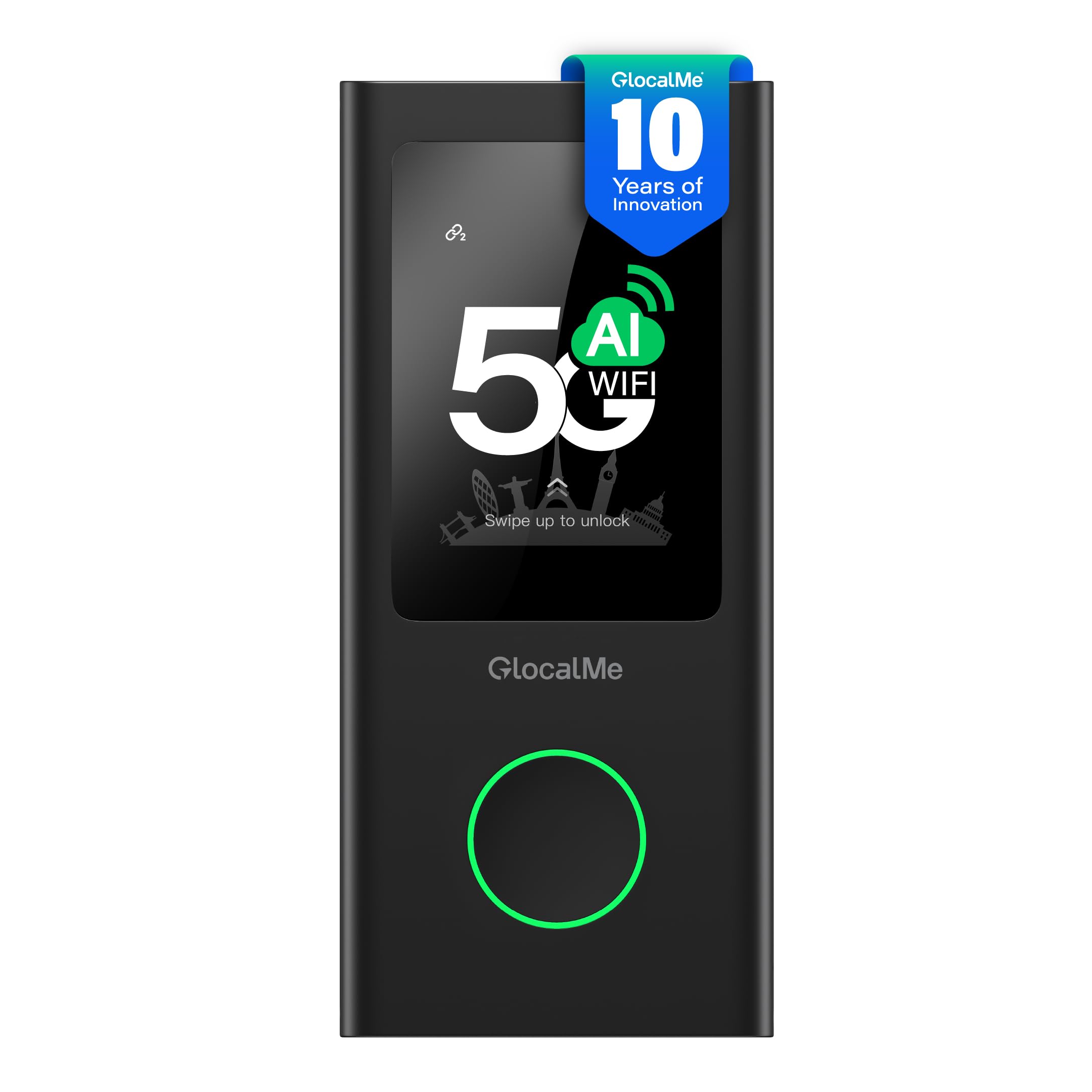
The global 5G flagship with CloudSIM tech and a 2.4-inch touch screen.
This is the top-shelf pick for frequent international travelers who demand speed. With speeds up to 2.5Gbps — cited as 15 times faster than 4G — it’s built for heavy streaming and large downloads while you’re parked at a scenic overlook or in a foreign city. It supports more than 90 commercialized 5G countries and over 390 operator networks.
The Numen Air uses GlocalMe’s patented CloudSIM technology, which needs no physical SIM card and intelligently selects the best network. It also supports a physical SIM slot if you prefer your own carrier. A 2.4-inch LCD touch screen gives you at-a-glance data usage, signal strength, and connected devices, and it doubles as a power bank for your phone.
Buyers report real-world speeds of 25-40Mbps indoors and 80-110Mbps outdoors, matching a phone’s 5G performance on Google-Fi. The battery runs about 6 hours, which is shorter than 4G rivals — you’ll want it plugged in on long drives. Setup requires the app, but boot time is a quick 7-10 seconds.
Global confidence: Owners found it works great in Japan and across the U.S., with fast boot times and a clear LED touchscreen.
Battery budget: At roughly 6 hours, this is a short-burst device — treat it as a mobile office, not an all-day lifeline.
Reach for this if: You need 5G global reach and don’t want to juggle local SIM cards.
Look elsewhere if: You need multi-day battery life and stick to budget 4G plans.
Understanding the Specs
5G vs 4G LTE
5G is the newest cellular standard, offering dramatically higher speeds and lower lag. For a vehicle hotspot, 5G is worth the premium if you stream 4K video, play online games, or run video calls from the road. 4G LTE is still perfectly capable for browsing, email, navigation, and most streaming — just slower on big downloads.
eSIM vs Physical SIM
An eSIM is a digital SIM built directly into the device, so you don’t need a physical card from a carrier. This is convenient for travel because the hotspot can automatically connect to local networks. A physical SIM gives you more control over which carrier you use, but requires you to source the card yourself.
FAQ
Do I need a SIM card for a vehicle hotspot?
Will a mobile hotspot work while my vehicle is moving?
How is 5G different from 4G for road trips?
Can I connect multiple devices to one hotspot?
Will an open up hotspot work with AT&T and T-Mobile?
Does the hotspot work outside the U.S.?
How long does the battery last on a road trip?
What does the display screen on a hotspot show?
Is a contract required for hotspot data?
Final Thoughts: The Verdict
For the majority of shoppers, the vehicle mobile hotspot winner is the JICICUXI 4G LTE Router because it balances a crowd-favorite 5.0-star rating with a budget-friendly price and 12-device capacity. If you want a no-SIM setup with free starter data, grab the STATELINKER S2. And for lightning-fast global 5G roaming, the GlocalMe Numen Air is the one to reach for.
How We Picked
We do not accept paid placement. Every pick is matched to a real buyer and a real use-case; we do not hands-on test units.
Sources & Methodology
Specifications: manufacturer listings and product documentation. Review insights: verified customer reviews, as of August 2026. Pricing: not shown on this page (it changes often); check the current price via the retailer link.
As an Amazon Associate, GoCarLife earns from qualifying purchases. This does not affect which products we feature.