
Our readers keep the lights on and the garage heater humming. As an Amazon Associate, I earn from qualifying purchases.
Specs are compiled from manufacturer listings and verified buyer reviews and can change over time — please confirm the key details on the product page before buying.
When your engine temperature sensor fails, you will not hear a bang. Instead, you will see a stuck cooling fan, a gauge that reads hot on a cold morning, or a check-engine light that sends you guessing. The right replacement restores accurate dash readings and calm driving, but only if the part matches your vehicle’s exact connector, thread, and resistance curve.
I’m Mo Maruf — the founder and writer behind GoCarLife. This guide is built by comparing the manufacturers’ published specifications and the patterns across verified customer reviews, so you get each pick’s real strengths and trade-offs instead of marketing spin.
Whether you drive a Chevy truck or a Toyota sedan, the best vehicle temperature sensor for your garage depends on matching the connector, thread, and resistance curve to your exact engine code.
Our Picks at a Glance


How To Choose The Best Vehicle Temperature Sensor
Your engine’s temperature sensor is a small thermistor — a resistor that changes its electrical resistance as heat rises. The engine computer reads that resistance to fire the cooling fans, move the dash gauge, and adjust the fuel mixture. Choose the wrong resistance curve and your gauge may read correctly while your fans never kick on, or vice versa.
Match the Connector and Thread First
Every manufacturer uses its own connector shape and thread pitch. A Delphi sensor built for a GM truck will not plug into a Toyota harness, and the reverse is just as true. Before you buy, confirm the exact part number your vehicle’s repair manual calls for, then verify the sensor’s listed thread diameter and connector style against what is in your engine bay.
Decide Between Aftermarket and Genuine OEM
Aftermarket brands like Beck/Arnley and Delphi offer solid performance at a friendlier price, and many are built to match the original equipment spec. Genuine factory parts from Toyota or GM carry a higher cost but guarantee the exact resistance curve and connector. For older vehicles with finicky gauges, the factory part often removes the guesswork entirely.
Quick Comparison
| Model | Best For | Material | Output Type | Accuracy | Amazon |
|---|---|---|---|---|---|
| ACDelco Gold 213-4663★ Best Overall | GM intake manifold swaps | Aluminum | Digital | High | Amazon |
| GM Genuine 213-4333Top Performer | GM trucks with fan issues | Ceramic/Polymer | Physical | Within GM OE specs | Amazon |
| Beck/Arnley 158-0629 | Budget-friendly coolant swaps | Stainless Steel | Digital | — | Amazon |
| ACDelco Gold G1852 | Classic GM gauges | Aluminum | Electrical signal | — | Amazon |
| Delphi TS10076 | GM trucks and SUVs | Metal, Plastic | Electrical signal | — | Amazon |
| Toyota Genuine 89422-33030 | Toyota economy cars | Stainless Steel | — | ±1.5% | Amazon |
| Toyota Genuine 89422-35010 | Toyota trucks and 4Runners | Brass | — | ±1.5% | Amazon |
In‑Depth Reviews
1. ACDelco Gold 213-4663 (88864354) Intake Manifold Temperature Sensor
Our pick — over 4.5★ from 550+ verified ratings; the strongest balance of quality and price.
The aluminum-bodied intake sensor that solves idling gremlins on GM V8s and LS swaps alike.
This sensor earns its spot at the top because it reads the intake air temperature with a digital output — a signal type that gives your engine computer clean, accurate data for fuel trimming. Buyers report it resolves rough-idle issues on a 1998 Chevy C1500 and a 95 Corvette, which makes sense: a wrong intake temp reading makes the computer guess the fuel mixture.
You can install this sensor without tools on many vehicles, and the flange mount (a flat rim that bolts it securely) holds it firmly in place. The 4.3 x 2.4 x 2.2-inch body feels solid, and owners mention, “Fit perfectly, all the metric read correct.” Owners also praise the value for money and the OEM-grade (original equipment manufacturer-level) quality, so you get reliable readings without the dealership price.
This is the pick for anyone working on GM trucks, Corvettes, or an LS swap who wants one sensor that handles both air temperature and drivability. The recurring theme in the feedback is simple: it works as intended, months later.
What wins people over
- Performance is the most-praised trait — over 20 owners single it out as solving real drivability problems
- Quality ranks second, with buyers calling it professional and well-made
- Many installs need zero tools, and the flange mount holds tight
Know before you buy
- It is an intake manifold sensor, not a coolant sensor — verify your engine reads intake air temp here
- Fitment is application-specific, so confirm it matches your GM model year
Reach for it if: you drive a GM truck or are mid-LS-swap and want a reliable intake air temperature reading that clears up idling and fuel trim.
The one caveat: double-check that your intake manifold actually uses this sensor’s flange and connector before ordering.
2. GM Genuine Parts 213-4333 (12608814) Engine Coolant Temperature Sensor
The factory-badged GM sensor with a lightning-fast response that tames roaring cooling fans.
When a 2018 Tahoe’s cooling fan howls at full speed ten minutes after shutdown and the gauge drops dead, this is the part owners reach for first. The GM Genuine badge means it is built to the original equipment spec, and its response time of 1 millisecond lets the engine computer react to heat changes almost instantly.
The ceramic/polymer construction and immersion mount position it directly in the coolant path, while the pre-applied Teflon coating on the threads means you skip the pipe tape. Feedback highlights a fit that is perfect for GMC Sierra and Chevy Silverado trucks, with one effective DIY trick: disconnect the negative battery terminal for 10-plus seconds to reset the fan logic after the swap.
Functionality is the single most-praised aspect in the review pool, and thread sealing earns its own positive mention. The trade-off is durability — a handful of customers note failures within weeks to a few months, so treat the ceramic body gently during install and torque it to spec, not to feel.
Built for the fix: this is the diagnosis-before-expensive-repairs part for GM trucks and SUVs with runaway fans or dead temperature gauges.
The honest catch: the ceramic/polymer shell is durable in service but intolerant of over-tightening, and a small share of units have failed early.
3. Beck/Arnley 158-0629 Engine Coolant Temperature Sensor
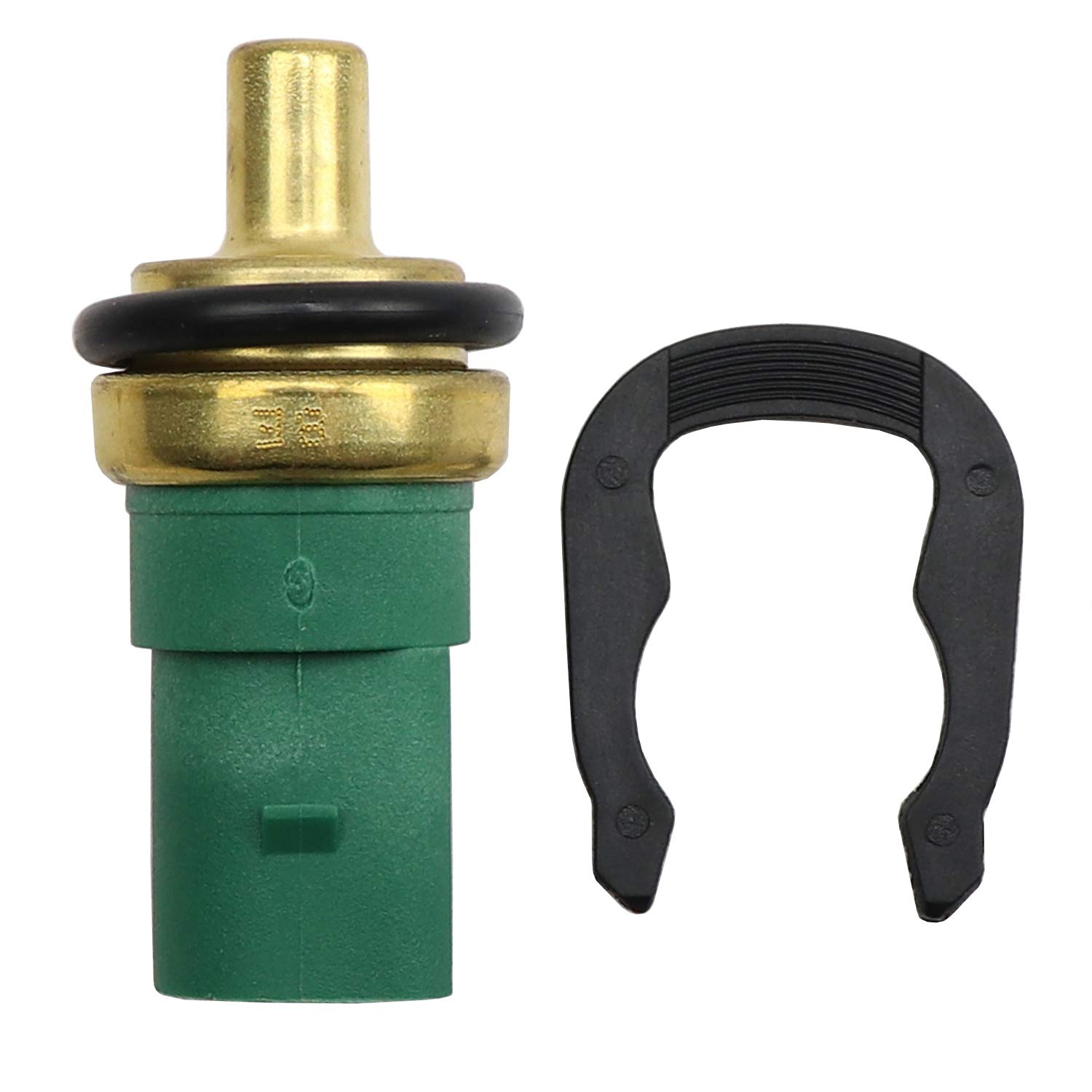
A featherlight stainless coolant sensor — 9.07 g — that swaps in without drama and reads true.
At just 9.07 grams, this is the lightest sensor in the lineup, and its stainless steel body is built to shrug off the harsh engine bay environment. The digital output feeds the ECU precise temperature data, and the corrosion-resistant terminals and coatings keep the connection clean over time.
The value pitch here is strong: it matches OE form, fit, and function at a friendlier price than a factory part, and it ships with an o-ring so you are not hunting for a gasket mid-job. Reviewers point out “Installation was easy and straight forward.” The classic advice from owners: pull the old rubber ring gasket out of the piping before you try to seat the new one, or the fit will fight you.
What wins people over is the combination of perfect fit and easy install, backed by helpful YouTube tutorials. The recurring gripe is the plastic retaining clip, which feels cheap compared to the OEM part and can turn brittle under repeated heat cycles. The main sensor body, though, works perfectly once fitted.
The strong points
- Stainless steel resists corrosion and engine heat
- Comes with an o-ring, saving a trip to the parts store
- Digital output delivers clean data to the ECU
The shortfalls
- The plastic retaining clip feels flimsy and can get brittle with heat
- A few shoppers say the clip blowing out of the flange under stress
Best for: the budget-minded DIYer replacing a coolant sensor on a daily driver who wants a reliable part without the factory markup.
Look elsewhere if: you want an all-metal build with a heavy-duty retaining clip — this one’s plastic clip is its weak spot.
4. ACDelco Gold G1852 (12334869) Engine Coolant Temperature Sensor

The aluminum sensor built for vintage GM iron, reading 100 to 220 degrees Fahrenheit for the dash gauge.
Classic car owners swear by this one. Its 0.840-inch thread diameter and electrical signal output make it the right match for older GM engines, and the temp range of 100 to 220 degrees Fahrenheit covers the operating band your dash gauge cares about. As buyers report, “Fantastic OEM part for my 76′ Chevy Truck V8 6.6.”
Functionality is the overwhelming winner in the feedback, with more than 40 owners praising how it restores accurate gauge readings on vehicles like the 1963 Corvette and Pontiac 301 V8. The clarity from owners is important: this sensor drives the gauge, not the dash warning light, so wire it to the right circuit. Quality ranks second among the praise, and value for money shows up as a consistent positive.
The honest trade-off is fitment. While it suits many GM engines, the 16 fit mentions split between perfect matches and misses — one owner found it too large for an intake manifold and returned it. Accuracy also earns mixed notes, so confirm your engine’s expected temperature range before you commit.
Built for the classics: this is the gauge-accurate coolant sensor for vintage GM trucks, Corvettes, and Pontiacs that need correct resistance values, not generic substitutes.
The fitment warning: verify your intake manifold’s thread size first, since not every GM engine accepts this sensor’s 0.840-inch thread.
5. Delphi TS10076 Coolant Temperature Sensor

A US-made Delphi that reads from -40°F to 257°F and quiets stubborn GM cooling fans.
Built in the United States from metal and plastic, this Delphi sensor covers a wide operating band from -40°F to +257°F (-40°C to +125°C), which means it handles both arctic cold starts and summer traffic jams. Its flange mount and electrical signal output plug straight into GM trucks and SUVs.
Functionality leads the positive mentions by a wide margin, with quality close behind. The mixed note is value for money, and durability earns a negative lean — a minority of reviewers point out early failures, so it is worth testing your gauge and fans right after install. For a 2014 GMC Sierra or 2016 Chevy Suburban, this is a direct, inexpensive fix.
The fan tamer: this is the go-to for GM owners chasing runaway cooling fans or a dead temperature gauge without paying dealer prices.
A fair warning: a small share of units have reported durability issues, so verify function immediately after installation.
6. TOYOTA Genuine (89422-33030) Water Temperature Sensor

A Japan-made Toyota factory sensor with ±1.5% accuracy that clears engine lights on Corollas and Prius Cs.
For Toyota owners, the genuine factory sensor guarantees the exact resistance curve and connector fit. This factory sensor, made in Japan from stainless steel, delivers a measurement accuracy of ±1.5% — the kind of precision that keeps your engine computer from guessing. Owners confirm it works great on 2012 Corollas and a 2013 Prius C, with one noting it “took off engine light.”
Functionality is the dominant praise in the feedback, and easy installation ranks second. The authenticity angle matters to buyers, who appreciate knowing they are holding a legit Toyota part rather than a clone. One owner even returned it prematurely, only to discover the real issue was the ground wiring to the ECM, not the sensor — proof of how reliable this part is.
This is the pick for Toyota owners who want a guaranteed factory-correct fit. The stainless construction resists corrosion, and the ±1.5% accuracy keeps fuel trim and fan logic honest. skip it if you drive a GM or Ford, since this connector and thread are Toyota-specific.
For the Toyota purist: this is the factory-correct water temp sensor for Corollas, Prius Cs, and similar Toyota platforms that demand genuine parts.
Who it is not for: anyone not driving a Toyota — this connector will not fit GM, Ford, or Honda harnesses.
7. Genuine Toyota 89422-35010 Water Temperature Sensor

The brass-bodied Toyota factory sensor that fixed a 10-second crank on a 1997 4Runner.
This one earns legend status among Toyota truck owners. The brass construction and ±1.5% measurement accuracy make it a drop-in factory replacement, and the concrete win is a 1997 4Runner that went from a 10-second intermittent crank to starting perfectly every time. The root cause was wrong temperature readings flooding the cylinders — a textbook failing-sensor symptom.
Functionality is the clear leader in the feedback, with fit taking second place. Owners praise it as a legit OEM part, and one found the old sensor literally crumbled during removal while this one slotted in and killed the check-engine light. The value for money earns consistent positive notes, especially versus Chinese-market alternatives.
The recurring negative is missing accessories: this sensor ships without the crush washer, so grab Toyota part number 90430-12005 before you start. On a 5VZ-FE engine, you may need to partially remove the fuel line via two banjo bolts and replace four washers — a job for someone comfortable with basic wrenching.
Reach for it if: you own a Toyota 4Runner, Tacoma, or other truck with a long-crank or check-engine issue and want the factory-fitted brass sensor.
Plan ahead: it does not include the crush washer, and a 5VZ-FE install may mean loosening the fuel line — budget time for both.
Understanding the Specs
Output Type and Resistance Curve
The output type — digital, electrical signal, or physical — tells you how the sensor talks to your engine computer. Digital and electrical-signal sensors send a clean voltage the ECU reads for fuel trim and fan control. The resistance curve matters even more: a sensor with the wrong curve makes your gauge read normally while the fans never trigger. Match the part number to your engine’s spec, not the shape of the old sensor.
Measurement Accuracy and Range
Accuracy, stated as a percentage like ±1.5%, tells you how close the sensor’s reading is to the true coolant temperature. The operating range — for example -40°F to +257°F — shows the temperature band the sensor can measure. A wider range means the sensor handles both extreme cold starts and hot summer idling without losing fidelity. Precision matters most for vehicles that use the sensor to adjust fuel mixture, since a sloppy reading wastes gas.
FAQ
Will a coolant temperature sensor fit my specific truck model?
What is the difference between a coolant temperature sensor and an intake manifold temperature sensor?
Why does my cooling fan stay on after I shut off the engine?
How long does a vehicle temperature sensor last?
Is an OEM sensor worth the extra cost over an aftermarket one?
Why does my temperature gauge read hot but the engine is not overheating?
Can a bad temperature sensor cause a long crank or check-engine light?
What tools do I need to replace a temperature sensor?
Final Thoughts: The Verdict
For most buyers, the vehicle temperature sensor winner is the ACDelco Gold 213-4663 because it pairs an aluminum build with a digital output that clears up drivability issues across GM trucks and LS swaps. If your GM truck’s fan is running wild, grab the GM Genuine 213-4333 with its 1 ms response. And for Toyota owners who refuse to gamble on fitment, the Genuine Toyota 89422-35010 brass sensor is the factory-correct choice — just remember to order the crush washer separately.
How We Picked
We do not accept paid placement. Every pick is matched to a real buyer and a real use-case; we do not hands-on test units.
Sources & Methodology
Specifications: manufacturer listings and product documentation. Review insights: verified customer reviews, as of August 2026. Pricing: not shown on this page (it changes often); check the current price via the retailer link.
As an Amazon Associate, GoCarLife earns from qualifying purchases. This does not affect which products we feature.