
Our readers keep the lights on and the garage heater humming. As an Amazon Associate, I earn from qualifying purchases.
Specs are compiled from manufacturer listings and verified buyer reviews and can change over time — please confirm the key details on the product page before buying.
A leaking windshield or rear window turns every rainstorm into a guessing game about where the water will pool next. The right sealant fixes that for good, but the wrong one leaves you with a sticky mess that never cures. This guide sorts the flowable liquids, the butyl ropes, and the curing urethanes so you know exactly which tube or roll matches your specific leak, your skill level, and how permanent you need the fix to be.
I’m Mo Maruf — the founder and writer behind GoCarLife. This guide is built by comparing the manufacturers’ published specifications and the patterns across verified customer reviews, so you get each pick’s real strengths and trade-offs instead of marketing spin.
Whether you own a classic car, a daily driver, or an RV, choosing the right vehicle window sealant depends on matching the material to the job, and this guide walks you through exactly why.
Our Picks at a Glance


How To Choose The Best Vehicle Window Sealant
Before you buy, ask yourself one question: are you patching a leak in an existing seal, or installing a piece of glass from scratch? For seeping cracks, a flowable liquid (a thin, runny sealant that seeps into gaps) works best. For holding a windshield in place, you need a structural adhesive (a thick, strong glue that bonds glass to the frame). Get this decision right, and the rest is easy.
Understand the Three Main Material Types
Butyl rubber stays soft and tacky for its whole life, which makes it perfect for sealing behind trim where it will be compressed. Silicone cures into a flexible rubber that resists weather but won’t hold heavy structural loads. Polyurethane is the automotive industry standard for bonding glass to the frame because it cures into a rigid, load-bearing grip.
Consider Curing Time and Cleanup
A non-curing butyl sealant can be water-tested immediately, but it will never harden and can collect dirt. A curing silicone or urethane takes hours to set, during which you must hold the glass in place. Cleanup also varies wildly — some products wipe away with isopropyl alcohol when fresh, while others need a dedicated adhesive remover.
Quick Comparison
| Model | Best For | Material | Size | Cure Behavior | Amazon |
|---|---|---|---|---|---|
| CRL Windshield Sealant★ Best Overall | Classic car gaskets | Butyl | 16 oz | Never cures | Amazon |
| Butyl Rubber Tape RopeBudget Champion | Door water shields | Butyl Rubber | 14.8 Ft | Never cures | Amazon |
| Permatex Flowable SiliconeBest for Cracks | Crack filling | Silicone | 1.5 oz (2-Pack) | Cures fast | Amazon |
| DAP Silicone Rubber | Trim & hatches | Silicone | 2.8 oz | 12 hr rain ready | Amazon |
| STAR BRITE Marine Silicone | UV resistance | Silicone | 10.1 Oz | 24 hr full cure | Amazon |
| Permatex RTV Silicone | Trim attachment | Silicone | 11 oz | crisp cure | Amazon |
| WELLUCK Black Silicone | Multi-surface sealing | Silicone | 10.2 FL.OZ (4-Pack) | 48 hr full cure | Amazon |
| Berkland Urethane Adhesive | Windshield replacement | Polyurethane | 2-Pack | Handling strength in hours | Amazon |
| FORTIVO Urethane Adhesive | Vertical glass channels | Polyurethane | 310ml (2-Pack) | Quick curing | Amazon |
In‑Depth Reviews
1. C.R. Laurence CRL7708 Windshield and Body Sealant
Our pick — over 4.5★ from 300+ verified ratings; the strongest balance of quality and price.
The shop-grade butyl that flows into cracks and never lets water back in.
The standout quality here is how well it flows into tight gaps — the 11 fluid ounce cartridge feeds through a standard caulk gun and sinks deep into cracks that other sealants can’t reach. This is the crowd favorite, with 4.7 stars across 300+ owners., and the functionality is what wins people over. Owners describe sealing a leaking 2003 Ford Superduty windshield after a glass shop refused to honor the warranty, and the water stayed out through every rain after.
The trade-off is built into its name: this sealant never cures. It stays tacky and gummy for life, which is exactly what you want behind a molding or gasket where it gets compressed, but it will collect dirt if left exposed. Cleanup needs WD-40 or Goo Gone rather than soap and water, and it’s not an adhesive or a seam sealer — it purely seals. Its 250 psi tensile strength (the force it resists before tearing) signals flexible sealing duty, not structural bonding..
You can water-test it immediately after applying—no waiting for a cure. That instant leak-proof check, plus a 16-ounce cartridge that handles multiple jobs, makes it the most forgiving choice for a first-time DIYer.
Why owners love it
- Flows deep into cracks with a caulk gun
- Water-testable right after application
- Stays flexible behind trim and gaskets
The sticky reality
- Never dries hard — stays tacky forever
- Messy to apply, needs tape and gloves
- Cleanup requires WD-40 or Goo Gone
Reach for it if: you’re sealing behind a gasket or molding on an older vehicle and want a leak-proof fix you can verify in minutes.
Look elsewhere if: you need a hard-curing structural adhesive to actually hold glass in place — this one only seals.
2. Butyl Rubber Tape Headlight Glue Sealant Rope
A 14.8-foot rope of butyl that makes resealing door panels and tail lights a roll-on job.
If you’re resealing an interior door water shield or a tail light housing, this tape-shaped rope is the most simple to use approach—you just press it around the pinch weld (the metal seam where the door panels meet) and it forms a complete contact. One owner resealed a 2021 F250 rear door water shield and confirmed the water now drains properly through the door holes instead of running along the cable. Owners praise the sealing performance most, followed closely by the build quality.
The critical catch is temperature. This butyl acts like gum — it needs warmth to stick. Buyers report that in 30-40°F weather, they warmed the rope in an oven and used a heat gun to get it to seal flawlessly overnight. At 100°F or hotter it becomes too soft, so timing your install for mild weather matters. It’s a non-drying, non-hardening synthetic rubber, meaning it stays permanently flexible and waterproof but will never set into a rigid bond.
At 4.6 stars with 250+ ratings, it’s the budget hero for resealing 20-year-old headlight lenses.. Owners who baked the applied rope at 200°F for 10 minutes before pressing the lens reported zero leaks after rainstorms — performance that matches brand-name strips for a fraction of the price.
Press-and-seal simplicity: no caulk gun, no nozzle — peel the release paper, press it into place, and it sticks. Wear gloves though, because the residue will cling to your hands.
Temperature tantrum: this rope demands warmth to stick, so install it on a mild day or plan to warm it up — cold installs simply fail.
3. Permatex 81730 Flowable Silicone Windshield Glass Sealer
The thin liquid that wicks into hairline cracks and seals them from the outside.
When your windshield seal has a small gap that water sneaks through, a thick paste won’t reach it—you need something that flows. This Permatex sealer lives up to its “flowable” name, with owners reporting it “got into the cracks i needed” and describing it as not too thick and not too thin, making it easy to apply around a glass seal from the exterior. It dries fairly quickly, and owners sealed leaking back glass with no more water making it into the trunk.
The 1.5-ounce tubes are small by design, but you get a 2-pack, and the leakage reduction is what earns the most praise. It’s a curing silicone, so unlike butyl it sets into a solid, non-tacky seal that won’t collect dirt. The mixed feedback centers on viscosity — some owners found it less flowable than expected, so it pays to warm the tube slightly in cool weather to thin it out.
At just 1.5 ounces per tube versus the 16-ounce cartridge of the CRL above, this is a precision tool rather than a bulk solution. It’s perfect for a quick, clean fix on a single window crack, with the second tube stashed in the glove box for the next leak.
Wick-it-in design: the low viscosity lets it seep into gaps that thicker pastes simply bridge over, making it the right pick for an established leak rather than a fresh install.
Not a gap-filler: if your leak is a wide opening or a missing chunk of seal, this thin liquid will run right through — it needs a crack to grip.
4. DAP 00694 Silicone Rubber Auto/Marine Sealant

A 100-percent silicone that bonds glass to metal and shrugs off rain in 12 hours.
This DAP sealant earns its versatility badge by working on glass, ceramic, porcelain, metal, and most plastics — making it the one tube that handles windshields, headlights, hatches, and even trim attachment. The effectiveness is the most-praised aspect, backed by a 4.6-star rating from over 600 owners.. It’s 100% waterproof and rain-ready in just 12 hours, so you can apply it in the evening and drive through weather the next morning.
The real surprise is its flexibility — the 100% silicone base provides a bond that won’t crack or shrink, which is critical for glass that flexes with the vehicle body. Owners have used it to create a watertight seal in a pickup truck bed liner and found it holds strong even in demanding conditions. It also meets ASTM C920, Class 25, a performance standard for handling significant joint movement without failing..
The honest caveat: this is not paintable, so you need to paint any surfaces before applying it. And at 2.8 ounces it’s a small tube, designed for targeted repairs rather than a full windshield bed. But if you want one sealant that moves between your car and your boat without complaint, this is it.
One tube, many jobs
- Bonds across glass, metal, and most plastics
- Rain-ready in 12 hours for fast turnaround
- Flexible bond resists cracking and shrinking
Know before you apply
- Not paintable — paint surfaces first
- Compact 2.8 oz tube limits coverage
- Durability is a mixed note for heavy structural use
Pick it up if: you juggle multiple projects — one tube that moves from car glass to a boat hatch to a home window.
Move on if: you’re doing a full windshield replacement that needs a structural, load-bearing bond.
5. STAR BRITE Marine Silicone Sealant
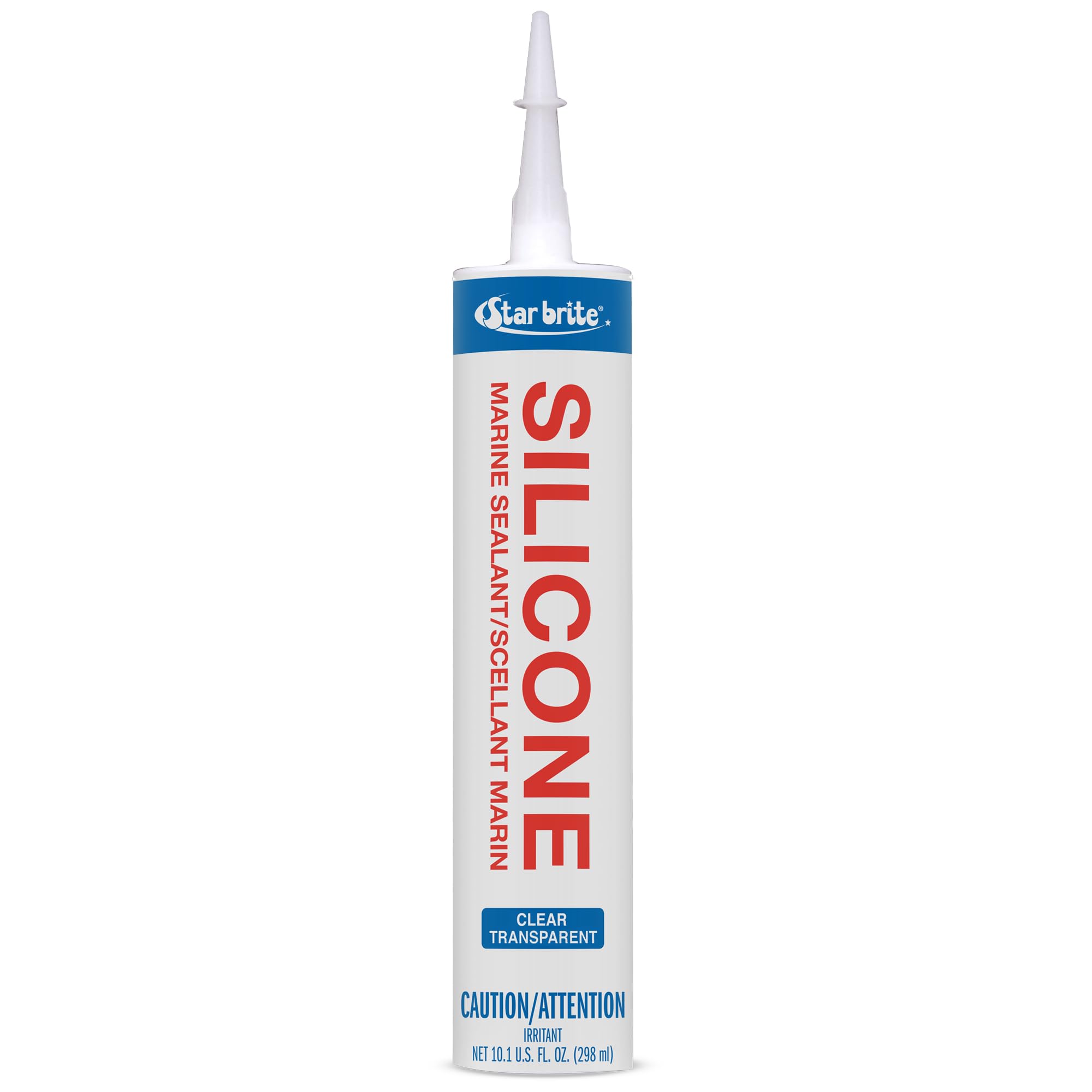
Marine-grade UV armor for glass that holds up where the sun beats down.
If your vehicle spends its life in direct sunlight, this is the sealant that won’t yellow or break down. Star Brite positions it as a marine-grade product, meaning it’s built to survive constant UV exposure, weathering, chemicals, and solvents — the harshest environment a sealant can face. It stays flexible from -60°F to +450°F, covering everything from a frozen winter windshield to an engine bay.. The sealing performance is the top-praised aspect, and glass owners mention it “outshines them all” for clarity, strength, and UV protection.
The working window is generous — it skins over in 10 minutes (forms a surface layer) and cures completely in 24 hours, so you have time to tool it into cracks and smooth it before it sets. The 10.1-ounce tube is a serious amount of material for the money, and it’s made in the USA. One owner used it to stop kitchen faucet leaks on a plumber’s recommendation, which speaks to how well it adheres and seals across very different materials.
The one recurring complaint is that it can dry slightly sticky on the surface, attracting dust that turns the clear seal gray after a few days. It’s not a dealbreaker — the waterproof seal holds — but if a perfectly clear, invisible finish matters to you, budget time to wipe away excess before it cures.
Built for the elements: the -60°F to +450°F range and UV resistance make it the strongest choice for RVs, boats, and vehicles parked under the sun all year.
Watch for sticky residue: a thin surface layer can stay tacky and collect dust, so tool it smooth and wipe off the excess during the first 10 minutes.
6. Permatex 80855 Clear RTV Silicone Adhesive Sealant

An 11-ounce RTV that bonds trim tight and dries crisp.
When a seal needs to be both invisible and strong, this clear RTV (room-temperature vulcanizing) silicone is the answer. It cures into a completely transparent rubber that blends into glass, making it ideal for attaching trim or sealing a joint where an ugly black bead would stand out. The effectiveness is the most-praised aspect, with owners using it to glue a seat cushion back to its base on a Honda Pioneer side-by-side after years of use had separated them — proof of its grip.
The 11-ounce cartridge is substantial and works in a standard caulk gun, which beats squeezing small tubes for a larger job. It dries crisp, stays tacky for about 1-2 hours while you position your parts, then cures into a durable, flexible bond. One owner applied it in 40-degree weather to bond a door seal to concrete and confirmed it still vulcanized and held — meaning it works even when the temperature isn’t ideal.
Owners rate the durability highly, noting it holds up where other adhesives fail. It’s compatible with glass, metal, plastic, and vinyl, giving it broad reach across a vehicle. The only mild note is that a full cure takes patience — it’s not a fast-set product, so you’ll want to clamp or hold whatever you’re bonding for a few hours.
Invisible strength: dries to a clear, durable rubber that disappears against glass while holding trim and seals firmly in place.
Requires patience: stays tacky for 1-2 hours and needs time to fully cure, so plan to hold or clamp your parts in position.
7. WELLUCK Black Silicone Caulk
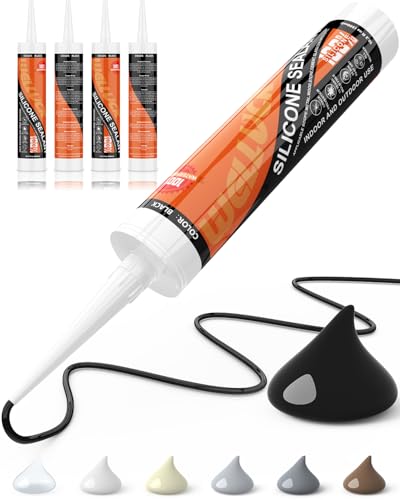
Four 10.2-ounce tubes of black silicone that never shrink, crack, or quit.
For the DIYer who wants sealant on hand for every project, this 4-pack of 10.2-ounce tubes delivers serious quantity at a value price. The quality is the most-praised aspect by a wide margin, with hundreds of owners confirming it holds up across RV windows, kitchen sinks, and automotive applications. It’s 100% waterproof silicone with no fillers, and The manufacturer rates it to resist heat, corrosion, leaks, and acids for 15 years..
The temperature flexibility is the headline spec — It stays flexible from -122°F to +322°F without shrinking or cracking, even under constant rain or UV.. It skins over in 30 minutes (forms a surface layer) and fully cures in 48 hours, giving you a clear timeline for when the bond reaches full strength. One owner found it outperformed both PL3X construction adhesive and Gorilla heavy-duty adhesive when trying to bond EPDM rubber liner to concrete — two products that failed where this silicone succeeded.
The honest gripe is the nozzle. Owners note the included nozzle quality is the weakest link, with some finding it clogs or struggles to deliver a smooth bead. It’s a minor fix — swap in a better nozzle tip — but it’s worth knowing before you squeeze. Ease of use also gets mixed feedback, so a steady hand and a caulking gun will make the job much cleaner.
Why four tubes win
- Huge 4-pack value covers multiple projects
- Extreme temperature range from -122°F to +322°F
- Won’t shrink, crack, or develop black spots
What to watch
- Nozzle quality is the recurring complaint
- Full cure takes 48 hours to reach maximum strength
- Adhesion can be inconsistent on some surfaces
Stock up if: you have an RV, a boat, and a house — this 4-pack covers all of them with a sealant that survives extreme weather.
Limit expectations if: you need a single fast-curing tube for one quick job — the 48-hour cure and finicky nozzle favor a planned project over an emergency patch.
8. Berkland Polyurethane Windshield Adhesive

The professional-strength urethane that bonds a full windshield and holds through every vibration.
When a windshield needs to be structurally held in place, silicone and butyl aren’t enough — you need polyurethane, the same material professionals use for glass replacement. This Berkland 2-pack delivers OEM-quality bonding strength with a formula that reaches handling strength in hours, and the adhesion is the most-praised aspect by far. One owner fixed a leaking RV windshield on a RAV4 after a professional reseal had failed, confirming the leak was cured. Another replaced a Jeep Commander’s rear quarter glass themselves, using just one cartridge and reporting a fast set with easy application.
The 2-pack is smart thinking — one cartridge handles a full windshield, and the second rides along as a spare for future jobs or a second vehicle. It works with any standard caulking gun and includes nitrile gloves, which you’ll definitely want. The cured seal stays flexible without shrinking or cracking, which is critical for maintaining a watertight bond as the vehicle flexes over bumps and temperature swings. It bonds glass to metal, fiberglass, and painted surfaces.
The honest caution: this stuff is slow to set and very messy. One owner notes it took a full 24 hours to set even in 90-degree heat, so you must support the glass so it cannot move during that window. It’s also greasy and migrates, needing Goo Gone or alcohol for cleanup, and it “does not like to come off skin” — hence the included gloves. This is a job for a careful DIYer who can leave the vehicle stationary overnight.
Bond it and forget it: this polyurethane cures into a permanent, flexible grip that holds glass through vibration, temperature swings, and weather — the closest thing to a shop-grade install at home.
Commit to the wait: with a 24-hour set time in warm weather and messy, greasy application, this demands a full day of patience and careful glass support.
9. FORTIVO Polyurethane Windshield Adhesive
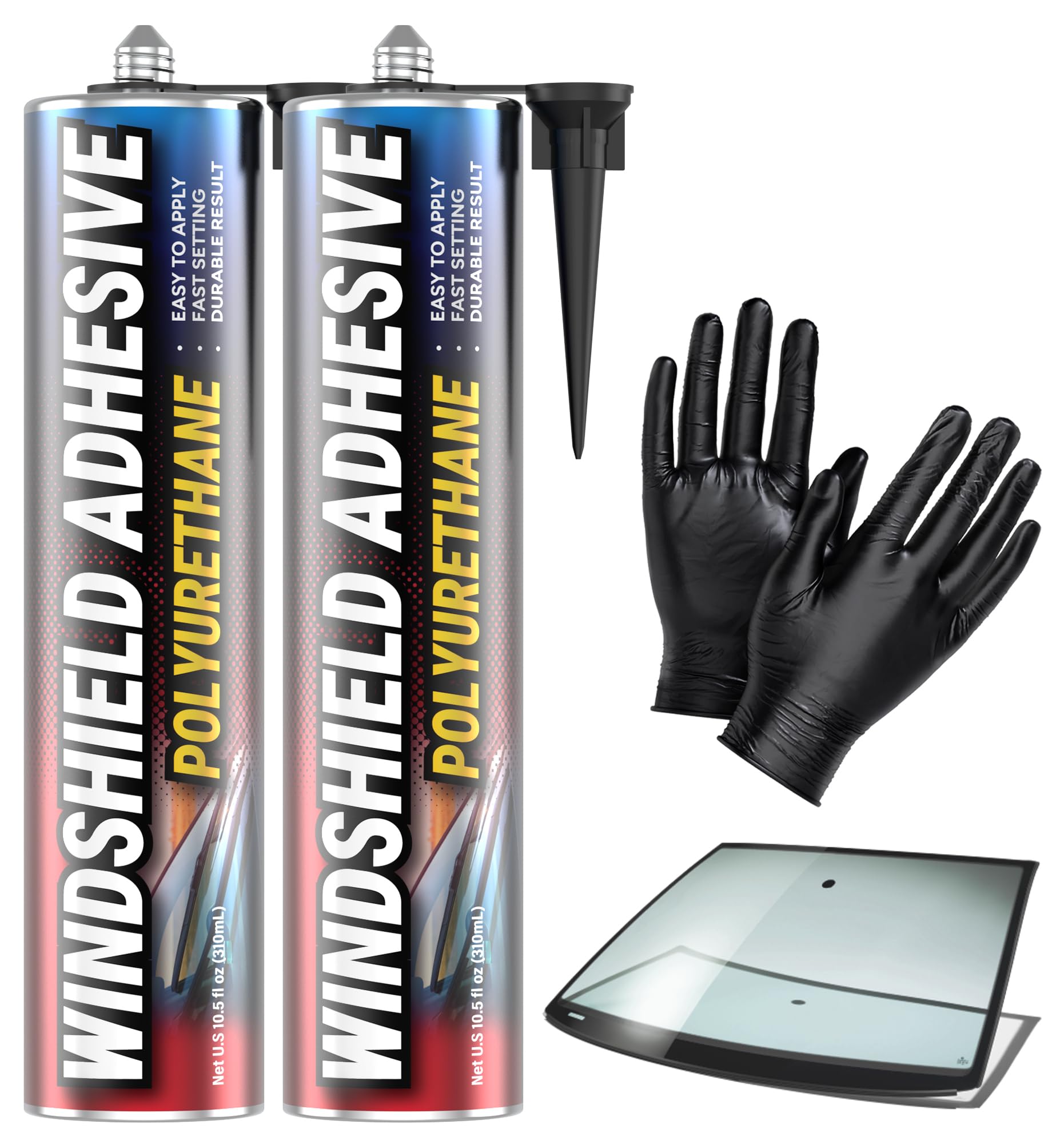
A non-sagging urethane that holds glass in vertical channels without running down the door.
Working on vertical glass — like the window channels of a classic car door — is where most sealants fail by dripping or running before they cure. This FORTIVO urethane is specifically designed with non-sagging properties for vertical and overhead application, meaning it stays where you put it. The functionality is the most-praised aspect, and owners confirm it holds glass in window channels better than the old tape method, with windows rolling up and down smoothly after a week of curing. At 4.7 stars, it holds the highest rating in this lineup.
It comes in a 310ml cartridge that works with any standard caulking gun, and no primer is needed — clean the surface and apply. The 2-pack includes gloves and an applicator tip, so everything you need arrives in one box. The formula is designed to absorb impacts and vibrations, keeping glass secure, crack-free, and leak-proof even in tough conditions and across both high and low temperatures. Owners describe it as working just as well as more expensive brands.
The one note for planning: it’s quick-curing but not instant, so you’ll still want to hold or tape the glass in position for a day while it reaches full strength. One owner left windows rolled up for a week to ensure a complete cure and reported great results. It bonds glass edges, backlights, and sidelights across cars, trucks, and RVs.
Gravity-defying grip: the non-sagging formula is the clear winner for vertical glass channels and overhead work where other adhesives drip and run.
Plan a full day: though quick-curing, it still needs overnight support for the glass to reach its permanent, vibration-absorbing bond.
Understanding the Specs
Butyl vs. Silicone vs. Urethane
The material is the single most important decision. Butyl stays soft and tacky forever, making it perfect for sealing behind trim where it gets compressed — but it never hardens. Silicone cures into a flexible, weather-resistant rubber that won’t hold heavy loads but resists UV and cracking. Urethane cures into a rigid, load-bearing bond and is the professional standard for holding glass in place. Match the material to whether you’re sealing a gap or bonding a structure.
Curing Time and Workability
Curing behavior determines how long you must wait before the seal is watertight. Non-curing butyl can be water-tested immediately but stays tacky. Silicones range from 12 hours to 48 hours for full cure, with some skinning over in as little as 10 minutes. Urethanes reach handling strength in hours but can take a full 24 hours to set even in warm weather. For vertical or overhead application, look for non-sagging formulas that won’t drip before they cure.
FAQ
What is the difference between butyl tape and flowable silicone for a vehicle window sealant?
How long does a vehicle window sealant take to cure before I can drive?
Can a vehicle window sealant be applied in cold weather?
Is a polyurethane windshield sealant better than a silicone one?
Will a non-curing butyl sealant collect dirt over time?
How do I remove excess sealant from glass or paint after application?
Can I use a home bathroom silicone caulk on my car window?
What is the best way to apply a windshield sealant for a clean finish?
Will a vehicle window sealant stop a leak if a professional reseal already failed?
How much sealant do I need for a full windshield replacement?
Final Thoughts: The Verdict
If you want one dependable pick, the vehicle window sealant winner is the C.R. Laurence CRL7708 because it flows deep into cracks, lets you water-test immediately, and stays flexible behind gaskets — the most forgiving all-rounder. If you want a curing silicone that dries clear and invisible, grab the Permatex 80855. And for a full windshield replacement that needs a structural bond, the Berkland Polyurethane Adhesive is the one to reach for.
How We Picked
We do not accept paid placement. Every pick is matched to a real buyer and a real use-case; we do not hands-on test units.
Sources & Methodology
Specifications: manufacturer listings and product documentation. Review insights: verified customer reviews, as of August 2026. Pricing: not shown on this page (it changes often); check the current price via the retailer link.
As an Amazon Associate, GoCarLife earns from qualifying purchases. This does not affect which products we feature.