
Our readers keep the lights on and the garage heater humming. As an Amazon Associate, I earn from qualifying purchases.
Specs are compiled from manufacturer listings and verified buyer reviews and can change over time — please confirm the key details on the product page before buying.
Restoring a classic car interior usually stalls at one question: which fabric actually holds up to sun, wear, and the occasional spill without looking like a costume? The real battle is matching the right material weight and weave to the job — a stiffer upholstery-grade textile for door panels and seats, a softer cotton for a nostalgic quilt, or a padded vinyl for a headliner you can actually press back into place. This guide sorts those choices by the work each fabric is built to do, so the yard you order becomes the upgrade you finish.
I’m Mo Maruf — the founder and writer behind GoCarLife. This guide is built by comparing the manufacturers’ published specifications and the patterns across verified customer reviews, so you get each pick’s real strengths and trade-offs instead of marketing spin.
These are the best Vintage Car Fabric choices ranked by durability, pattern, and real owner results for quilts, bench seats, and headliners.
Our Picks at a Glance

How To Choose The Best Vintage Car Fabric
Before you order yards of any print, decide where the fabric will live. A fabric that is perfect for a throw pillow will sag and wear thin on a car seat, while a stiff upholstery textile is miserable to hand-stitch into a quilt. Matching the material’s weight and weave to the project is the single biggest decision you will make.
Know Your Project First
Quilting and crafts want a soft, easy-to-sew cotton that drapes and takes a needle without fighting you. Seats, door panels, and headliners want a heavier, stiffer, often UV-treated polyester that shrugs off sunlight and friction. A quilting cotton that drapes for crafts will sag on a seat, while a stiff upholstery polyester fights a sewing needle.
Check The Width, Not Just The Yard
Fabric width changes how much coverage you actually get. A 44-inch-wide cotton gives you a 36-inch square per yard, while a 58- or 60-inch-wide upholstery material gives a much larger piece. For a headliner or a bench seat, the wider bolt means fewer yards to buy and fewer seams to hide.
Match The Backing To The Surface
Flat cotton and polyester sit flush and are easy to glue or sew, but they transmit every bump and lump underneath. A foam-backed vinyl adds a soft, padded layer that smooths over imperfections and feels plush to the touch — a real advantage on a metal roof panel or a worn seat frame.
Quick Comparison
| Model | Best For | Fabric Type | Width | Weight | Amazon |
|---|---|---|---|---|---|
| Timeless Treasures Route 66★ Best Overall | Quilts & Crafts | 100% Cotton | 44 inches | 8 ounces | Amazon |
| Vintage Trucks Packed TrucksBest Print | Quilting & Bags | 100% Cotton | 44 inches | 5.28 ounces | Amazon |
| Ambesonne Vintage Car | Chair Covers & Pillows | 100% Polyester | 58 inches | Medium weight | Amazon |
| Houndstooth Headliner Fabric | Headliners & Door Panels | 100% Polyester | 60 inches | 11 oz per yard | Amazon |
| Quilted Foam Vinyl Fabric | Headliners & Headboards | Faux Leather & Foam | 59 inches | 0.23″ foam backing | Amazon |
In‑Depth Reviews
1. Timeless Treasures Route 66 Natural, Quilting Fabric by the Yard
Our pick — over 4.5★ from 150+ verified ratings; the strongest balance of quality and price.
The 100% cotton pick that sews like a dream for quilts and craft projects.
The crowd favorite here — 4.7 stars across 179 ratings — is a natural-toned cotton with the warmth of a Route 66 road trip stitched into every square inch. Cut to order at 44 inches wide, so a single yard gives you a 44 x 36 inch piece and three yards come as one continuous 44 x 108 inch length, which is exactly what you want for a quilt backing that runs the full width without a seam.
At 8 ounces per cut, this is the heaviest cotton in this lineup — noticeably denser than the 5.28-ounce truck print below, which means it drapes with structure rather than flimsy translucency. It is machine washable cold and tumble dry low, practical details for a piece that will live on a lap or a bed. Buyers report the quality as simply “high quality fabric,” and one owner captured the mood best: “I can’t wait to start working on my vintage car quilt and using this fabric as the background.”
This is not an upholstery material — it has no stretch, no foam, and no UV treatment, so it is not the right call for a seat that takes daily sun and friction. Keep it for quilts, wall art, tote bags, and decor where softness and print clarity matter more than abrasion resistance.
Why Quilters Reach For It
- 100% cotton sews and presses without fighting your needle
- Heftier 8-ounce weight drapes well for backing panels
- Machine wash cold and tumble dry low for easy care
Where It Stops Short
- No stretch or foam, so it is not built for seat upholstery
- 44-inch width means more yards for wide panels
Reach for it if: your project is a quilt, cushion cover, or craft piece where a soft natural cotton background shines.
Look elsewhere if: you are covering seats or panels that need a stiff, abrasion-resistant upholstery weave.
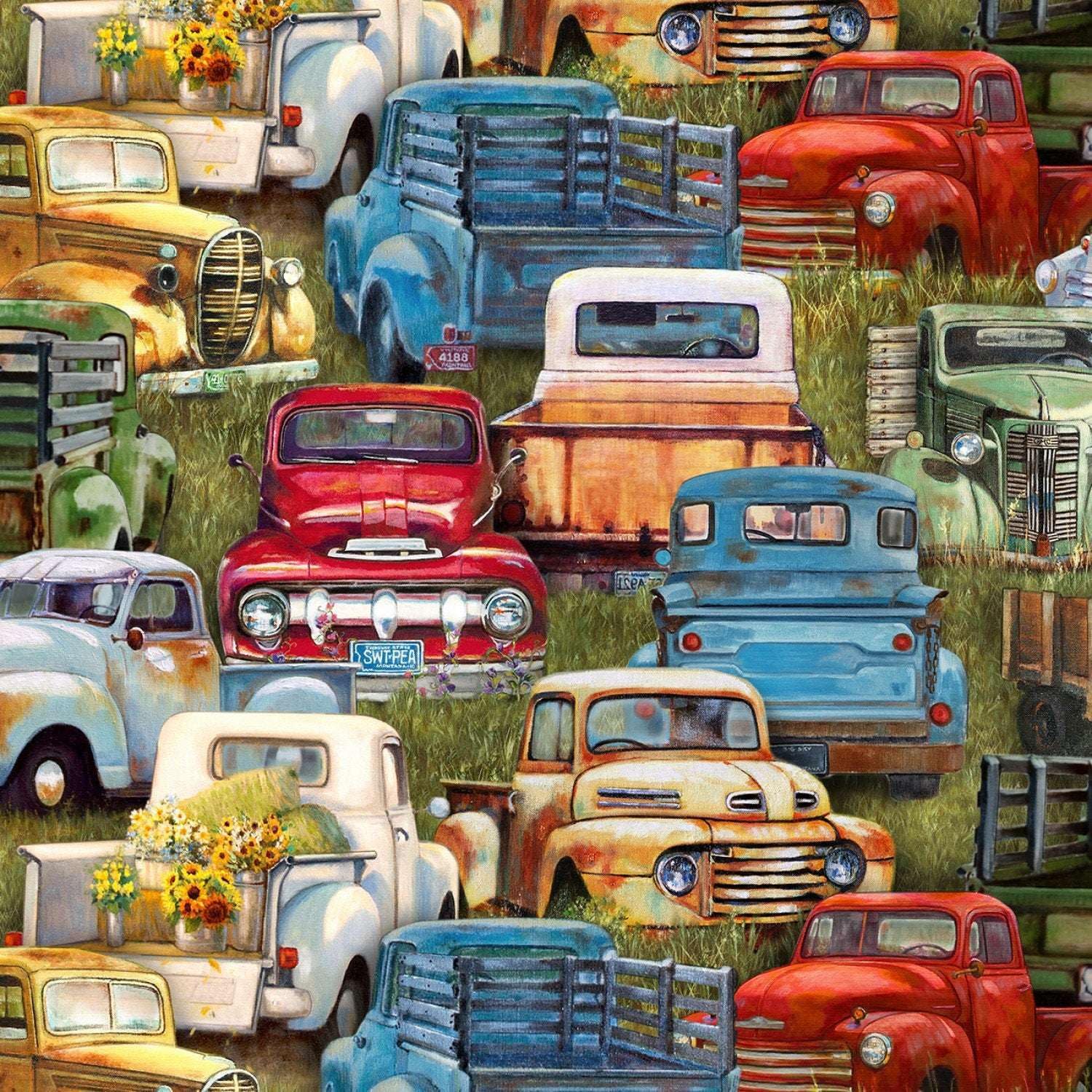
2. Vintage Trucks Packed Trucks Green, Fabric by The Yard
A feather-light cotton truck print that makes bags, stockings, and quilts pop.
Designed by Wendy Marquis for Elizabeth’s Studio, this green truck print is the lightest fabric on this list at just 5.28 ounces per yard — a good thing when you want a soft hand that drapes easily into quilts, pillow covers, and bed skirts. It is 100% cotton and machine washable with a low tumble dry, matching the easy-care routine of the Route 66 pick above.
What wins people over is the fabric quality, and the print does the heavy lifting: the packed-trucks design has made its way onto a quilted bag for a brother, a Christmas stocking for a husband, and — per the review summaries — even an adorable winter coat for a fur baby. One owner was pleased the order “arrived a day earlier than scheduled” and called it “quilters quality and colorfast,” which matters if your finished piece spends time in sunlight.
At 44 inches wide and cut by the yard, this behaves like a classic quilting cotton — soft, flat, and easy to sew — not a structural upholstery textile. It will not hold up to heavy seat wear, so treat it as a craft and decor fabric, not an interior restoration material. It is the pick for anyone making a gift that looks distinctly automotive without the stiffness of a vinyl.
Soft-hand verdict: the lightest, drape-iest cotton here — ideal for sewing projects that need to fold and gather.
Fair warning: no UV treatment or foam means it stays out of high-wear seating duty.
3. Ambesonne Vintage Car Fabric by The Yard, Retro Vehicles Scooter and Girl

A bold 58-inch polyester with scooter graphics that covers chairs and yields pillow leftovers.
This Turkish-woven polyester is the widest of the print fabrics at 58 inches, and that extra width pays off in real coverage: one owner’s husband covered an entire chair with it and there was still enough left for the granddaughter to sew three pillows. It is a medium-weight, tight-woven material that the maker describes as stretchy, lightweight, and soft, with a magenta-mustard color story that reads unmistakably retro.
The fabric quality is the thing everyone raves about, and the durability claims back it up — the listing touts a waterproof finish and machine washing on a cold delicate cycle with no fading. One craft-minded owner summed it up: “Firm yet lightweight; easy to lay seams and sew,” a combination that makes it a workhorse for upholstery accents and home decor alike. That same reviewer found the synthetic fibers let you seal cut edges with a hot knife to stop fraying, a trick that does not work on cotton.
The honest trade-off is texture: reviews are split on thickness and stiffness, with some describing it as thick and solid while others find it stiffer and heavier than expected. One owner learned the hard way that once cut, the edges can unravel at the slightest touch. It also runs through the wash fine but demands care — so it is best for projects where a firm hand is an asset, like pillows, quilts, and furniture covers, not delicate clothing.
What The Coverage Buys You
- 58-inch width means fewer yards for wide chair and cushion covers
- Waterproof polyester shrugs off spills and wipes clean
- Vibrant digital print stays sharp through cold washes
Handle With Care
- Edges fray once cut unless you seal them with heat
- Stiffness divides opinion — best for structured projects, not clothing
Who it beats: the cotton prints on width and water resistance, making it the better furniture-cover fabric.
Who it does not suit: sewers wanting a soft, drapey hand for garments or masks — this one stands firm.
4. Houndstooth Automotive Retro Headliner Material & Upholstery Fabric

The 60-inch UV-treated houndstooth purpose-built for headliners and door panels.
This is a real upholstery textile, not a flimsy print — 11 ounces per yard of 100% polyester at a full 60 inches wide, which is wider than the 44-inch cotton prints above and the 58-inch Ambesonne, so you cover a roof panel with fewer yards and fewer seams. It is UV treated, a detail that matters when your headliner sits inches from a baking windshield, and the maker calls it durable enough for automotive, RV, and marine interiors.
The houndstooth pattern in this yellow colorway is a throwback racing look, and owners mention it delivers: a custom headliner now “looks great in my 1978 Suburban,” and one owner uses it for inserts on an upholstery project with their daughter, calling it substantial and perfectly on-theme. The fabric quality is the top praise, and the care routine is upholstery-standard — spot clean with foam or mild detergent and do not saturate with liquid.
The catch is feel, and it is worth knowing before you buy: the material has no stretch, is quite sturdy and reasonably thick, and one owner found it “slightly stiff and a little rough to touch.” For a headliner or door panel that stiffness is actually an asset, keeping the fabric taut and wrinkle-free. For a seat cushion you sit on every day, you may want a softer face — this one is built for structure over softness.
Structural strength: the stiff, non-stretch weave holds its shape on roof panels and door cards without sagging.
Texture reality: expect a firm, slightly rough hand — ideal for panels, less ideal for daily-contact seating.
5. Quilted Foam Vinyl Fabric Classic Pattern with 0.23″ Sponge Backing
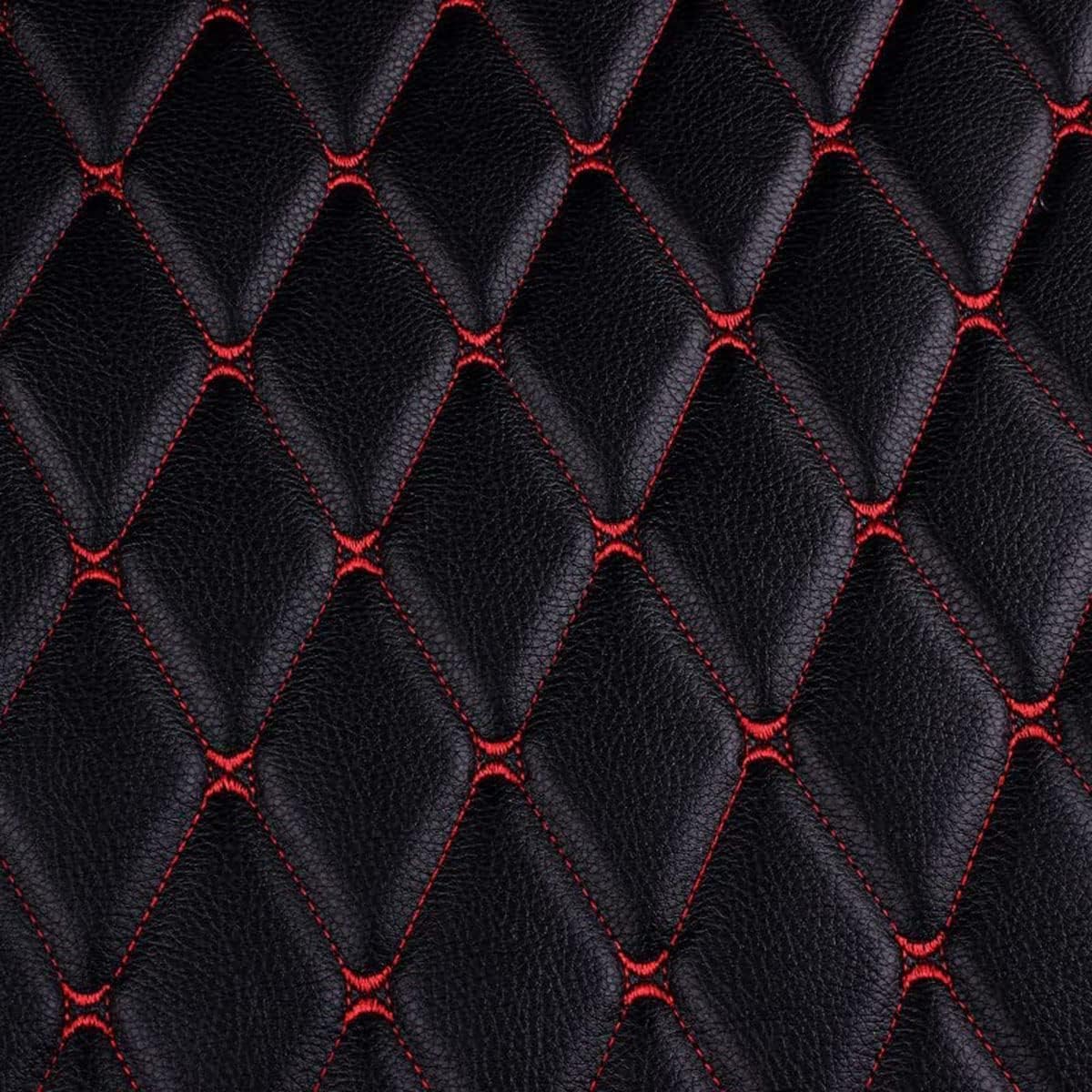
A diamond-stitched faux leather with built-in 0.23-inch foam padding for plush panels.
This is the only pick with cushion built in: a quilted faux leather with a 0.23-inch sponge backing that adds a soft, padded layer when you press it onto a headliner, headboard, or seat panel. It measures 59 inches wide by 39 inches long per piece, and the manufacturer describes it as waterproof — spills bead up and wipe clean with a damp cloth, which is a genuine advantage in a car interior.
The classic diamond stitching is the defining look, delivering that tufted, luxurious appearance, and the fabric quality earns the most praise. One owner called it easy to work with, noting the pattern “looks very smooth,” and another confirmed the stitching quality is solid. The foam backing means you do not need to add your own padding layer, saving a step in the install.
Two honest caveats before you buy. First, it ships folded in non-continuous 1-meter lengths, so the wrinkles need to relax under heavy items for a while, and the cut ends are not always straight — owners suggest buying about a foot extra on each side and squaring it yourself. Second, the adhesive backing has drawn mixed feedback, with one owner reporting glue residue on the vinyl. This is a firm, structured material, best for panels and headboards rather than anything that needs to drape or flex.
The Padded Advantage
- 0.23-inch foam backing smooths imperfections and adds plushness
- Waterproof surface wipes clean, great for interiors
- Diamond stitching delivers a tufted luxury look
Install Gotchas
- Ships folded, so creases need time and weight to relax
- Cut edges are not always square — buy extra and trim yourself
Choose this for: a padded headliner or headboard where the foam backing does the cushioning work for you.
skip it if: you need a flexible fabric that bends around curved contours — this one stands firm and structured.
Understanding the Specs
Fabric Weight In Ounces
Weight tells you how a fabric will behave. A light cotton around 5 to 8 ounces drapes softly and sews easily, perfect for quilts and bags. A heavier 11-ounce-per-yard polyester stands stiff and holds its shape, which is what you want for upholstery panels. Heavier 11-ounce polyester holds shape for panels, while lighter 5-8 ounce cotton drapes for quilts.
Width And Coverage
Width decides how many yards you need. A 44-inch cotton gives you a modest piece per yard, while a 58- or 60-inch upholstery bolt covers far more area. For a wide headliner or bench seat, the wider the bolt, the fewer seams you have to hide. Measure your panel’s length and width, add a few inches of margin, then divide by fabric width to find yardage.
UV Treatment And Backing
UV-treated polyester resists the sun damage that fades and weakens fabric in a car interior. A foam or sponge backing adds cushion and smooths over imperfections underneath, saving you from adding a separate padding layer. Flat fabrics transmit every bump; padded ones hide them.
Cotton vs Polyester
Cotton is soft, breathable, and easy to sew — ideal for quilting and crafts, but it lacks the abrasion resistance for daily seat wear. Polyester is tougher, often UV-treated, and less prone to fading, making it the standard for automotive upholstery and headliners. Choose cotton for soft crafts and polyester for structural upholstery.
FAQ
How much vintage car fabric do I need for a headliner?
Can I use quilting cotton to reupholster a car seat?
What is the difference between cotton and polyester vintage car fabric?
Why does my upholstery fabric feel stiff?
How do I stop cut edges from fraying?
Is a foam-backed vinyl worth it for a headliner?
Will a wider fabric save me money in the long run?
How should I clean vintage car fabric?
Final Thoughts: The Verdict
Across the board, the vintage car fabric winner is the Timeless Treasures Route 66 because its 100% cotton quality at 44 inches wide makes it the dependable foundation for quilts and craft projects. If you want a bold, waterproof polyester for covering a chair, grab the Ambesonne Vintage Car. And for a padded headliner that needs no separate foam layer, the Quilted Foam Vinyl is the one to reach for.
How We Picked
We do not accept paid placement. Every pick is matched to a real buyer and a real use-case; we do not hands-on test units.
Sources & Methodology
Specifications: manufacturer listings and product documentation. Review insights: verified customer reviews, as of August 2026. Pricing: not shown on this page (it changes often); check the current price via the retailer link.
As an Amazon Associate, GoCarLife earns from qualifying purchases. This does not affect which products we feature.