
Our readers keep the lights on and the garage heater humming. As an Amazon Associate, I earn from qualifying purchases.
Specs are compiled from manufacturer listings and verified buyer reviews and can change over time — please confirm the key details on the product page before buying.
Your classic car restoration hits a wall the moment you face the old, sagging seats — you want them replaced, but you don’t want to lose the car’s original character. The right vintage-style seat keeps that factory-era look while giving your back the support a modern daily driver offers, and it bolts into a 1960s muscle car, a Jeep CJ, or a fiberglass dune buggy with the right brackets. This list matches each pick to the specific classic rides owners actually drop them into, so you know which one fits your project before you order.
I’m Mo Maruf — the founder and writer behind GoCarLife. This guide is built by comparing the manufacturers’ published specifications and the patterns across verified customer reviews, so you get each pick’s real strengths and trade-offs instead of marketing spin.
Every seat here is a vinyl-wrapped, steel-framed bucket aimed at mid-century classics, so the decision depends on fit, firmness, and how much fabrication you are willing to do. Keep reading to find the best vintage car seats that match your restoration’s budget and your body type.
Our Picks at a Glance


How To Choose The Best Vintage Car Seats
Before you click buy, take a hard look at your floor pan and your old mounting points. A seat labeled “vehicle specific fit” rarely drops in without some kind of adapter or bracket work on a 50-year-old car, and knowing that upfront saves you from a frustrating weekend.
Low-back or high-back first
Low-back seats without a headrest nail the mid-century muscle look and tuck under a hardtop’s roof line, making them a natural match for cars like a 1965 Olds 442. High-back seats with a reclining mechanism offer more daily support and a more modern feel, but the taller backrest can block rear visibility or crowd a roll bar in a Jeep — measure your cabin height before choosing.
Vinyl and frame materials
Automotive-grade vinyl survives years of sun and wiping better than cloth, and it cleans up quickly after off-road dust or a spilled coffee. The frame underneath matters more than the surface: a TIG-welded steel frame (a precise welding method that creates a strong, clean joint) holds its shape and carries your weight without flexing, while lighter stamped frames may creak over rough roads.
Quick Comparison
| Model | Best For | Back Style | Material | Orientation | Amazon |
|---|---|---|---|---|---|
| Scat ProCar 80-1400-51R★ Best Overall | Muscle car bucket swaps | Low back | Vinyl | Passenger side | Amazon |
| Bestop Trailmax II 39429-01Classic Jeep Pick | Classic Jeep upgrades | Low back | Foam, vinyl | Front seat | Amazon |
| Rugged Ridge 13402.01 | Reclinable daily comfort | High back | Manmade, steel | Driver side | Amazon |
| ProCar 80-1050-51L Rally | Hot rods and muscle cars | Low back | Vinyl | Driver side | Amazon |
| Scat ProCar 80-1000-51R | High-bolstered classics | High back | Vinyl | Passenger side | Amazon |
In-Depth Reviews
1. Scat ProCar 80-1400-51R Lowback Seat
Our pick — over 4.5★ from 80+ verified ratings; the strongest balance of quality and price.
The bench-to-bucket swap for 1960s Chevys that keeps the original interior story intact.
This ProCar low-back in black vinyl is what owners reach for when they rip out a worn bench and want two proper buckets in its place. Buyers report it as “Great for 69 Chevy C/10 bench-to-bucket conversion,” and the built-in slide adjuster plus rear storage pockets give you modern usability without shouting “new”. The vinyl finish is the thing people praise most — owners call the upholstery nice and the overall quality well-made, with comfort close behind. At a 4.6-star average from nearly 90 owners, this is the crowd favorite for a reason.
Expect to do some bracket work, because the floors under old trucks and buses are never flat. One owner built custom angle iron brackets instead of using a seat kit, another made vertical-to-horizontal brackets for a flat floor because the sold bracket sat too tall and stole headroom. Others simply built a base to bolt to in a VW bus — that was expected. The seat itself fits a fiberglass dune buggy and a 1965 Olds 442 with almost no one noticing it is not factory.
Unlike the high-back Rally seat that adds bolsters and a taller profile, this low-back keeps a clean line under a hardtop and pairs well with original rear seats. My advice: budget for mounting hardware and a little fabrication time, and this becomes a straightforward weekend swap.
Why it wins: the black vinyl low-back drops into muscle cars, buggies, and buses with a factory-era look and a built-in slide adjuster.
Plan for it: old floors are never flat, so custom brackets or a base are part of the deal here.
Reach for this if: you are converting a bench to buckets in a 1960s Chevy, a VW bus, or a dune buggy and want a low-back profile.
Look elsewhere if: you want a bolt-in with zero fabrication — this seat rewards a little DIY mounting effort.
2. Bestop Trailmax II Classic Seat 39429-01
A fixed-back vinyl seat that bolts to a Jeep’s existing sliders in about half an hour.
This Bestop is the direct-replacement play for classic Jeeps, and it nails the look. The thing everyone raves about is the appearance — owners call it factory-ish and note the “vibrant color enhances white/black Jeep,” with an easy “30-min install” that bolts right onto the existing seat sliders of a 1994 Wrangler YJ. The closed-cell foam (a dense foam that doesn’t absorb water and holds its shape) keeps fatigue down and holds the seat’s shape, and the vinyl meets Federal Motor Vehicle Safety Standards, which matters for a daily-driven classic.
Fit is where owners split. Some report a direct replacement for the Jeep DJ5 Postal Jeep and a perfect factory look, while others say a CJ5 needs custom brackets — the fine print also reveals the price covers one seat, not a pair. Height gets the same mixed reaction, with several owners noting the seat sits very high, especially in older flat-floor builds. Plan for a possible adapter, since 97-02 models need Seat Adapter Bracket 51256-01 and 03-06 models need Slider Adapters.
At a 4.3-star average from over 100 owners, this is a proven value for Jeep owners who want the old-school low-back profile with minimal effort. It is easier to turn around and see behind you off-road, which is exactly why many Wrangler owners pick it over the taller Rugged Ridge high-back.
What wins people over
- Bolt-on install for many Jeeps using existing sliders
- Classic low-back look owners call factory-ish
- Closed-cell foam resists fatigue and keeps shape
Where it gets tricky
- Fit is mixed — a CJ5 may need custom brackets
- Sits high for some owners
- Price covers one seat, not a pair
Best for: classic Jeep owners — CJ5, CJ7, YJ, TJ — who want a fast, factory-looking low-back replacement.
Think twice if: you are tall and tight on headroom, since this seat tends to mount high.
3. Rugged Ridge High-Back Reclinable Seat 13402.01
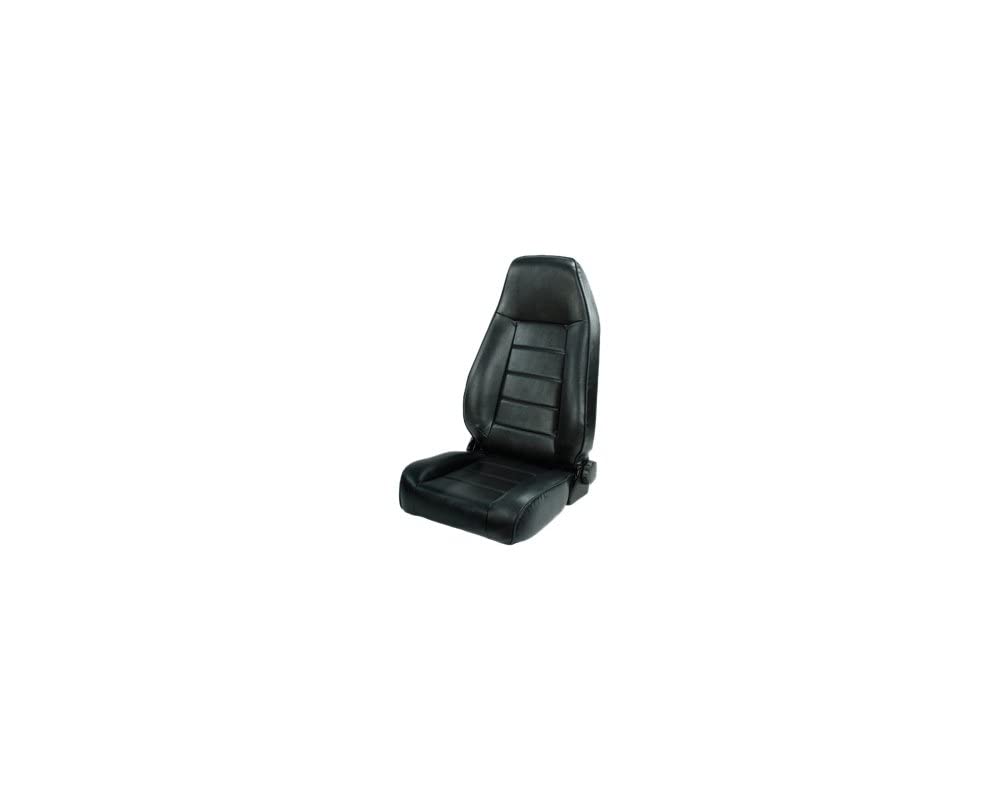
A powder-coated steel high-back that adds reclining comfort to 1976-2002 Jeeps.
This Rugged Ridge is the seat for the owner who wants a more modern, adjustable driving position in an older Jeep. The build quality is what earns the strongest praise — owners call the material nice and the seats very durable, with a powder-coated steel frame (steel coated in a baked-on protective finish) and automotive-grade vinyl built to last. Unlike the fixed-back Bestop above, this one reclines, and owners describe a “5 Year Limited” warranty backing the frame. It weighs 31.5 pounds, so you feel the solidity the moment you lift it.
The honest trade-off is firmness and fit. Owners say the seat is stiff like newer vehicles — great support for some, “most uncomfortable” for larger frames, since the sculpted edges can dig into legs and back. A 6’2″ owner found the seat bottom shorter than OEM, ending mid-thigh, and the seat sits higher with noticeable thigh pressure. Taller cushions can also block A/C vents, and the tilt adjuster may rub a roll bar or console.
Quality carries a 3.8-star average from over 100 owners — the hardware and materials get consistent praise, while comfort is genuinely mixed by body type. For a smaller-frame driver in a CJ or YJ/TJ who wants reclining adjustability and durable vinyl, this earns its premium spot; for larger builds, size your expectations around the firm bolsters and shorter base.
Solid where it counts: a 31.5-pound powder-coated steel frame and 5-year limited warranty make this a durable, quality-feeling upgrade.
Know before you buy: firm foam and a shorter seat base favor smaller frames — larger drivers feel the pressure points.
Pick this if: you want reclining support and tough vinyl for a 1976-2002 Jeep and you are average or smaller build.
skip it if: you are tall, since the shorter seat bottom and higher ride height create thigh pressure.
4. ProCar by Scat 80-1050-51L Rally Low Back Seat

The nostalgic muscle-car low-back, TIG-welded for hot rods and lead sleds.
This Rally seat is built for the restoration crowd chasing a “nostalgic muscle look, without a headrest,” and it nails that early-interior vibe. The TIG-welded steel frame (welded with a precise, clean process that makes the joint strong) plus high-density foam makes it heavy and very well built — owners describe it as exactly that, “heavy and very well built,” and one retrofitted it into a 1951 Merc Lead Sled with excellent results. Owners who build hot rods and muscle cars say they have used several sets and keep coming back, which is the strongest endorsement a restorer can give.
Two details matter before you order. First, passenger seats come with sliders in the box, which surprised owners who did not see it in the description — that is a genuine value win. Second, the mounting brackets are sold separately, and one owner who missed that detail ended up with seats sitting in the garage, so budget for the universal bracket kit and confirm compatibility first. The high bolsters also sit very high and favor smaller or skinny frames — one buyer loved the build but could not use them comfortably.
With a 4.3-star average from a smaller pool of owners, this is a premium, well-constructed low-back for someone who values the look and is willing to sort out brackets. Just do not skip the mounting kit in your cart.
The draw: TIG-welded steel and high-density foam deliver a heavy, durable seat with authentic muscle-car styling.
The catch: brackets sell separately and high bolsters suit a slimmer frame — plan both before checkout.
Choose it for: hot rods, lead sleds, and muscle cars where a headrest-free profile and stout build win the day.
Pass on it if: you are a larger build or need a bolt-in solution, since bolsters and separate brackets complicate the install.
5. Scat ProCar 80-1000-51R Seat

The snug, high-bolstered seat that transformed a 1966 Mustang Fastback’s interior.
This ProCar is the pick for the owner who wants a deep, supportive bucket with serious side bolsters (the raised cushion edges that hold you in place around corners) in a classic pony car. The quality is what owners praise most — the vinyl looks awesome and the seats are described as comfortable, snug, and safe. One owner fitted them into a 1966 Mustang Fastback and the visual payoff was immediate, with the seat belt and interior suddenly looking intentional rather than tired.
Owners are just as consistent about the height. The bolsters put you deep into the seat, and the whole thing sits higher than stock — one tall Mustang owner found his head touching the headliner and the seat belt no longer lining up properly, even at the lowest mounting point. Fit is otherwise mixed, with some owners finding the seats very snug while others had to enlarge holes on the slider brackets to bolt up the seat frame.
At a 4.5-star average from nearly 40 owners, the quality and look earn strong praise, but this seat demands you check your cabin height and bracket alignment first. It is a high-bolstered, custom-fit upgrade, not a drop-in replacement, so measure before you commit.
Where it shines: thick bolsters and quality vinyl give a classic Fastback a snug, upgraded feel owners call awesome.
Where it bites: it rides higher than OEM and the slider holes can need enlarging — both are fit realities to plan around.
Best for: classic Mustang owners who want deep bolsters and a quality vinyl look and are fine with a little bracket work.
Not for: tall drivers or anyone tight on headroom, since this seat sits noticeably higher than stock.
Understanding the Specs
Low-back vs high-back
Low-back seats skip the headrest entirely, which is why they look right in a 1960s muscle car and keep rear visibility open in a Jeep. High-back seats raise a headrest and often add a reclining mechanism, giving you more modern support but a taller profile that can crowd a roll bar or headliner. Your choice depends on the era you are matching and how much cabin height you have to spare.
Frame and foam density
A TIG-welded steel frame is the heavyweight option that holds its shape without flexing, while powder-coated steel adds corrosion resistance for off-road abuse. High-density foam keeps its support over years of use, and closed-cell foam specifically resists fatigue — meaning the seat does not flatten out on a long drive. Vinyl upholstery then handles sun and spills better than cloth ever will.
FAQ
Will these seats bolt directly into my classic car?
Are low-back seats safer than high-back seats?
Why do some seats come without mounting brackets?
How much taller do aftermarket seats sit than factory seats?
Will a bench seat in my truck accept these bucket seats?
How do I clean and care for vinyl upholstery?
Are these seats too firm for everyday driving?
Will high bolsters fit larger drivers?
Final Thoughts: The Verdict
For most muscle car and classic truck owners, the best vintage car seats choice is the Scat ProCar 80-1400-51R because its low-back vinyl profile, built-in slide adjuster, and proven bench-to-bucket fit make it the most versatile restoration seat at a friendly price. If you want a fast, factory-looking replacement for a classic Jeep, grab the Bestop Trailmax II. And for a heavy, TIG-welded muscle-car look in a hot rod or lead sled, the ProCar Rally low back is the one to reach for. Whichever you pick, measure your cabin height and plan for brackets — the seats are the easy part, the mounting is where the story happens.
How We Picked
We do not accept paid placement. Every pick is matched to a real buyer and a real use-case; we do not hands-on test units.
Sources & Methodology
Specifications: manufacturer listings and product documentation. Review insights: verified customer reviews, as of August 2026. Pricing: not shown on this page (it changes often); check the current price via the retailer link.
As an Amazon Associate, GoCarLife earns from qualifying purchases. This does not affect which products we feature.