
Our readers keep the lights on and the garage heater humming. As an Amazon Associate, I earn from qualifying purchases.
Specs are compiled from manufacturer listings and verified buyer reviews and can change over time — please confirm the key details on the product page before buying.
Your hands are the first thing to go numb on a snowmobile, and once the cold bites, the ride is over. The right pair of gloves separates a long, comfortable ride from a frozen, miserable trip back to the truck. You need a windproof, snow-shedding barrier that keeps a firm grip on the throttle in plummeting temperatures.
I’m Mo Maruf — the founder and writer behind GoCarLife. This guide is built by comparing the manufacturers’ published specifications and the patterns across verified customer reviews, so you get each pick’s real strengths and trade-offs instead of marketing spin.
Finding the best waterproof snowmobile gloves means balancing insulation weight, shell toughness, and a cuff that seals out the elements.
Our Picks at a Glance


How To Choose The Best Waterproof Snowmobile Gloves
Sledding’s high wind and high effort demand gloves that balance warmth, breathability, and control. You need warmth that avoids sweat, a shell that sheds snow, and flexibility for easy control operation.
Insulation Weight Is Your Temperature Gauge
Look for the insulation gram weight — it’s the most honest spec on the label. A glove with 200g or 300g of Thinsulate in the back of the hand is built for serious cold, while a lighter 40g palm keeps your grip nimble. Heavier insulation means warmer hands but less feel; the best gloves layer it unevenly to give you both.
The Cuff Is the Real Leak Point
Water and wind enter at the wrist, not the palm, making the cuff the primary leak point. A long gauntlet cuff that pulls over your jacket sleeve, paired with an adjustable strap or elastic closure, seals the gap. Keeping snow outside the glove prevents it from melting and chilling your hands.
Waterproofing: Membrane vs. Coating
There are two ways to block water. A full membrane insert — like Gore-Tex, Hipora, or a TPU layer — physically stops moisture while letting sweat escape. A DWR (durable water repellent) coating only beads water off the shell, which is lighter but wears out faster. For snowmobiling, a true membrane is the safer bet, especially if you ride wet snow.
Quick Comparison
| Model | Best For | Insulation | Waterproofing | Cuff Style | Amazon |
|---|---|---|---|---|---|
| Castle X Epic-G1★ Best Overall | Best overall balance | 200g back / 150g palm | Hipora membrane + DWR | Adjustable strap | Amazon |
| FXR FuelTop Performer | Deep cold, serious riders | 300g back / 250g palm | HydrX Pro membrane | Adjustable storm cuff | Amazon |
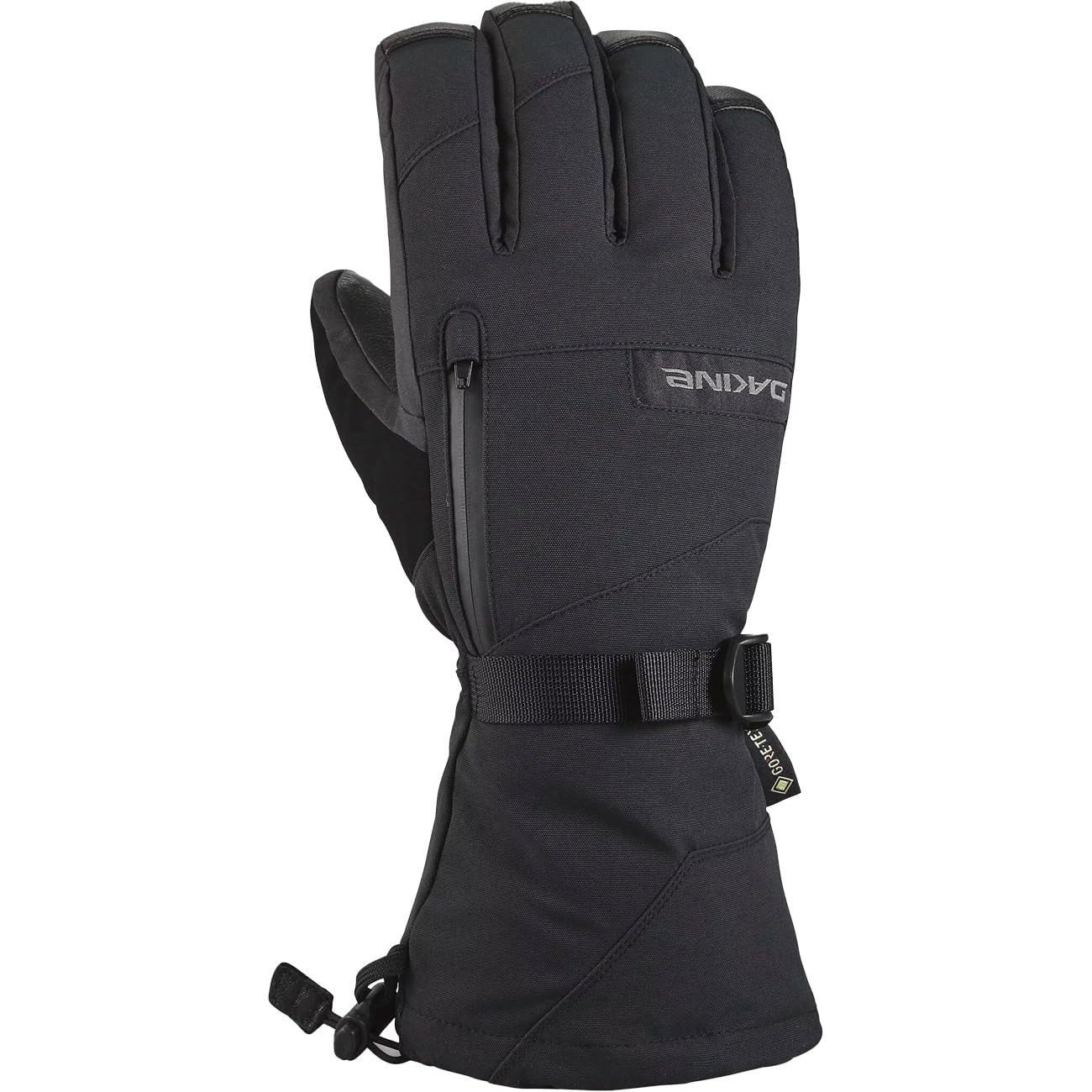
| Dakine Leather TitanPremium Pick | All-day warmth w/ liners | High-loft insulation | Gore-Tex + Gore Warm | Wrist leash + gauntlet | Amazon |
| SKYDEER Deerskin | Extra-soft natural leather | 150g Thinsulate | 3M Scotchgard + bladder | Adjustable pull strap | Amazon |
| Gordini Storm GTX | Resort skiing + sledding | Megaloft synthetic | Gore-Tex insert | Extended drawcord gauntlet | Amazon |
| KUTOOK 3-Finger | Mitten-like heat at speed | 250g back / 40g palm | TPU membrane | Hook & loop elastic cuff | Amazon |
| RIDEIRON Winter | Mid-range all-rounder | 3M Thinsulate fibers | Windproof + water-resistant | Extended adjustable cuff | Amazon |
| 100% Hydromatic Brisker | Wet PNW-style winters | Hydromatic insulation | Water-resistant shell | Standard cuff | Amazon |
| KEMIMOTO Winter | Budget-friendly entry | 4-layer fleece/cotton | Waterproof layer | Elastic band cuff | Amazon |
In‑Depth Reviews
1. Castle X Epic-G1 Snowmobile Gloves
Our pick — over 4.5★ from 650+ verified ratings; the strongest balance of quality and price.
The trail-tested standard that balances Arctic warmth with real throttle feel.
This glove earns its place at the top for one simple reason: it nails the warmth-to-control ratio that most snowmobile gloves miss. The 3M Thinsulate Platinum insulation stacks 200g on the back of your hand where the wind hits hardest, and drops to 150g in the palm so your grip stays sensitive on the handlebars.
The waterproofing setup is the full deal, not a shortcut — a Hipora windproof, waterproof, and breathable membrane sits inside, and the shell gets a DWR (durable water repellent) coating so snow beads off the surface. The outer is a strong high tenacity dobby nylon that shrugs off brush and ice, with a synthetic sure-grip palm to keep your hand planted on the throttle even in slush.
What wins people over is the warmth — owners consistently call out how well it cuts the wind and locks in heat. The quality is a close second, with many describing the build as tougher than pricier mainstream brands. A few riders note it’s not the warmest glove for extreme-below-zero days, but the comfort against the skin and the value for what you pay keep it a favorite.
What Riders Rave About
- Warmth is the top praise, with dozens of owners singling out how well it blocks wind
- Quality construction holds up in cold weather, feeling near the 9.92-ounce mark
- Ambidextrous design with an adjustable strap for a custom fit over jacket sleeves
Where It’s Less Perfect
- A few owners say it’s not as warm as expected on brutally cold days
- Some riders find it a bit bulky, though typical for winter gear
The standard to beat: Choose this for a dependable, warm, well-built glove that works over your jacket sleeves while staying affordable.
Think twice if: You regularly ride in extreme sub-zero temperatures and need maximum insulation over dexterity.
2. FXR Men’s Fuel Winter/Snowmobile Glove
A snowmobile-specific heavyweight with the thickest insulation in this lineup.
If you ride hard in true deep-winter cold, the FXR Fuel is built exactly for your sled. Its Thinsulate insulation is the most aggressive here — 300g on the back of the hand and 250g in the palm — which is why owners describe it as warm as mittens while keeping better finger control. The wind resistance gets the same treatment, with a durable nylon shell that stands up to season after season.
The waterproofing comes from a HydrX Pro breathable membrane, paired with an adjustable storm cuff that riders say fully covers the jacket sleeve and keeps air and snow from sneaking in. A reinforced goat leather palm and thumb give you a grippy, abrasion-resistant surface for the handlebars, and the pre-curved finger design plus goggle wipe features show this was engineered for sledding specifically, not borrowed from a ski glove.
Buyers report legendary durability, with many pairs lasting a decade and some riders on their second set after ten years. The recurring gripe is stiffness when new, but most note it loosens up nicely after a few rides. The price tag sits high, and opinions on cost are split, but the warmth and build quality are the things everyone talks about.
Peak warmth, proven build: The 300g back-of-hand insulation is the thickest on this list, and the storm cuff seals over your jacket completely, making sweat and cold air non-issues.
Know before you ride: Expect a break-in period — the gloves arrive stiff and need a few rides to mold to your hands.
Built for the frigid ride: Reach for this if you want maximum warmth, a sealed gauntlet, and a glove that’s proven to last years on the trail.
Not the pick if: You want an inexpensive glove for occasional mild-day riding, or if you need fine motor control for constant phone or GPS use.
3. Dakine Leather Titan Gore-Tex Snow Glove
Modular warmth with removable liners and a premium leather touch.
The Titan’s signature trick is the removable liner gloves, which stretch its comfort range across two seasons. Keep the liners in for deep winter and you get serious extra warmth; pull them out for spring rides and the glove breathes better. The touchscreen-compatible liner means you can check your phone or GPS without pulling your hands out to freeze.
The waterproofing is the real deal: a GORE-TEX insert with Gore Warm technology combines the inner lining, membrane, and outer material into one tune system that fends off moisture while staying breathable. The leather palms manage buckles, poles, and throttle with reliable dexterity, and a small stash pocket holds a heat pack or cash when temperatures go extreme.
Owners describe it as a top-tier Gore-Tex glove that keeps hands warm for hours in freezing conditions — some report six hours in 10°F snow and sleet without the liners even in. The wrist leash is a favorite for not dropping gloves on the lift or trail. The honest caveat: some say it feels thinner and lighter than expected, and a few riders found it too cold in the low 20s, so it rewards riders who manage their layers carefully.
Two-season flexibility: The removable liners let you adjust warmth on the fly, and the touchscreen liner is a genuine convenience when you’re moving.
Layer smart, not hard: It runs lighter than its price suggests — bring the liner for truly frigid days or below-20°F riding.
Best for the versatile rider: Pick this if you want a premium leather glove that adapts from cold fall nights to deep winter with a liner system.
skip it if: You want the absolute thickest insulation without thinking about which liner combo to use.
4. Gordini Men’s Gore-Tex Storm Glove

A resort-tested glove packed with handwarmer pockets and a sealed gauntlet.
The Storm Glove is the gear that ski-town locals trust, and its warmth reputation carries straight onto a snowmobile. The Gore-Tex waterproof and windproof insert keeps hands dry without trapping sweat, while the durable 10K polyester shell and textured palms keep your grip solid on handlebars and poles. The extended gauntlet cuffs with drawcord closures pull tight over your jacket, sealing out deep-powder snow.
The defining feature is the back-of-hand pockets built for handwarmers — pop a pack in and you extend your ride well past where most gloves give up. Megaloft synthetic insulation delivers warmth without the bulk of heavier fills, and the water-resistant Clutch recycled synthetic leather trim is more abrasion-resistant than standard cow grain, adding durability right where you grip.
Owners consistently report it’s warm and dry in 20–40°F riding, with some pushing it into sub-zero territory successfully. The wrist straps are a small detail riders love, saving gloves from chairlift drops and trail loss. The flip side: some find the fingers a touch bulky for fine control, and a few have had stitching fail on the wrist-strap tab — so it’s a glove that rewards careful handling.
The Reasons It’s Loved
- Warmth is the top praise, holding up in 20–40°F and even sub-zero for some riders
- Wrist straps prevent losing a glove on lifts or during a break
- Zippered handwarmer pockets add serious extendable heat
The Honest Trade-offs
- Some owners mention the wrist-strap stitching failed quickly
- Bulkier fingers mean less fine-touch dexterity for tools
Great for the deep-day rider: Choose this when you want ski-grade waterproofing, a drawcord gauntlet seal, and the option to add heat with a handwarmer pack.
Look elsewhere if: You need maximum finger dexterity for constant GPS or phone work while riding.
5. SKYDEER Deerskin Leather Ski Gloves
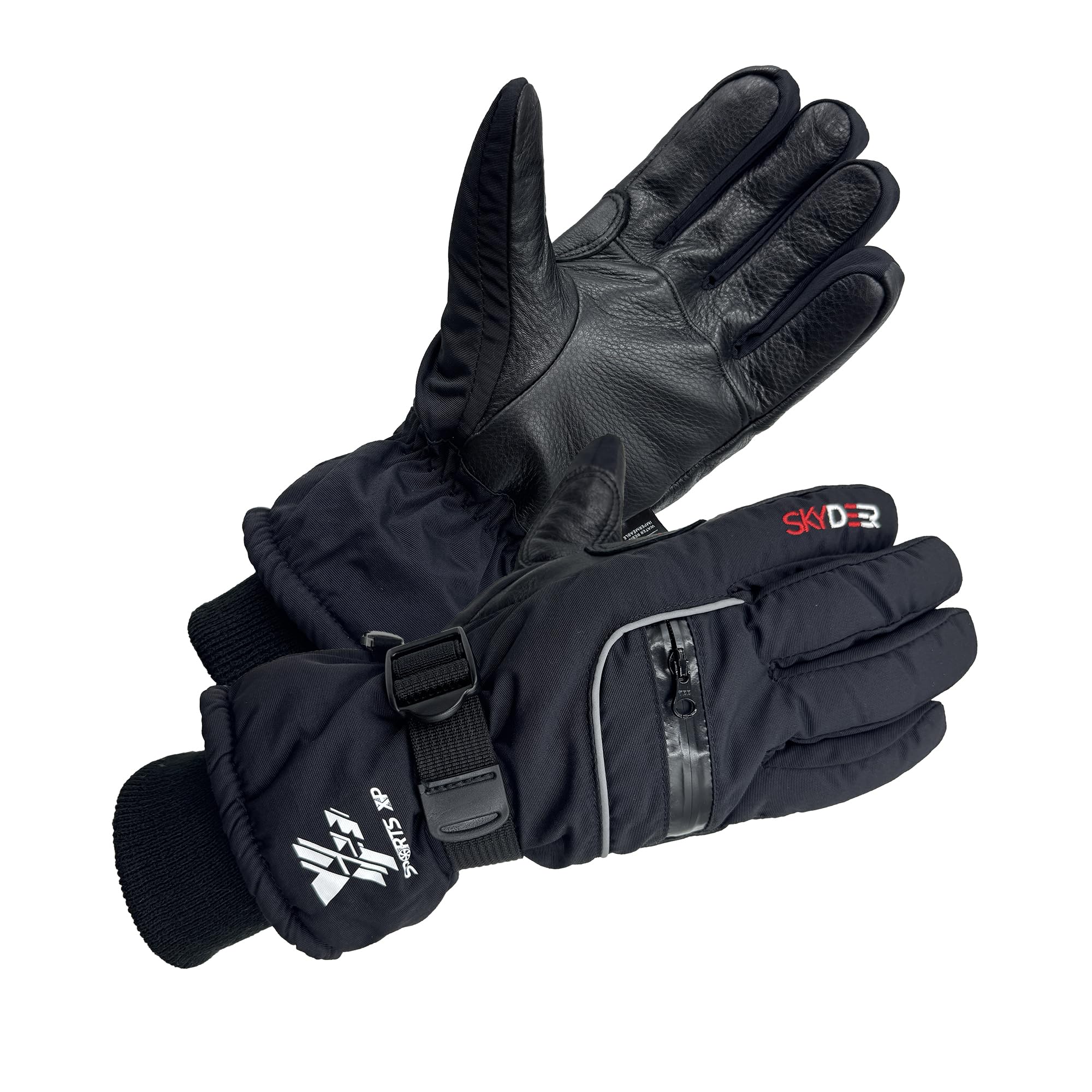
Buttery-soft deerskin that delivers surprising warmth for a mid-range price.
The first thing you notice is the palm — genuine deerskin suede from 3M Scotchgard feels like a soft, flexible hug for your hand, not the stiff plastic of cheaper shells. The 150g 3M Thinsulate insulation is warm without being bulky, and customers note it handles extreme cold impressively for its weight, with some riding comfortably in -17°F conditions.
The waterproofing is layered, not surface-level: the 3M Scotchgard waterproof deerskin suede sits on top, a waterproof bladder sits in the middle, and a breathable waterproof layer sits closest to your skin. That stack means snow and slush stay out while sweat still escapes. A utility zip pocket on the back is sized for handwarmers or keys, and the adjustable pull strap plus knitted inner cuff seals out drafts.
What owners rave about most is the warmth-to-flexibility balance — this glove is soft and stretchy where others are rigid, making it easy to grip controls and manage gear. Water resistance earns consistent praise too. The honest warning, repeated across reviews: the inner lining can pull out if your hands sweat, and once it’s out, getting your fingers back in is a struggle — so keep your hands dry and treat the lining gently.
Soft-touch warmth: The deerskin palm absorbs impact and vibration while staying flexible, and the zip pocket fits handwarmers for extra-cold days.
Mind the lining: Sweaty hands can pull the inner layer out of the fingers — dry hands are the secret to making these last.
Reach for this if: You want premium-feel leather, great warmth for the price, and a glove that doesn’t fight your grip.
Look elsewhere if: Your hands run hot and sweaty, since the lining is the one part that demands careful handling.
6. KUTOOK 3-Finger Ski Mittens
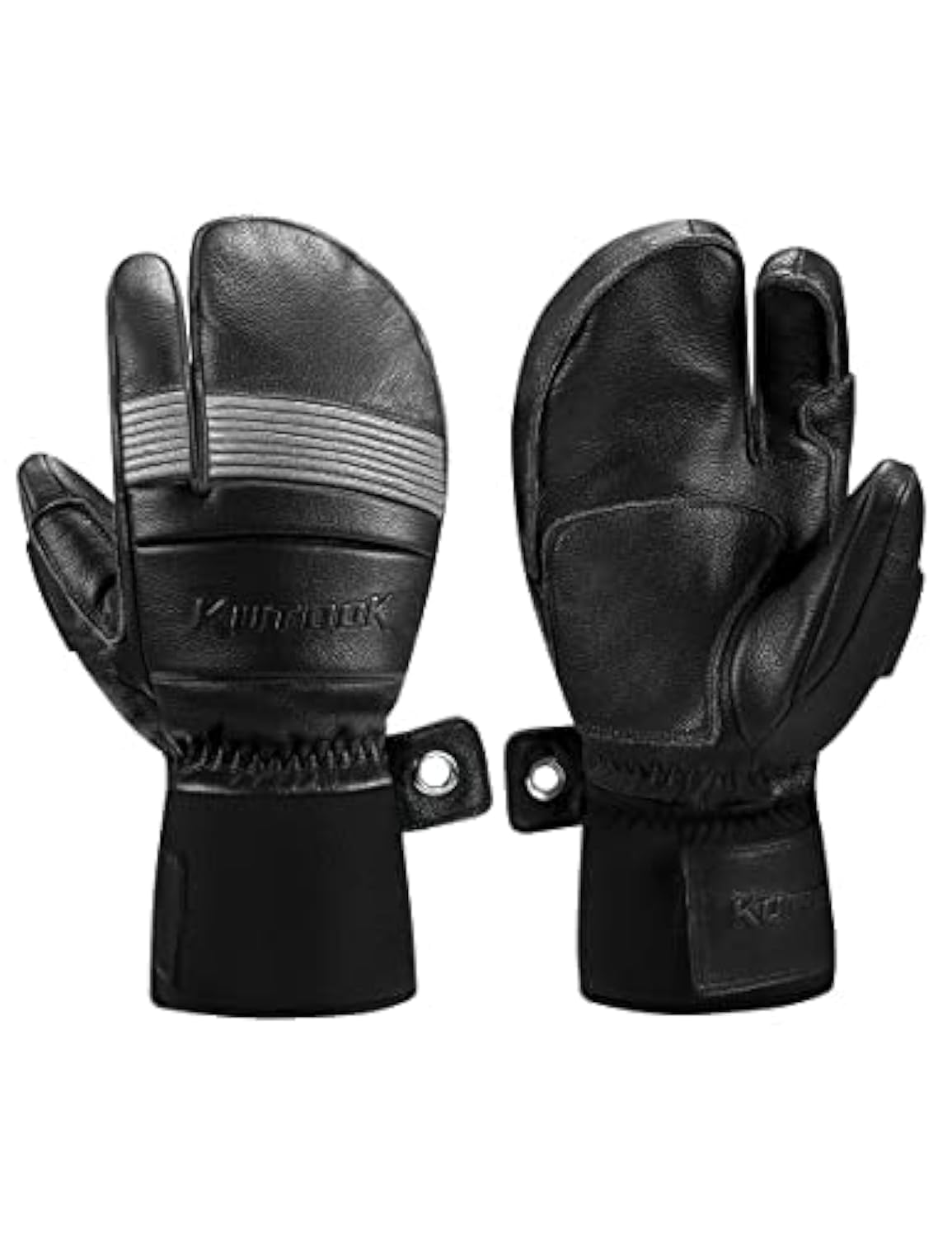
A mitten-style build that runs almost too warm for its price class.
This one looks like a mitten but behaves like a glove — and that’s exactly the point. The 3-finger design, with separate five-finger construction inside, gives you the shared-body warmth of a mitten while keeping independent finger movement for controls. The insulation is serious: 250g/m² of 3M Thinsulate on the back and 40g/m² in the palm, which owners describe as warm enough that they actually had to take them off mid-ride.
The waterproofing is dual-layer — a TPU membrane sits inside while the nylon shell uses a super water-resistance technique, so slush and snow don’t soak through. A goat leather palm gives you a secure, anti-slip grip, and the hook-and-loop wrist closure plus elastic neoprene cuff locks out cold air and snow. Connected clips keep the pair together, and the conductive thumb fabric wipes snow off your goggles without freezing your hand.
What wins owners over is the sheer heat — this is the glove people reach for when standard five-finger gloves leave them cold. One catch: because the 3-finger layout reads as a mitten, some riders expected true mitten warmth and found it cooler than hoped in sub-20°F weather. The brand suggests sizing up, so order larger than your usual glove size for the best fit.
Mitten heat, glove control: The 250g back insulation is among the warmest on this list, and the dual-layer waterproofing keeps wet snow out.
Check the size chart: KUTOOK explicitly recommends choosing a larger size than normal — follow that advice.
Great for the cold-handed rider: Choose this if your hands freeze easily and you want mitten-level warmth without losing finger dexterity.
Not ideal if: You expect true extreme-cold mitten performance below 20°F, or you hate a roomier fit.
7. RIDEIRON Winter Motorcycle Gloves
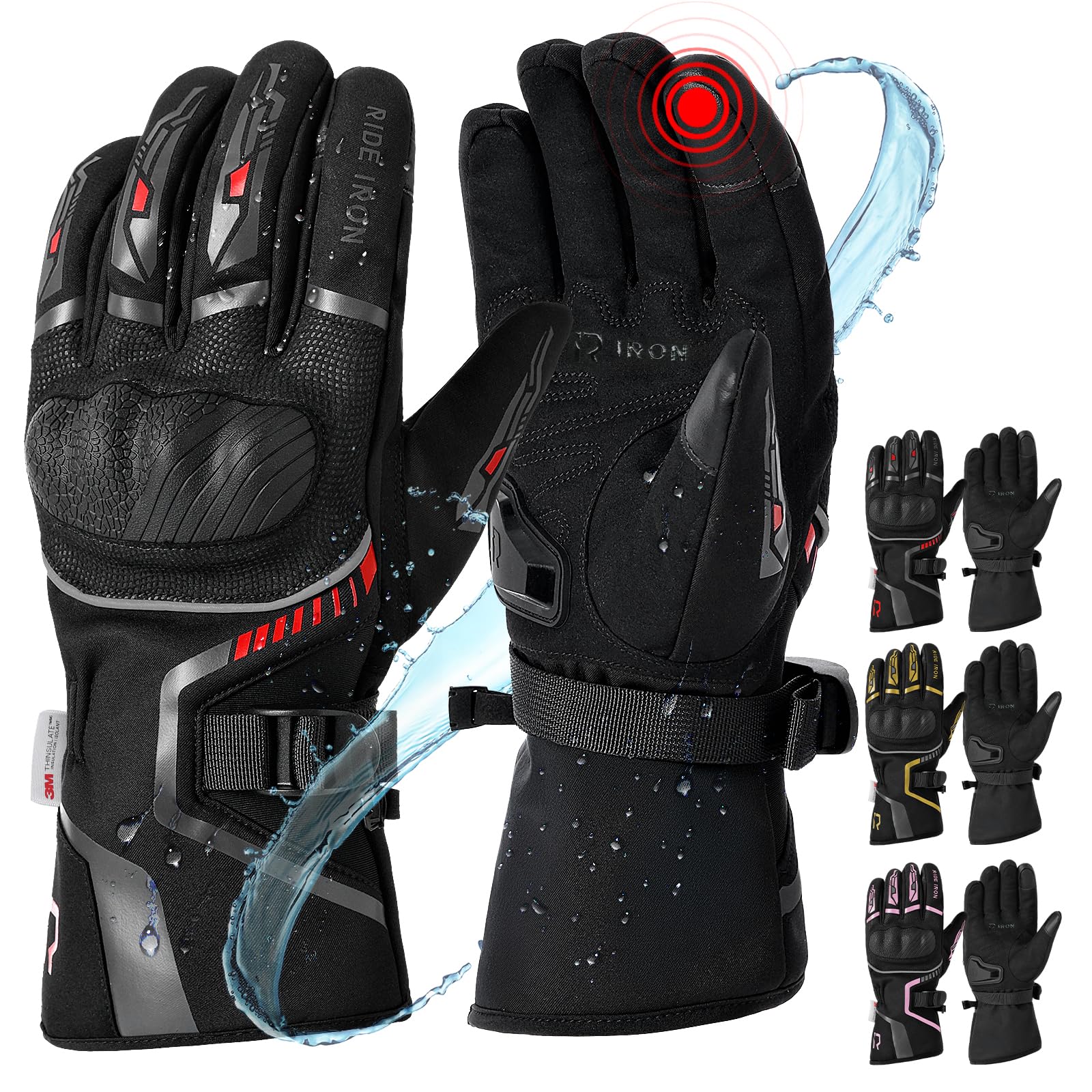
A budget-friendly all-rounder with hard-shell knuckle protection and touchscreen access.
Starting with serious safety: hard-shell knuckle guards shield against impacts, and TPR palm padding absorbs shocks and vibrations while improving grip. That makes this a smart pick if your snowmobile time mixes with ATV, UTV, or motocross riding — it’s built to take a knock. The extended cuffs with adjustable wrist closures seal over jacket sleeves, and the windproof design blocks cold air on long rides.
Warmth comes from ultra-fine 3M Thinsulate fibers that trap a dense layer of air, and reviewers point out excellent heat without sweat even after 2–3 hours of continuous riding. The touchscreen-compatible fingertips let you operate your phone, GPS, or other devices without bare hands — a small convenience that makes a big difference in freezing wind.
The thing everyone mentions first is the value — solid quality for a modest price, with a good fit for riders who struggle to find gloves for larger hands. The reflective design adds nighttime visibility, which helps for road riding. The honest caveat: sizing runs a bit small and some riders find fingertips get cold on truly bitter days, so size up and treat this as a solid mid-winter glove rather than an Arctic specialist.
Guarded and connected: Knuckle guards and TPR palm padding protect your hands while touchscreen fingertips keep you connected without exposing skin.
Fit is the catch: They run small — order up, especially if your hands are on the larger side.
Smart pick if: You ride multiple machines and want one protective, warm glove with phone access at a friendly price.
Think twice if: You need extreme-cold performance well below freezing, where the thinner fingers may not keep up.
8. 100% Hydromatic Brisker Gloves
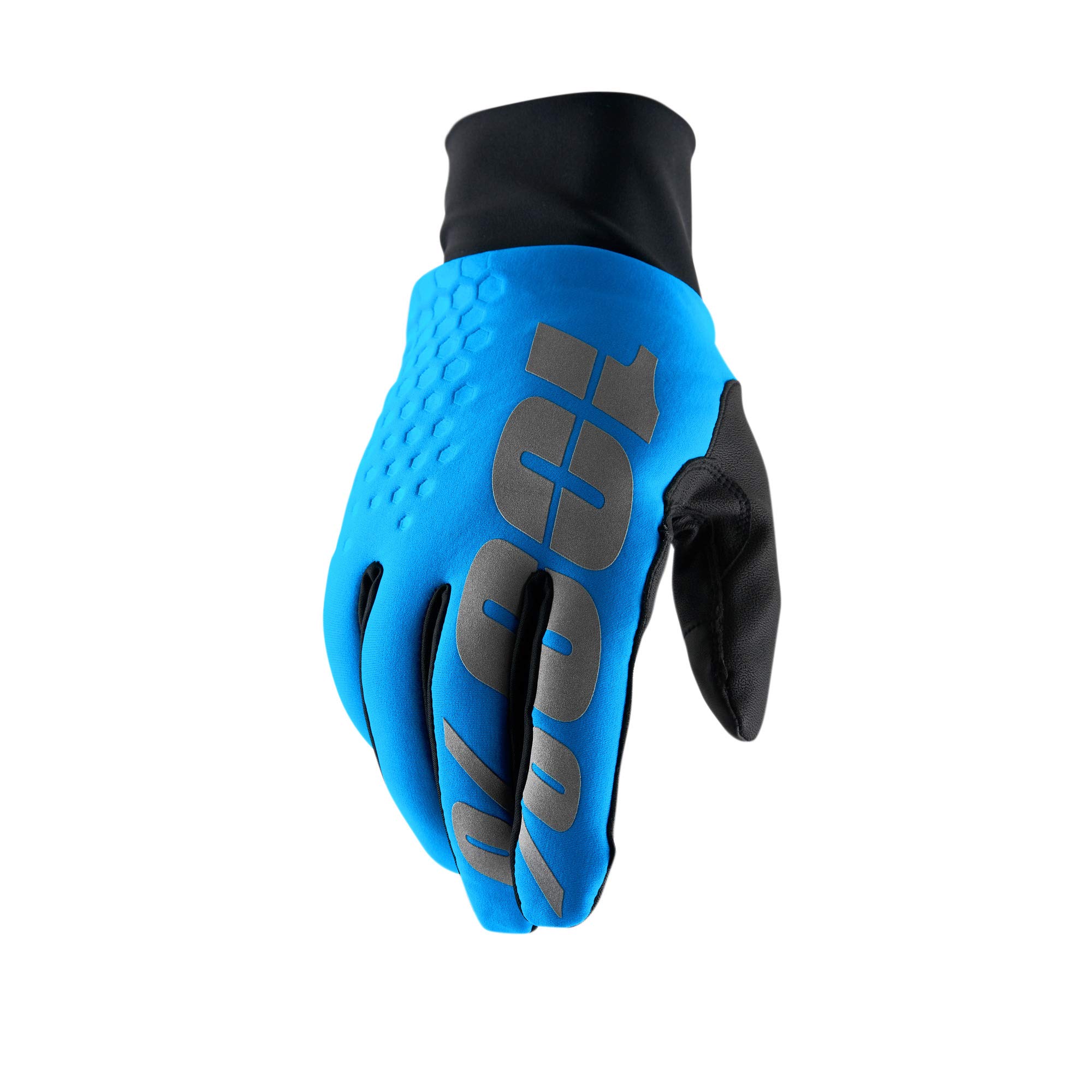
The lightweight, packable pick for wet Pacific Northwest-style winters.
Owners describe it as perfect for that specific climate, offering solid warmth for how thin it is, and it packs away smaller than most winter gloves, making it easy to stash in a saddlebag.
The grip earns immediate praise — sturdy yet flexible with a real, reliable hold on the bars, and the touchscreen compatibility works for quick phone checks or clocking in. Its slim profile means you keep dexterity other thick gloves steal, which riders appreciate for controls and zippers alike.
The water resistance is where opinions split: many find it very waterproof for the first year, while others say it’s not waterproof at all in heavy wet. Similarly, the fit is a point of contention — the wrist piece runs tight for some, and a few find the sizing runs small. Approach it as a lightweight cold-weather glove that’s best on mild-to-moderate days, not a deep-freeze barrier.
Featherweight warmth: Warm for its thin build and small pack size, with a strong, reliable grip on the bars — great for wet, mild winters.
The catch is conditions: Water resistance and warmth are inconsistent for some, so treat it as a spring/fall-to-mild-winter glove, not an Arctic specialist.
Reach for this if: You ride in wet, cool conditions and want a slim, dexterous glove that stows easily.
Look elsewhere if: You need guaranteed deep-winter waterproofing or have large wrists that may fight the tight cuff.
9. KEMIMOTO Winter Waterproof Riding Gloves
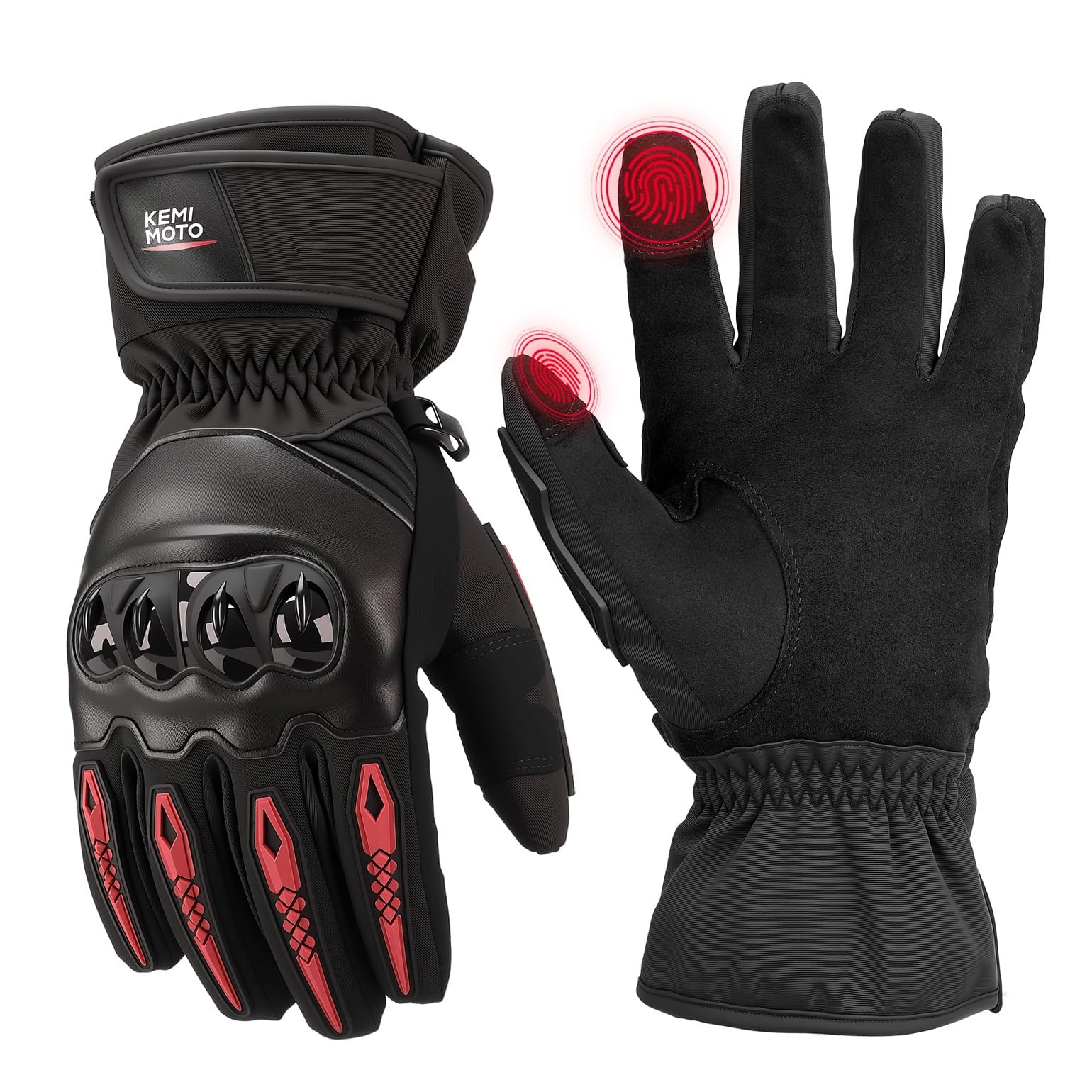
A wallet-friendly entry point with real waterproof layers and hard knuckle armor.
If you’re getting into snowmobiling or need a spare pair without a heavy investment, this is a smart place to start. The build stacks four layers — polar fleece lining, cotton lining, a waterproof layer, and a windproof layer — which does genuine work keeping rain and snow out. A hard PVC shield on the back of the hand adds impact protection, and the abrasion-resistant microfiber palm gives you a solid grasp on the controls.
Owners riding in genuinely cold conditions report it holds up — one confirmed it worked fine at 28 degrees Fahrenheit with wind and no hand warmers. The touchscreen fingertips on the forefinger and thumb mean you can use navigation or your phone without pulling a glove off.
The quality consistently earns praise for its price. The honest trouble spot, repeated across multiple reviews: the fleece liner can slide out of the fingers once it gets wet, and getting it back in is genuinely frustrating. The fit is also a gamble, running tight for some while perfect for others — treat sizing carefully. It’s a capable budget glove with a quirk you’ll want to know about before you buy.
Real protection, low price: Four-layer waterproofing plus a hard PVC knuckle shield gives you a lot of feature for the money.
Know the liner quirk: If the fleece lining shifts out of the fingers after getting wet, it’s hard to push back in — dry hands help.
Best for the budget buyer: Pick this as an entry-level waterproof glove that handles cold and wet without a premium price tag.
pass on it if: You’re sensitive to fit inconsistencies or want a glove whose liner never needs repositioning.
Understanding the Specs
Insulation Weight (Grams of Thinsulate)
This number tells you how much heat the glove is designed to hold. A higher gram weight — like 300g on the back of the hand — means serious cold-weather capability, while a lower palm weight (think 40g to 150g) keeps your grip nimble. Many snowmobile gloves use a split, putting heavy insulation where wind hits and lighter insulation in the palm for control.
Waterproof Membrane vs. DWR Coating
A full membrane — Gore-Tex, Hipora, HydrX Pro, or a TPU layer — is a physical barrier that stops water while letting sweat out; this is what you want for snowmobiling. A DWR (durable water repellent) coating is a surface treatment that beads water off but wears away over time. Check which one you’re actually getting: a membrane is the durable choice, a coating is the lightweight compromise.
FAQ
What is the difference between a 3-finger glove and a standard five-finger snowmobile glove?
How should waterproof snowmobile gloves fit?
Can I use touchscreens with these gloves?
What is a gauntlet cuff and why does it matter?
How long do waterproof snowmobile gloves last?
Is there a difference between ski gloves and snowmobile gloves?
Why does my glove keep getting wet from the inside?
Can I use heated liners underneath snowmobile gloves?
Final Thoughts: The Verdict
For most riders, the waterproof snowmobile gloves winner is the Castle X Epic-G1 because it nails the warmth-to-control balance most riders need at a fair price. If you ride in true deep-winter cold and want maximum insulation, grab the FXR Fuel with its 300g back-of-hand warmth. And for riders who want premium leather flexibility with a liner system that adapts across seasons, the Dakine Leather Titan is the one to reach for.
How We Picked
We do not accept paid placement. Every pick is matched to a real buyer and a real use-case; we do not hands-on test units.
Sources & Methodology
Specifications: manufacturer listings and product documentation. Review insights: verified customer reviews, as of August 2026. Pricing: not shown on this page (it changes often); check the current price via the retailer link.
As an Amazon Associate, GoCarLife earns from qualifying purchases. This does not affect which products we feature.