
Our readers keep the lights on and the garage heater humming. As an Amazon Associate, I earn from qualifying purchases.
Specs are compiled from manufacturer listings and verified buyer reviews and can change over time — please confirm the key details on the product page before buying.
Slapping any old set of rims onto your car for winter driving is a gamble you don’t want to take. The wrong offset or bolt pattern means your dedicated snow tires don’t sit right, and that adds dangerous play in slush and ice. The goal is a direct, vibration-free mount that lets your winter rubber do its job, season after season.
I’m Mo Maruf — the founder and writer behind GoCarLife. This guide is built by comparing the manufacturers’ published specifications and the patterns across verified customer reviews, so you get each pick’s real strengths and trade-offs instead of marketing spin.
Whether you are outfitting a sedan for a harsh winter or swapping a truck over to dedicated cold-weather rubber, these wheels for snow pair the correct fitment with proven durability to get you through the worst of the season safely.
Our Picks at a Glance

How To Choose The Best Wheels for Snow
Winter wheels take a beating from road salt, potholes, and freezing temperatures. Choosing the right ones means looking beyond just the diameter. Focus on three critical match points: bolt pattern, offset, and center bore. Get these right, and your winter tires mount without vibration or stress on the hubs. Steel wheels are the traditional favorite because they bend rather than crack under impact, but modern alloy options offer weight savings that can improve ride quality over rutted snow. Always confirm your vehicle’s lug nut thread size (like M12 x 1.5) before buying.
Bolt Pattern and Offset — The Non-Negotiables
The bolt pattern (expressed as 5×100 or 5×114.3) must match your car’s hubs exactly. A wheel that “almost fits” will vibrate and can loosen over time. Offset, measured in millimeters (like 40mm), determines how far the wheel sits from the suspension. Too much offset, and your tires rub the strut or fender. Too little, and you risk contact with the brake caliper. Always cross-reference the manufacturer’s fitment guide for your specific model year.
Load Index — Why It Matters for Safety
Your wheel must support the weight of your vehicle, especially when loaded with passengers or cargo. The load index (a number like 1190 or 1600 on the spec sheet) indicates the maximum load capacity per wheel. A wheel with too low a rating can fail under stress. Heavier trucks and SUVs need a higher load index — check your owner’s manual for the minimum requirement before ordering.
Quick Comparison
In‑Depth Reviews
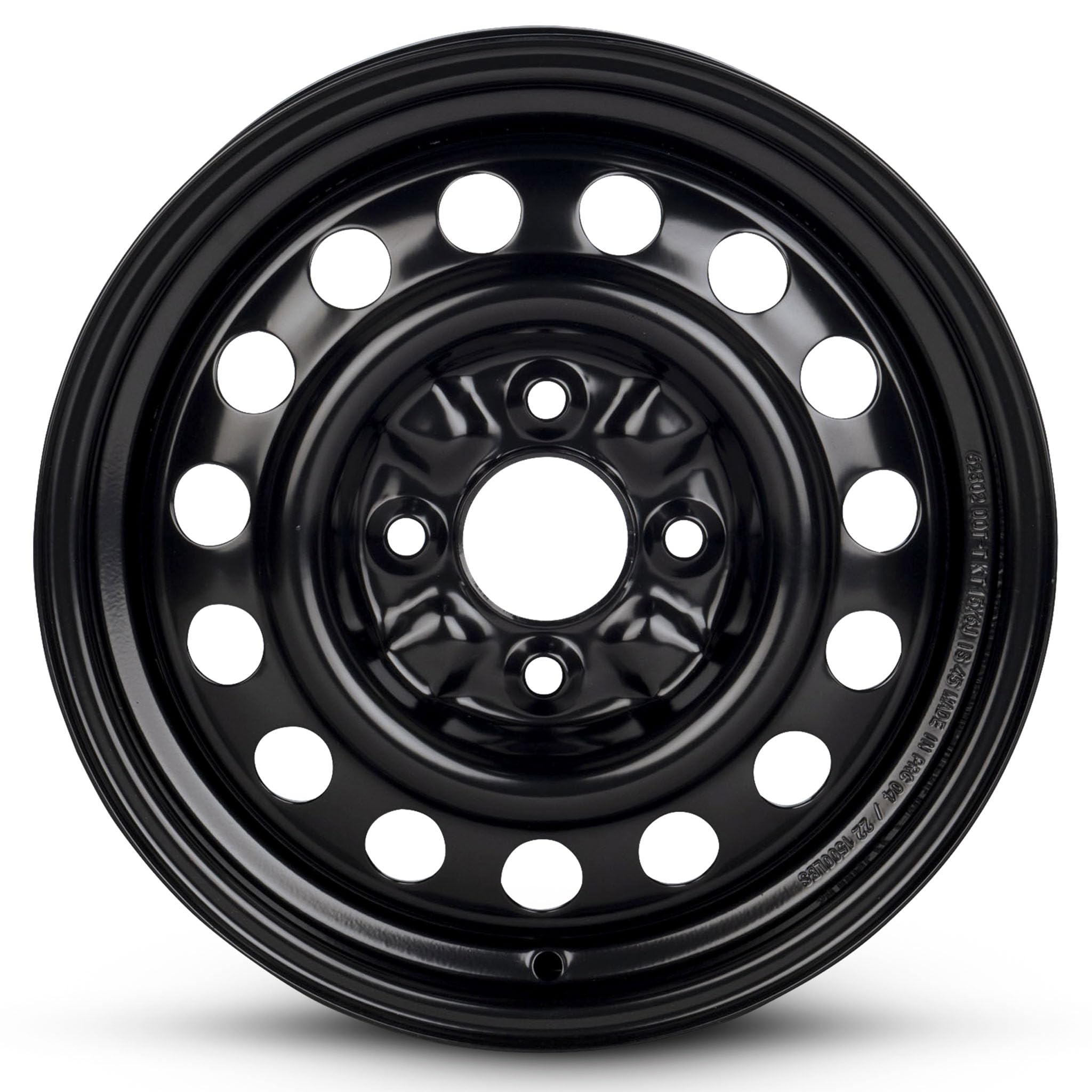
1. For 2003-2006 Nissan Sentra 15 Inch Painted Black Rim – OE Direct Replacement
Our pick — over 4.5★ from 750+ verified ratings; the strongest balance of quality and price.
The steel rim that arrives early and bolts right up to your Sentra.
This is the winter-wheel equivalent of a handshake — simple, certain, and exactly what the factory intended. Engineered to OEM specifications for 2003-2006 Nissan Sentras, it uses an original tire size of 195/65R15 and works with all factory TPMS sensors, lug nuts, and wheel covers. The 15-inch diameter and steel construction mean you are getting a rim that can take a pothole hit without cracking, which is exactly what you want when snow hides road hazards.
What wins owners over is the painless fit. The steel rim is manufactured by Road Ready Wheels, comes in at 20.9 pounds, and carries a load index of 1190. Buyers report it slots in without any of the shims or centering rings that alloy wheels often demand. One owner summed it up: “Arrived early and perfect fit👍.” The quality matches the factory rim, and several owners mention that after years of use, it still takes a new tire and sensor with no issues.
The 4.7-star average across hundreds of owners backs up the claim. The only real caveat: this is a painted steel surface, so if you live in an area that dumps heavy road salt, expect some cosmetic weathering over time — that is the trade-off for a rim that costs a fraction of what an alloy wheel does.
Tools Up For
- Dead-on factory fitment for Sentra
- Strong steel absorbs winter road abuse
- Works with OEM TPMS and covers
Watch For
- Steel will show cosmetic rust over time in salt-heavy regions
- Specific to 2003-2006 Sentra bolt pattern — not universal
Reach for this if: you drive a 2003-2006 Nissan Sentra and want a direct, trouble-free winter wheel swap.
Look elsewhere if: your vehicle uses a different bolt pattern or you need an 18-inch-plus rim for larger brakes.
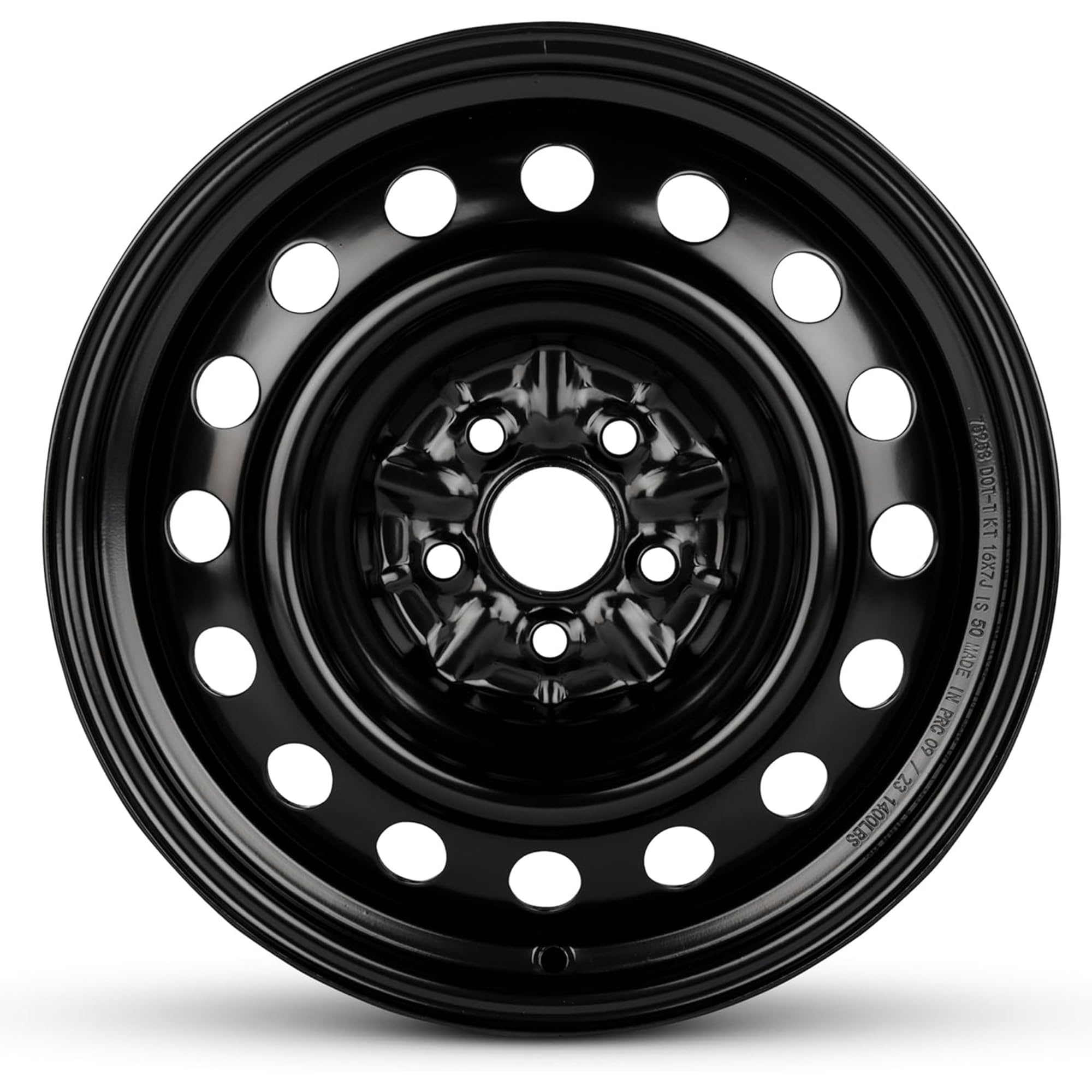
2. For 2003-2008 Toyota Corolla Rims 15 Inch Painted Black Car Rim – OE Direct Replacement
The Corolla’s perfect winter partner — lighter and tougher than a spare.
At 19.8 pounds, this 15-inch steel rim is actually the lightest full-size wheel in this lineup, which makes a real difference when you are wrestling a winter tire onto the hub in freezing temperatures. Designed for 2003-2008 Toyota Corollas, it matches the factory bolt pattern of 5-100mm (or 5-3.9 inches), a 54.1mm center bore, and M12 x 1.5 lug threads. That last spec is critical — it means your factory lug nuts thread in without adapters.
The load index sits at 1212, slightly higher than the Sentra rim above, so this wheel carries a bit more margin under full load. It also features a black coat paint that is specifically resistant to chipping, plus quality testing for fatigue bending and salt water spray — exactly the sort of abuse a winter wheel endures. Owners note it looks just like the factory rim and works as a full-time spare or a seasonal swap. One buyer called it “high quality wheel for my Corolla,” praising the fast shipping and direct fit.
Share a platform with a similar-aged Pontiac Vibe or a Matrix? This same rim fits those, too, because they share the Corolla chassis. The trade-off is the same as any painted steel wheel: the black finish can scuff if you slide over a curb in the snow, but the structural integrity stays intact.
Solid Ground
- Lightest full-size steel rim at 19.8 lb — easier winter install
- Salt-spray tested for corrosion resistance
- Matches factory Corolla lug fit exactly
Downside
- Paint chip-prone on rough terrain
- Only fits 5×100 bolt pattern Corolla/Vibe/Matrix
Best for Corolla owners who want a proven, lighter steel wheel that is tested against salt and winter grit.
skip it if: you need a larger diameter for a Corolla with bigger brake calipers (post-2009 models).
3. TR60 18×8, Bolt Pattern: 5×100/4.5, Offset: 40, FULL MATTE BLACK, set of 1
An 18-inch alloy that looks expensive but won’t break the bank.
This Touren TR60 steps up to an 18-inch diameter and a full 1600 load index as its stablemates but comes in the full matte black finish at a very competitive price point. The dual bolt pattern (5×100 or 5-114.3) gives it a wide compatibility net across Subaru, Honda, and many GM compact platforms, making it a versatile option if you swap cars frequently. Owners praise the quick delivery and the “great value,” noting that the quality “is amazing” for the price.
One of the more interesting owner hacks: several reviewers point out that the center caps tend to fly off after about a month of driving. The consensus solution is to simply remove all four caps and run the wheel without them — owners say the rim actually looks better that way, exposing the black lug nuts.
The 4.4-star average is solid, and the owner feedback clusters around the rim looking exactly like the product photos. The weight comes in at 28 pounds, right in line with the other 18-inch alloys here. A handful of owners note that if you prefer a satin finish over gloss, the sheen is the only visual mismatch — but functionally, the rim performs without issues.
Price-to-good looks ratio: The alloy construction beats steel on corrosion resistance, but the center caps are a weak point — budget for aftermarket caps or just go capless.
Consider this if: you want the durability of an 18-inch alloy on a 5×100 car without paying premium prices.
Not for you if: you prefer a contrasting finish — this is a uniform matte black.
4. TR60 18×8, Bolt Pattern: 5×112/120, Offset: 40, FULL MATTE BLACK, set of 1
The matte black choice for Audi, VW, and Mercedes winter fitment.
This Touren TR60 is engineered specifically for 5×112 and 5×120 bolt patterns — the common standard across Audi, VW, BMW, and Mercedes platforms. The 18×8 size with a 40mm offset is a classic fitment for many European sedans, and the full matte black finish gives it a stealthy, OEM+ look that suits German cars well. The load index of 1600 means it easily handles the weight of a modern luxury sedan with winter tires mounted.
The owners are split on fitment. The appearance is praised highly — “the rims look great especially for the price” — but the fit category receives mixed feedback. The hub bore is 74.1mm, and several shoppers say that the rim does not fit an Audi Q5 from the start without centering rings, and a 2019 VW Atlas needed different lug bolts because the factory ones were too short. That is a common story with aftermarket wheels: the bolt pattern matches, but the center bore and lug seat require extra parts for a perfect mount.
At 28 pounds, it is manageable for a winter swap. The 4.2-star average reflects the fitment confusion more than any quality defect. If you go into the purchase knowing you will need hub-centric rings and possibly longer lug bolts, the result is a great-looking wheel that saves you from ruining your expensive factory alloys on salted roads.
Why It Works
- Matte black hides winter grime and brake dust well
- High 1600 load index suits heavy European sedans
- Arrived early for many buyers
The Catch
- Hub bore mismatch means centering rings are required
- Some VW/Audi models need aftermarket lug bolts
For the savvy Euro owner who accepts that aftermarket wheels need hub rings and correct lug hardware.
Pass if: you want a bolt-on-and-go wheel with zero extra parts — this needs prep work.
Understanding the Specs
Bolt Pattern and Offset
The bolt pattern (like 5×100 or 5×114.3) tells you the number of lug holes and the diameter of the circle they sit on — it must match your car exactly. The offset (measured in millimeters, such as 40mm) determines how far the wheel sits in or out from the hub. A wrong offset can cause your tire to rub the suspension or fender, which is dangerous in snow where steering clearance is critical. Always verify both numbers against your vehicle’s factory spec before ordering.
Load Index
This number (e.g., 1190 or 1600) represents the maximum weight each wheel can support in pounds. A higher load index means the wheel is stronger and can handle a heavier vehicle or a more aggressive winter tire. For a compact sedan, a load index around 1200 is usually sufficient. For a truck or an SUV, you typically need 1600 or more to stay safe when the vehicle is fully loaded with passengers and gear.
FAQ
Can I use steel wheels for snow driving on a truck?
Will a 15-inch steel rim fit over my car’s brake calipers?
Do alloy wheels hold up better than steel in winter salt?
What does a load index of 1600 mean for my winter wheels?
Do I need centering rings for aftermarket wheels?
Can I use my factory lug nuts on aftermarket alloy wheels?
Are steel rims heavier than alloy rims for winter use?
How do I find the correct bolt pattern for my car?
What is the difference between painted and machined finishes on winter wheels?
Can I use a winter wheel as a full-size spare year-round?
Final Thoughts: The Verdict
For most drivers, the wheels for snow winner is the Nissan Sentra Steel Rim because it offers the most direct factory fitment, the highest owner satisfaction across hundreds of reviews, and a load index that covers sedan needs. If you drive a 2003-2008 Toyota Corolla, grab the Corolla Steel Rim for its lighter weight and salt-spray testing. And for a Silverado 1500 owner looking to protect chrome wheels from road salt, the 20-inch Steel Rim is the one to reach for — it covers a two-decade model span and fits without any adapters.
How We Picked
We do not accept paid placement. Every pick is matched to a real buyer and a real use-case; we do not hands-on test units.
Sources & Methodology
Specifications: manufacturer listings and product documentation. Review insights: verified customer reviews, as of July 2026. Pricing: not shown on this page (it changes often); check the current price via the retailer link.
As an Amazon Associate, GoCarLife earns from qualifying purchases. This does not affect which products we feature.