
Our readers keep the lights on and the garage heater humming. As an Amazon Associate, I earn from qualifying purchases.
Specs are compiled from manufacturer listings and verified buyer reviews and can change over time — please confirm the key details on the product page before buying.
Staring through a baked-on orange haze, burning your forearm on the door panel every afternoon, and watching your dashboard slowly crack into a spiderweb of sun damage — that is the reality of untinted windows. A do-it-yourself kit fixes all of that in an afternoon for a fraction of what a shop charges, but the market is a minefield of paper-thin films and adhesive headaches. This guide compares seven rolls and kits by the specs that matter: material grade, VLT (Visible Light Transmission — the percentage of light the film lets through) accuracy, adhesive quality, and coverage per dollar.
I’m Mo Maruf — the founder and writer behind GoCarLife. This guide is built by comparing the manufacturers’ published specifications and the patterns across verified customer reviews, so you get each pick’s real strengths and trade-offs instead of marketing spin.
Avoid wasting money on film that bubbles, creases, or arrives crushed before you open the tube. Find the right do-it-yourself window tint kits for your daily driver, van, or house windows.
Our Picks at a Glance
How To Choose The Best Do-It-Yourself Window Tint Kits
A successful DIY tint job depends on three things: the film’s construction, the VLT (Visible Light Transmission — the percentage of light the film lets through) you pick, and whether the roll length actually covers your windows. Focus on these filters, not the marketing words.
Film Material: Carbon vs. Ceramic vs. Dyed
Dyed film is the cheapest but fades to purple in a year or two. Carbon film (like the YIFUOK or RockRose picks) holds its color and rejects heat better without blocking phone signals. Ceramic film (like the TOYOCO and ARANA options) sits at the top — it scatters infrared heat and blocks 99% of UV (ultraviolet) rays while staying optically clear. If you live in a hot climate, the step up to ceramic pays off fast.
VLT Percentages and Legal Limits
VLT stands for Visible Light Transmission — 5% VLT (often called “limo tint”) is almost black from the outside and can be dangerous at night; 20% offers a deep privacy look while still seeing mirrors; 35% is the legal ceiling for front-side windows in many states. Check your local laws before ordering so you do not waste a whole roll.
Roll Length vs. Your Vehicle
A 20-inch-wide roll is plenty for side windows on a sedan or coupe. A 36-inch-wide roll gives you the extra width for tall SUV rear hatches or van windows. Always measure your largest window panel — the film dimension listed (like 240 inches long) is the length of the roll, not the individual piece.
Quick Comparison
| Model | Best For | Film Type | Dimensions | VLT Options |
|---|---|---|---|---|
| RockRose 20% | Full-vehicle value | 1-Ply Carbon | 36 in x 100 ft | 20% |
| IAQWE Ceramic 35% | Heat rejection & coverage | Ceramic | 20 in x 20 ft | 5/15/20/35/50/70% |
| YIFUOK 2-Ply Carbon | Tool kit & long roll | 2-Ply Carbon | 20 in x 100 ft | 20% |
| LuxeShade 35% | Wide-format covering | Carbon (Advanced) | 24 in x 100 ft | 35% |
| TOYOCO Ceramic 5% | Budget ceramic option | 2-Ply Ceramic | 20 in x 20 ft | 5/15/20/35/50/70% |
| ARANA Ceramic 35% | Affordable UV blocking | Ceramic | 20 in x 20 ft | 35% |
| JNK NETWORKS Precut | No-cutting convenience | Polyester (Standard) | Precut per vehicle | 5/15/30% |
In-Depth Reviews
1. RockRose 20% Car Window Tint 36 in x 100FT
Our pick — over 4★ from 350+ verified ratings; the strongest balance of quality and price.
A giant 36-inch-wide roll that wraps a whole van in a single buy.
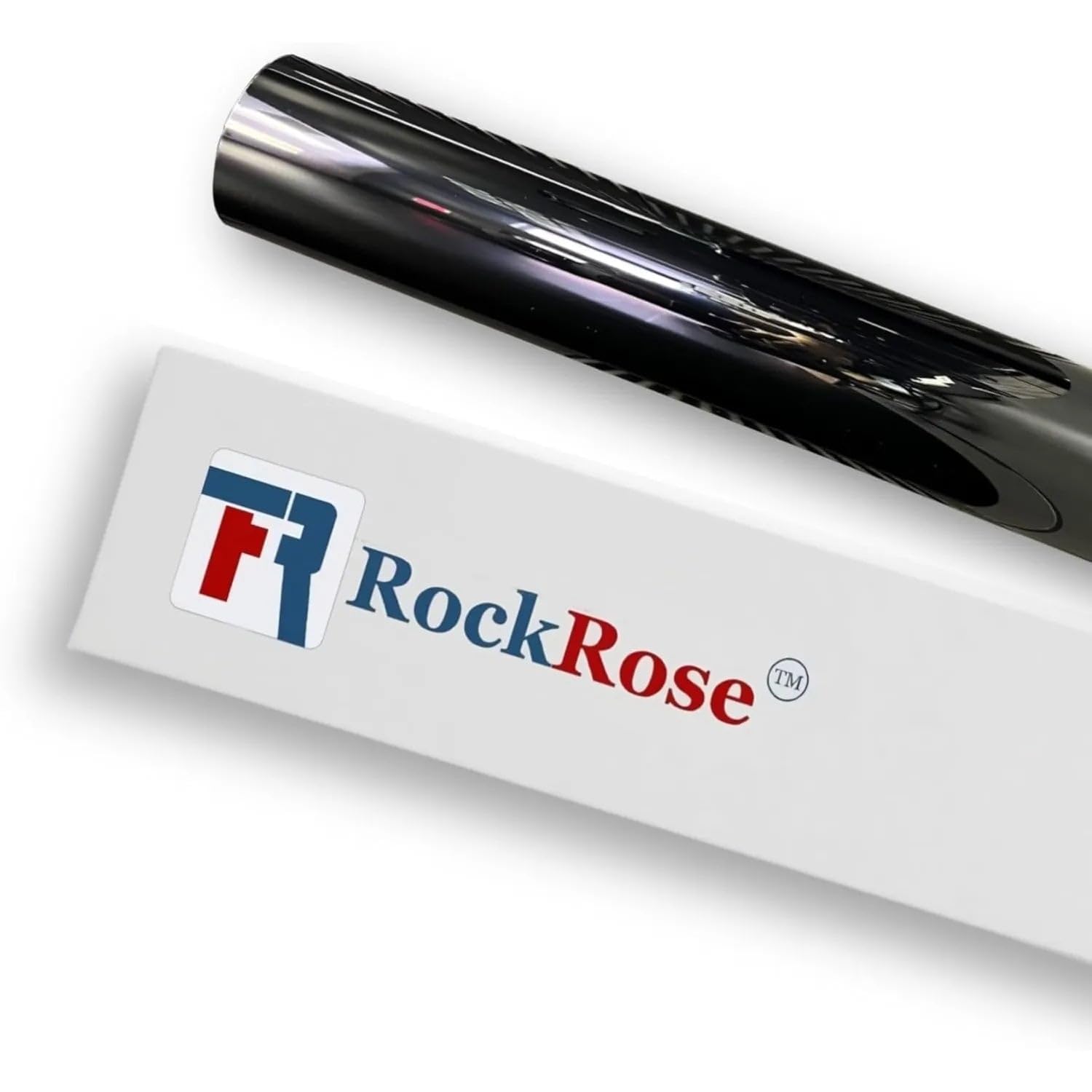
You need the RockRose when you have to do every window on a large vehicle — the RockRose roll measures 36 inches wide by 100 feet long, while a typical short roll measures 20 inches wide by 20 feet long, giving you enough to do a 15-passenger van and still have leftovers. It is a 20% VLT (Visible Light Transmission — deep privacy during the day, but still usable at night) single-ply carbon film that blocks up to 99% of ultraviolet rays. It provides up to 35% infrared heat rejection, so the cabin stays cooler without the film fading to blue over time. The adhesive has that rare the just-right quality: “It is not too sticky or tacky, just the right amount,” as buyers report, which makes sliding it into position during the wet-apply process genuinely forgiving for a first-timer.
The trade-off is the 1-ply (single-layer) construction — it is thinner than a 2-ply film, which means careful squeegee work is required to avoid creases on curved rear windows. The roll end arrives crushed often enough that Amazon’s own summary flags it as a recurring packing issue. Inspect the tube immediately and photograph damage before installation.
Why owners pick it
- Film quality is the most-praised aspect — buyers who have used many tints call it “the best film I have seen” for the price.
- 100-foot length at 36-inch width covers SUVs, vans, and trucks in one purchase instead of two rolls.
- Heat-shrink installation (with a heat gun) lets it conform to complex curves for a professional fit.
Know before you buy
- Single-ply film is thinner than multi-layer options; easier to crease if you rush the squeegee step.
- Roll ends sometimes arrive crushed, so unpack and check immediately on delivery.
The value king for big vehicles: If you are tinting an entire SUV, van, or truck and want a single roll that covers everything with a forgiving adhesive, this is the roll to order.
Think twice if: You want the absolute thinnest installation possible — the 1-ply requires more patience on compound curves than a 2-ply film.
2. IAQWE 35% VLT Ceramic Car Window Tint Film 20 in x 20 ft
True ceramic film at a price that undercuts every shop quote by miles.
You get actual nano-ceramic film (not dyed polyester) in a 20-inch-wide by 20-foot-long roll at a mid-range price point. It delivers on the heat-relief promise — owners mention immediate comfort improvement after installation. The 35% VLT strikes the safest legal balance, reducing glare for daytime driving while keeping side mirrors usable after dark. The material is a 5-layer construction that holds glass fragments together on impact (shatterproof behavior), and the scratch-resistant coating means it handles regular window operation without showing track marks.
The film runs thinner than many budget rolls; a dull blade catches easily and tears the edge. “One roll covered a 15-passenger van minus front windows” is real-world proof that coverage is generous for a sedan or coupe, but the 20-foot length means larger vans or SUVs need two rolls. A minority of customers note the tint arrives in a plain cardboard tube with no edge protection, so bend damage is a known risk.
Real heat blocker: Even with the thinness caveat, the heat deflection from the ceramic layer is immediate — the car feels noticeably cooler on the first sunny drive. The bubble-free adhesive helps a first-timer avoid the frustration that cheaper dyed films cause.
Buy this for: The genuine heat rejection of a ceramic film without paying ceramic-tier prices. It is a strong pick for anyone whose car sits in direct afternoon sun.
skip it if your vehicle has heavily curved rear glass that needs a thicker, more forgiving film to avoid creases.
3. YIFUOK 2PLY Premium Carbon 20% VLT 20″ x 100FT + 8 Tools
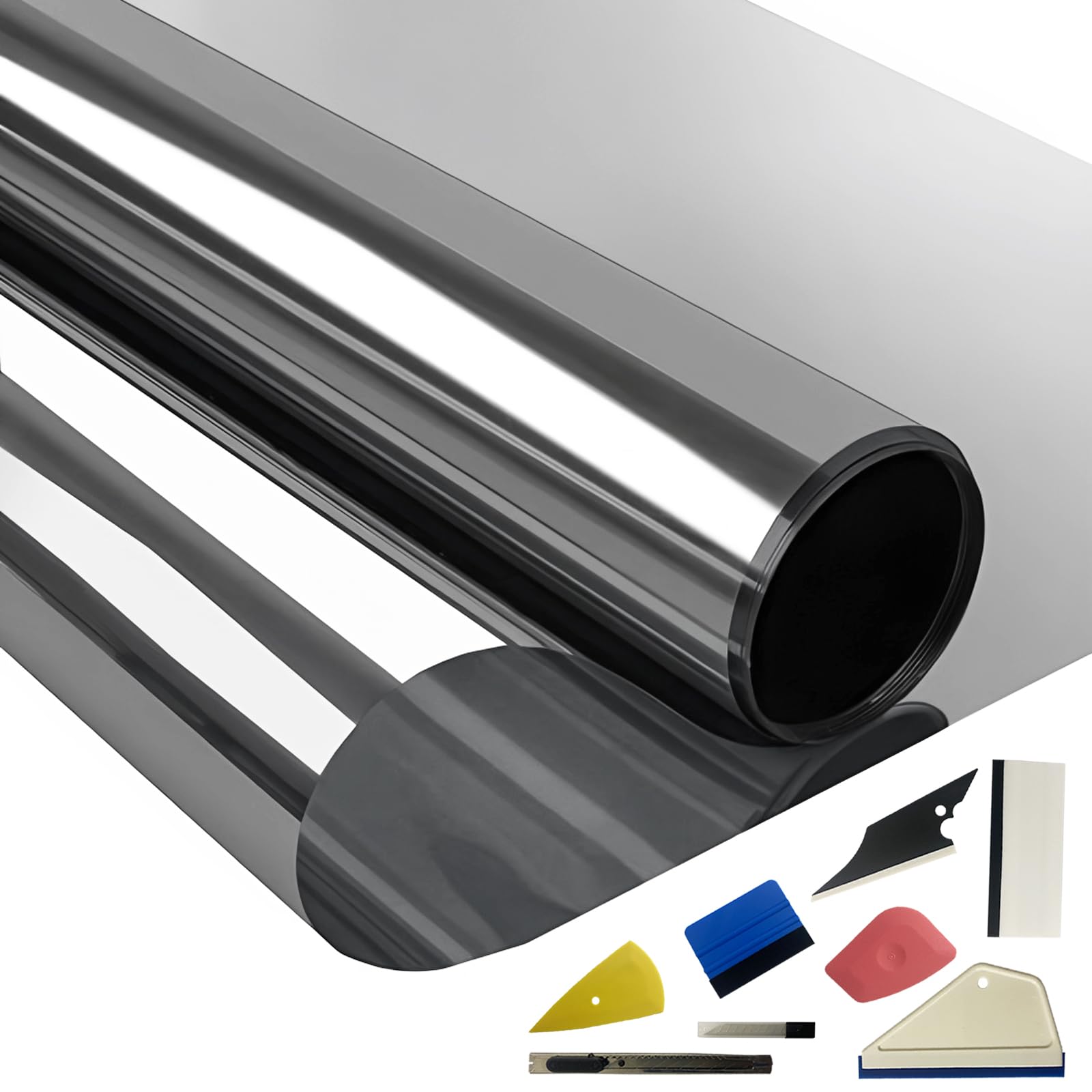
A 100-foot roll plus all the tools you need, right in one box.
You get everything in one shipment: a 20-inch-wide, 100-foot-long carbon film roll at 20% VLT paired with 8 installation tools (a squeegee, blade, application solution, and more). The film is 1.5-mil (0.0015 inches) thick 2-ply carbon construction, which gives it a heft that resists tearing during the pull-and-stretch step on curved windows. It blocks 99% of UV (ultraviolet) rays and cuts infrared radiation to keep cabin temperatures manageable.
One owner running a 35% VLT version on a 2022 Hyundai Kona N discovered the film measured 27% and 28% on two gauges during state inspection, failing legal limits. If your state enforces strict VLT limits, treat the labeled percentage as approximate and test with a meter before permanent installation. The included tools are basic-level quality — the squeegee works fine, but the blade may need swapping for a sharp replacement on a second vehicle.
Kit convenience pays off: For someone who has never tinted before, having the tools in the same package removes the guesswork of buying a separate squeegee and cutting blade. The carbon material also means zero signal interference for GPS (Global Positioning System) and phone reception.
Ideal for: A first-time DIYer who wants everything in one shipment and a long roll to practice on.
Watch out for: VLT may run darker than labeled — verify with a meter if your state does inspection checks.
4. LuxeShade Professional 35% Premium Carbon 24IN x 100FT
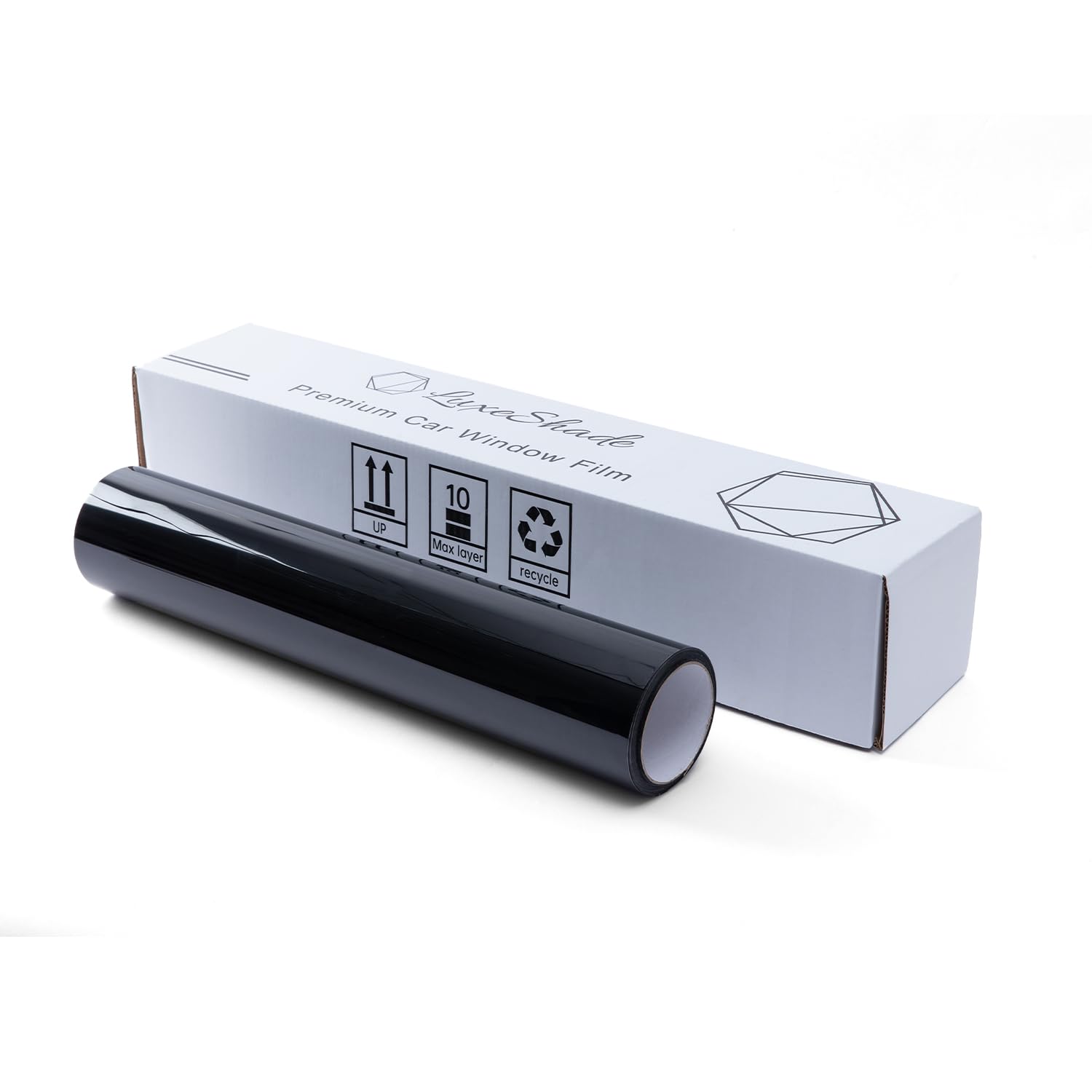
A 24-inch-wide roll that fits tall rear hatches without splicing two strips.
Most budget rolls top out at 20 inches wide, which leaves a gap on the tall rear window of an SUV or hatchback. This LuxeShade roll is 24 inches wide by 100 feet long, giving you an extra four inches of height. That extra width means one continuous piece for many hatch windows instead of a seam. The film is a 2-mil (0.002 inches), 2-ply carbon nano-tech construction that owners describe as sturdy and durable against sun wear — it keeps houses noticeably cooler, according to several reports. It blocks UV (ultraviolet) and reduces heat buildup while letting you see out clearly in the 35% VLT (Visible Light Transmission) shade.
The peel-and-stick application is straightforward, but the film’s thicker build makes it less forgiving on extreme compound curves compared to a ceramic film that shrinks more aggressively under a heat gun. The 24-inch width also means you waste a bit more material on narrow sedan side windows, though the 100-foot length gives you plenty to spare.
Better coverage for SUVs: If you drive a tall SUV, van, or crossover, the 24-inch width is the single spec that makes your tinting job easier. It avoids the headache of butting two 20-inch strips together on a large rear glass.
Reach for this if: You need to cover a large rear hatch or tall side windows in one continuous piece without splicing.
Not the pick for: Heavily curved sports-car windows where a more pliable ceramic film would shrink-fit better.
5. TOYOCO Ceramic Car Window Tint Film, 5% VLT, 20″ x 20FT
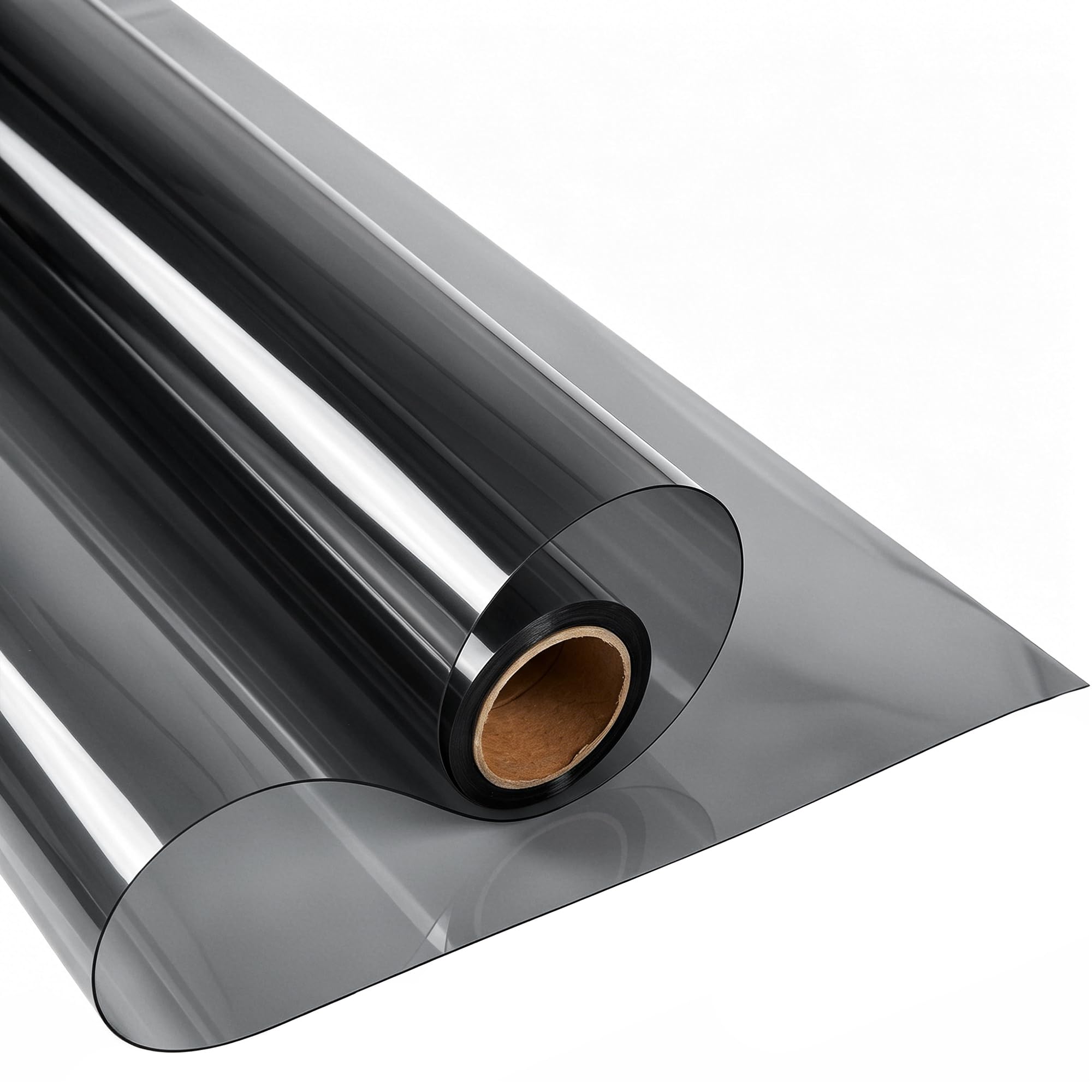
A genuine 2-ply ceramic film that costs less than a tank of gas.
You get a 2-ply nano-ceramic construction for a low price. This 20-inch by 20-foot film blocks 99% of UV (ultraviolet) rays and does not interfere with GPS (Global Positioning System) or cell signals (a problem with cheap metal-based films). The 5% VLT (Very Low Transmission — limo-tint darkness) provides maximum daytime privacy and glare reduction. Reviewers point out a dramatic heat difference inside the vehicle immediately after installation. The roll comes in six VLT choices (5%, 15%, 20%, 35%, 50%, 70%), so you can match your state’s legal limits or mix shades across windows.
The 5% VLT is very dark — night driving in unlit areas is genuinely compromised. A vocal minority report the film started “bubbling and peeling almost immediately, and the finish looks uneven and cheap,” which suggests that consistency across batches varies. Installation is also a skill-hurdle; the film is not the most forgiving, sticking to itself during maneuvering if the slip solution dries too fast.
Huge heat drop for the money: Even with the mixed reviews on long-term adhesion, the immediate heat reduction is the consistent praise. For a beater truck, farm vehicle, or temporary tint while you save for a pro job, the value is undeniable.
Best for: A tight-budget ceramic experiment on a secondary vehicle or a quick privacy solution where you accept some risk on longevity.
Avoid it if: You need a guaranteed long-term outdoor film — the bubbling reports, though a minority, point to durability limits.
6. ARANA 35% VLT Ceramic Car Window Tint Film 20″ x 20FT
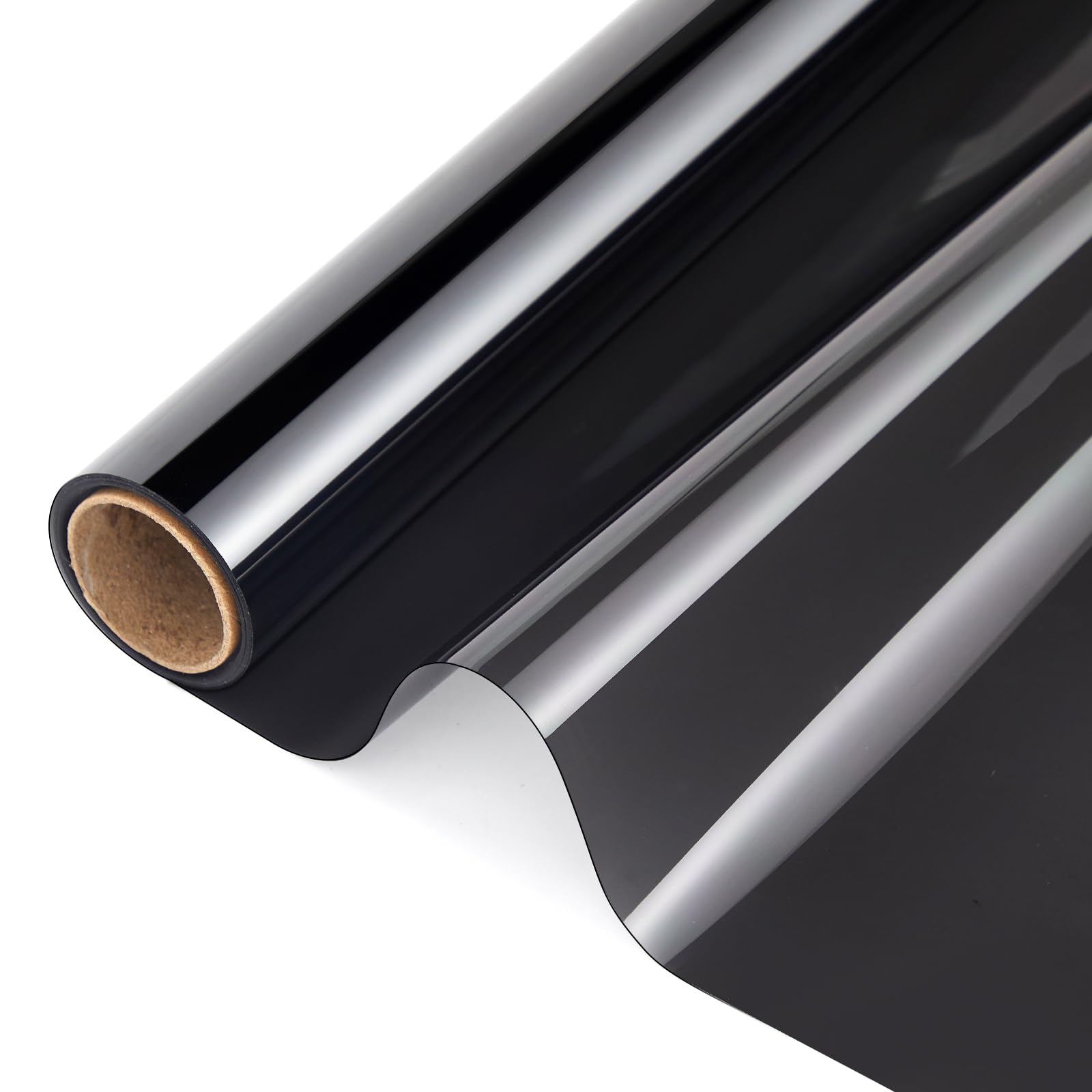
Ceramic UV protection at a price that makes dyed film look overpriced.
The ARANA uses a nano-ceramic layer to block 99% of both UVA and UVB (ultraviolet A and B) radiation, reducing solar heat buildup without the metallic content that scrambles phone signals. It is a 35% VLT film, giving you a balanced middle-ground between privacy and night-time visibility. It comes in a 20-inch by 20-foot roll that covers the side windows of most sedans and small SUVs. The company backs it with 18 months of after-sales support, which is a meaningful warranty tier for a budget ceramic roll.
The film is not as dark as advertised — owners comparing it to 5% VLT found it closer to 20%, so if absolute privacy is your goal, go with a darker VLT option. The material is also thin and creases easily if you apply heavy pressure with a squeegee without enough slip solution. A professional installer refused to work with one roll, calling it “poor quality material,” though that experience appears to be an outlier given the general positive tone on value.
Warranty gives confidence: The 18-month support period directly addresses the skepticism around budget ceramic films. If the adhesive fails or the film discolors, you have a clear path to resolution.
Grab it for: A first-time ceramic installation on a car that does not see extreme heat — the UV protection is real and the warranty covers you.
Pass over it for: A dark-privacy build where you need the labeled VLT to be exact and the film to handle aggressive curves without creasing.
7. JNK NETWORKS Precut Window Tint Kit for Car, SUV, Minivan
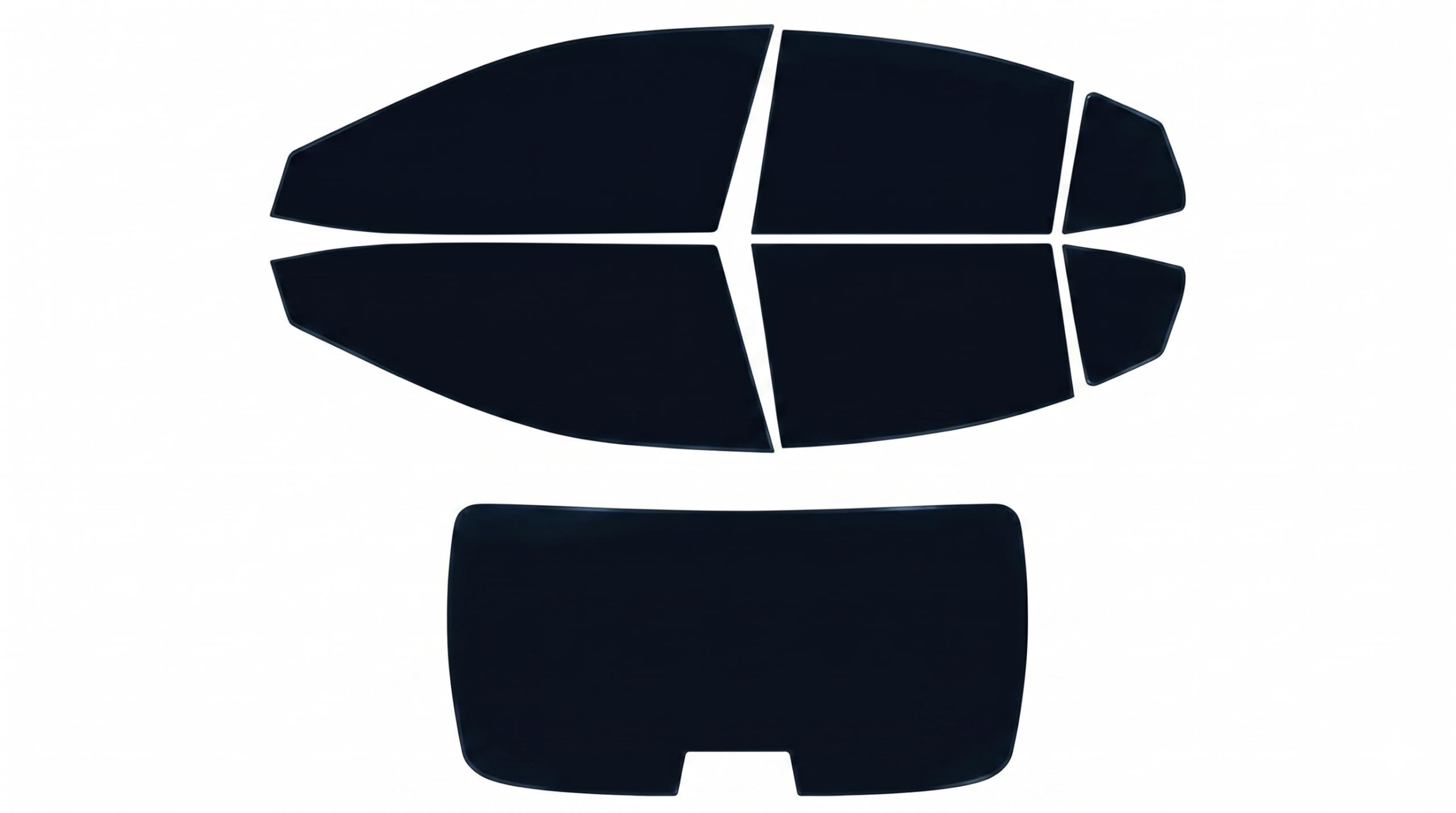
Computer-cut pieces for your exact car model — no measuring, no trimming.
This kit eliminates the most intimidating part of DIY tinting: cutting the roll to the correct shape. The pieces are precut by laser or die to your vehicle’s year, make, and model (covering all side windows and the rear windshield). You unbox a set of shaped film pieces and apply them directly. A 25-year tinting professional bought this for a 2020 Ford Explorer and confirmed the shapes are perfect, calling it faster than removing door panels. Made in South Korea from premium polyester, the film supports heat-shrinking for curved glass and is available in 5%, 15%, or 30% VLT combos.
The convenience comes at a fit-cost. Several shoppers say the rear window pieces are oversized and need trimming anyway (defeating the “precut” purpose), while some rear side pieces arrive undersized, leaving slivers of untinted glass. The film also lost adhesion and peeled on one buyer’s car after a few days, though the seller issued a prompt refund. The 3.9-star average across many ratings reflects the inconsistency — when it fits, it is easy; when it does not, it wastes an afternoon.
Pro-level time saver when it fits: If your vehicle is a common model (Ford Explorer, Jeep, Honda Civic), the odds are in your favor — experienced tinters praise the precise cutting. For less common models, the sizing gamble is real.
Who this works for: A driver who is nervous about cutting a roll and wants a bolt-on experience on a popular vehicle — the precut design removes the hardest skill barrier.
Who should skip it: Anyone with an uncommon model or year — the fit gamble can cost you time if the pieces are off.
Understanding the Specs
VLT (Visible Light Transmission)
This is the percentage of visible light the film lets through your window. A 5% VLT is very dark (limo-style), 35% is medium (legal for front-side windows in many states), and 70% is nearly clear. Lower VLT numbers give more privacy and glare reduction but reduce your night vision. Always check your state’s legal limit for front-side windows before picking a percentage — 35% is a safe default for most drivers.
Film Type: Dyed, Carbon, and Ceramic
Dyed film is the cheapest but fades to purple and offers weak heat rejection. Carbon film uses carbon particles to block infrared heat without fading, and it does not interfere with radio or GPS (Global Positioning System) signals. Ceramic film scatters infrared and UV (ultraviolet) rays with nano-particles, giving the best heat rejection and optical clarity at a higher price. If you park in direct sun, spring for ceramic — the cabin temperature difference is immediate and dramatic.
FAQ
Can I apply window tint to the inside or outside of the glass?
How long does DIY window tint actually last?
Will window tint interfere with my phone or GPS signal?
What VLT percentage is legal for front windows?
Can I use car window tint on my home windows?
How do I remove bubbles after the tint is already on the window?
What tools do I need besides the film roll?
How long should I wait before rolling down tinted windows?
Can I tint just the rear windows and leave the fronts clear?
What does 2-ply film mean for durability?
Final Thoughts: The Verdict
For most people, the do-it-yourself window tint kits winner is the RockRose 20% 36 in x 100 ft because it marries massive coverage with a forgiving adhesive and genuine carbon construction at a price that undercuts smaller rolls per square foot. If you want true ceramic heat rejection on a budget, grab the IAQWE 35% VLT Ceramic 20 in x 20 ft. And for the driver who does not trust themselves with a blade, the JNK NETWORKS Precut Kit is the one to reach for — accepting the fit gamble on less common vehicles is the only real trade-off.
How We Picked
We do not accept paid placement. Every pick is matched to a real buyer and a real use-case; we do not hands-on test units.
Sources & Methodology
Specifications: manufacturer listings and product documentation. Review insights: verified customer reviews, as of July 2026. Pricing: not shown on this page (it changes often); check the current price via the retailer link.
As an Amazon Associate, GoCarLife earns from qualifying purchases. This does not affect which products we feature.