
Our readers keep the lights on and the garage heater humming. As an Amazon Associate, I earn from qualifying purchases.
Specs are compiled from manufacturer listings and verified buyer reviews and can change over time — please confirm the key details on the product page before buying.
Setting a windshield is a two-person wrestling match if you don’t have the right gear. Between the old sealant that refuses to let go, the awkward weight of the glass, and the need to position it perfectly the first time, a bad tool turns a two-hour job into an all-day fight. This guide picks the tool that actually makes installation straightforward — the one that lets you focus on the fit, not the fight.
I’m Mo Maruf — the founder and writer behind GoCarLife. This guide is built by comparing the manufacturers’ published specifications and the patterns across verified customer reviews, so you get each pick’s real strengths and trade-offs instead of marketing spin.
Whether you are a pro shop or a first-time DIYer, picking the right windshield setting tool depends on how you remove the old bond and how you set the new glass — and the nine options here cover every approach, budget, and skill level.
Our Picks at a Glance


How To Choose The Best Windshield Setting Tool
The right tool depends on whether you are prying out a rubber lock strip, cutting through urethane, or lifting a fresh windshield into place. Most jobs break into three stages — removal, cleanup, and installation — and no single tool covers all three equally well. Knowing which stage demands the most from you points straight at the tool that saves the most time.
Removal Style — Cold Knife vs. Air Powered vs. Lock Strip
A cold knife is a long, sharp blade you pull manually through the adhesive. It is simple, quiet, and works on any vehicle, but it takes muscle on a big windshield. An air-powered remover runs off your compressor and buzzes through the sealant in seconds, though it needs an air supply and the blades can be expensive to replace. For older cars using a rubber gasket, a lock strip tool pulls the weatherstripping into place — it is a totally different motion from cutting adhesive, so be sure your vehicle type matches the tool you choose.
Handle Design and Ergonomics
A handle you can grip without cramping after the second car matters more than any blade material. Look for a tool with an offset or swiveling tip if you are reaching into deep dashes, and a non-slip or foam-covered pull handle if you will be tugging hard. An oblong handle that resists rolling off the hood saves you from chasing a tool across the shop floor.
Blade Options and Replacement Cost
Some tools come with a single disposable blade; others accept standard utility blades or a proprietary set (a blade made only for that specific tool). Check whether replacement blades are easy to find and how much they cost — a cheap tool with expensive consumables quickly stops being a bargain. A quick-release blade system that does not require a screwdriver lets you swap blades between cuts in seconds.
Quick Comparison
| Model | Best For | Weight | Blade System | Build Material | Amazon |
|---|---|---|---|---|---|
| Lisle 48600 Offset Lock Strip Tool★ Best Overall | Lock strip installation on classics | 6.4 oz | Swiveling tip | Metal | Amazon |
| Auto Glass Windshield Removal Tool, 18″Also Great | Clean, one-piece removals | 12 oz | Screw-fixed blade | Steel | Amazon |
| UltraWiz 3007k Lever KnifePro Workhorse | Daily pro use, ergonomic | Light (aluminum) | Quick-release lever | Aluminum | Amazon |
| Equalizer Cold Knife | Variable height, tool-free changes | Light (aluminum) | Unique clamping device | Aluminum / Stainless Steel | Amazon |
| Astro Pneumatic WINDKO ONYX Air Remover | Fast, powered removal | 2.3 lb | Proprietary, 3-blade set | Metal / Plastic | Amazon |
| Tool Aid SG 87900 | Budget-friendly straight cuts | 9 oz | Tempered steel, extra blade | Tempered Steel | Amazon |
| PipeKnife Quickset Tool w/ WRD Cups | Full professional setting kit | 3.5 lb | N/A (setting tool) | Aluminum / Rubber | Amazon |
| SOLUDE 2-Pack Suction Cups | Lifting large heavy glass | 2.9 lb | N/A (lifting tool) | Aluminum Alloy / Rubber | Amazon |
| CRL E.Z.D. De-Glazing Tool | Window glass removal | 7.7 oz | Fixed flat blade | Solid composite | Amazon |
In‑Depth Reviews
1. Lisle 48600 Offset Windshield Locking Strip Tool
Our pick — over 4.5★ from 500+ verified ratings; the strongest balance of quality and price.
The offset swivel tool that makes short work of lock-strip weatherstripping on classic trucks and tractors.
For any vehicle with a rubber locking strip (a thin rubber bead that locks the gasket in place) — think an old Chevy pickup or a skid loader — this is the exact tool you need. The offset design gives you extra clearance around the gasket, and the tip swivels 90 degrees in either direction to work where a straight tool simply will not fit. Buyers report that it takes about “5 min per side for first-time install,” which is remarkably fast for someone who has never done the job. The body weighs only 6.4 ounces, so it is easy to maneuver into tight corners. It is completely different from the PipeKnife or the Tool Aid cutter — this tool does not cut adhesive at all. It pushes the locking strip into the gasket channel, a specific motion that urethane cutters cannot replicate. The functionality earns the most praise by a wide margin, with durability also running high. If your project uses a lock strip, the Lisle is the only tool on this list that does that job right.
One specific use, perfectly solved: if you work on old GM, Ford, or agricultural glass with locking strips, this tool saves you from fighting the rubber for an hour. For urethane-bonded modern glass, you need a cold knife instead.
Perfect for: classic car restorers and heavy-equipment mechanics who regularly encounter lock-strip windshields.
Not useful for: modern urethane-bonded windshields — it is a strip tool, not a cutter.
2. Auto Glass Windshield Removal Tool, Cut Out Long Knife, (18 Inch)
The long-reach cold knife makes a clean, one-piece windshield cut a reality.
You want this tool when you need the whole windshield out in one piece without cracking it. The 18-inch length lets you slice through urethane (the black adhesive that bonds modern glass) and old sealant from inside the car, so number plates and trim stay protected. Buyers report it is “sharp out of box, holds edge” — a crucial trait when you are cutting through thick caulking and mirror mastic (sticky backing material) behind a rear glass. It weighs only 12 ounces, so your forearm does not fatigue after several cuts, and the grips stay put without slipping off. Compared to the Tool Aid SG 87900, which is 7.3 inches long, this knife has an 18-inch blade (the package measures 24 x 5 x 1 inches) for deep dashes and wide windshields. The trade-off is a screw-fixed blade: swapping it requires a screwdriver, which slows you down in a production job lane. But for a shop that values a clean, one-piece removal over quick blade swaps, that is a small concession.
Why It Wins
- Stays sharp through multiple windshields — no mid-job blade change.
- Thin profile slips behind deep-set glass where round handles jam.
- Grips are molded securely so they never slide off mid-pull.
The Honest Trade-Off
- Blade changes need a screwdriver, unlike lever-release competitors like the UltraWiz 3007k.
- At 12 ounces it’s heavier than the 6.4-ounce Lisle lock strip tool.
Grab it if: you regularly do full windshield removals and want a sharp, long-lived blade that cuts thick adhesives without cracking the glass.
Think twice if: you need to swap blades every few cuts — the screw-fix slows a high-volume workflow.
3. UltraWiz 3007k Lever Knife Knife Auto Glass/Windshield Removal Tool
The aluminum lever knife designed for techs who change blades between every car.
What wins people over here is the quick-release lever (a clamp that opens and closes by hand): you push it, swap the blade, and tighten — no screwdriver, no lost fasteners. That speed matters when you are cutting dozens of windshields a week. The body is aluminum, lighter than the steel Cold Knife, and the foam-covered pull handle gives you a comfortable grip even when you are pulling at an odd angle. Owners mention that one owner who uses it daily says the tool “cuts through glass” — obviously a figure of speech for the urethane surrounding it — while another describes it as “reliable” after 100+ cuts. The particular version ships in purple (or black depending on availability), and it is noticeably bigger than the standard UltraWiz, which gives you more leverage on heavy glass. It is a mid-premium price that lands between the budget cold knives and the air-powered Astro tool, making it a smart balance for a pro building a long-term kit.
A confident buy for: any technician who values fast blade changes and a comfortable, cramp-free grip over multiple cars. The big lever handle is the standout feature that pays for itself in saved minutes.
Best suited for: daily professional use where blade swaps happen between every job and the cost of downtime outweighs the tool price.
Not ideal if: you are on a tight budget — this sits above the entry-level cold knife options.
4. Equalizer Cold Knife

The cold knife with a unique lever clamp that adjusts blade height without pins or bolts.
Where other knives force you to loosen bolts or release pins to adjust blade depth, the Equalizer uses a clamping device that locks blades without needing holes in the knife. That means you can raise or lower the blade by a fraction of an inch in seconds, which is a real advantage when you are working around a deep-set gasket or a curved windshield. The handle is an oblong shape — not round — so it does not twist in your hand while you pull, and it will not roll off a vehicle hood. The foam-covered pull handle is attached to the body, so you never have to remove the handle to change the blade. It comes with one Z2 blade (a 1.5-inch wide blade), and the handle is larger than standard knives, which translates to less hand cramping on long jobs. For a shop manager equipping multiple techs, the adjustable height and tool-free blade swaps reduce the “I need a different tool” stops during a busy day.
Standout feature: the oblong aluminum handle that prevents twisting and hood-rolling — a small but daily-useful improvement over every round-handle cold knife.
Reach for this if: you want a cold knife that adjusts to different glass depths without reaching for a tool every time.
Look elsewhere if: you prefer a longer blade for deep dash work — this uses a 1.5-inch wide blade, shorter than some dedicated long knives.
5. Astro Pneumatic Tool WINDKO ONYX Air Windshield Remover

The pneumatic sealant cutter that buzzes through adhesive like a hot knife through butter.
When you are removing windshields in a high-volume shop, every minute counts. The Astro WINDKO runs off your air compressor and uses a flexible blade mount that you can position in 12 different ways — each at 30-degree increments — so you can reach awkward corners of a windshield without contorting your wrist. It comes with three blades: a 57mm bent blade, a 52mm bent curved blade, and a 35mm flat-nose straight blade, which cover the most common removal geometries. Customers note: one owner says it “cuts through side of windshield in like 10 seconds,” though the same owner notes the bottom of the glass sometimes requires a manual tool. The teasing throttle (a trigger that lets you control speed gradually) and regulator give you easy speed control, so you don’t tear the rubber gasket. At 2.3 pounds and 29 inches long, it is heavier than a cold knife, but you are not the one pulling — the air does the work. The main downsides are that the bottom bead often still needs a manual cold knife, and replacement blades (sold separately) can cost nearly as much as the tool itself.
What It Does Best
- Cuts side and top sealant in roughly 10 seconds per side.
- 12-position blade mount reaches every angle a cold knife struggles with.
- The rear exhaust tube keeps noise lower than old air-knife designs.
What to Watch
- Bottom urethane bead often still requires a manual cold knife.
- Replacement blade sets cost nearly as much as the tool itself.
- Requires an air compressor — not for mobile or cordless work.
Best for: a shop with compressed air that needs to crank through removals fast, especially on heavy equipment and bonded glass.
skip it if: you work without an air supply or you primarily do lock-strip classic cars (this tool is for cutting urethane, not rubber).
6. Tool Aid SG 87900 Windshield Removal Tool

The low-cost straight cutter that has introduced thousands of DIYers to windshield removal.
This is the tool that over 900 buyers have reviewed, and it remains a staple because it works for straight cuts. The tempered steel blade and the pull handle that gives you extra leverage are exactly what you need for a simple removal on a flat windshield. As reviewers point out, one owner used it to remove and reseal the back window of an R32 Skyline and said the job “wouldn’t be possible without this tool” — proof of its surprising effectiveness for its size. It comes with an extra blade, which is a thoughtful touch at this price point. Compared to the 18-inch Auto Glass Windshield Removal Tool, the Tool Aid is a compact 7.3 inches long, limiting its reach on deep dashes. The recurring gripe is blade durability: several shoppers say that the blades can break right away, especially if you twist them aggressively. The tool works best when you use a heat gun to soften old sealant — without heat, the job gets much harder.
Where it fits: the first windshield remover for a home garage or a backup for a pro shop. If you keep the blade straight and use heat, it gets the job done for a fraction of the price.
Grab it for: occasional DIY removals on older vehicles where you can spare the time to go slow and heat the sealant.
Trade up if: you are removing multiple windshields a week — the blade life here does not match a dedicated cold knife.
7. The PipeKnife Quickset Tool w/WRD Cups – B Model Series

A full professional setting system that replaces the strong-arm method with vacuum-controlled precision.
This is not a removal tool — it is a setting tool, meaning it holds the windshield while you position it. The B Model Series WRD Cups (WRD stands for “Water Retention/Drain” — cup design for holding glass) provide high-performance vacuum grip that secures the glass without risking a slip. A shop owner who runs an auto glass company says they use it “on almost every single job” and that it “saved my back from a lot of strain,” which points directly at the real benefit here: you are not holding the full weight of a windshield while aligning it. The lightweight design makes it easy to maneuver, and the 5-piece set includes everything you need for the installation side of the job. The model weighs 3.5 pounds and measures 20 x 15 x 5 inches. The catch is real: one owner who works full-time in auto glass reports they have not been able to use it on a single car, citing the bottom piece’s inability to attach on certain vehicles. This seems to be a fitment issue that depends on the vehicle’s pinchweld shape (the metal lip the windshield sits on) — the Basic (B) cups are specifically for setups without a fiber line cutout (a slot for a thin wire antenna).
The honest bottom line: when it fits, it transforms a two-person awkward lift into a one-person precise placement. But fitment varies by vehicle, and the price makes it a shop tool, not a garage experiment.
Reach for this if: you own or manage an auto glass shop and want to reduce physical strain on your techs while speeding up installation.
Proceed with caution if: you cannot confirm compatibility with the specific vehicle mix your shop sees — test fitment before committing to the investment.
8. 2 Pack Heavy Duty Vacuum Handle Suction Cups for Lifting Large Glass
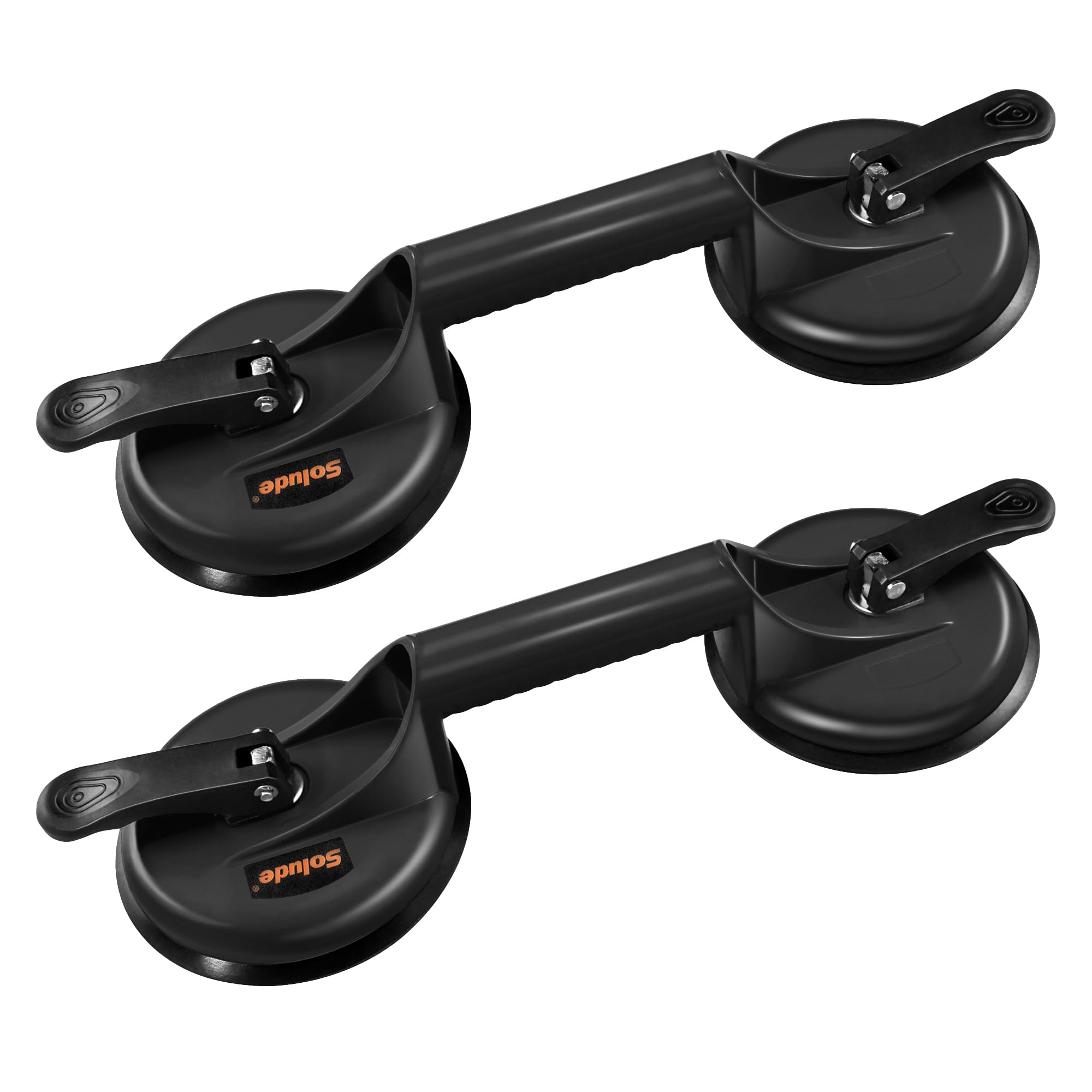
A twin-pack of aluminum suction cups that makes lifting heavy glass a one-person operation.
Lifting a windshield or a large shower glass panel is awkward, because you need both hands to hold it and a third hand to guide it in. These suction cups solve that by giving you two secure handles that lock onto the glass with a flip of the lever. One owner reports successfully removing an 89″ x 36″ mirror using two of these plus a third handle — the suction held throughout the entire move. The body is made from durable aluminum alloy with a natural rubber base, so it resists shop abuse. The quick-release locking lever flips down to lock the suction in place, and it stays stable. The tool has a wide range — it works on windshields, shower glass, tiles, granite, mirrors, and even laminate flooring. But the durability score is mixed: some owners mention that one unit in a pack can arrive with a cracked rubber seal, causing it to lose grip. That is an occasional quality-control miss, not a design flaw, but it means you should inspect each cup before trusting it with a heavy glass panel.
What Works
- Locks onto glass with a simple lever flip — no pumping or priming.
- Works on multiple materials: glass, tile, granite, and metal.
- Aluminum body resists rust and wear on a daily job site.
What to Check
- Inspect the rubber seal on arrival — a small percentage of units have a cracked seal that leaks suction.
- The tool requires a clean, smooth, flat surface to seal properly.
Best for: any task that involves lifting and positioning large, heavy glass panels — auto glass, shower doors, mirrors, or flooring.
Proceed carefully: always test the suction on the glass before trusting the full load, especially if you are working alone overhead.
9. CRL E.Z.D. Glazer De-Glazing Tool – EZ1010
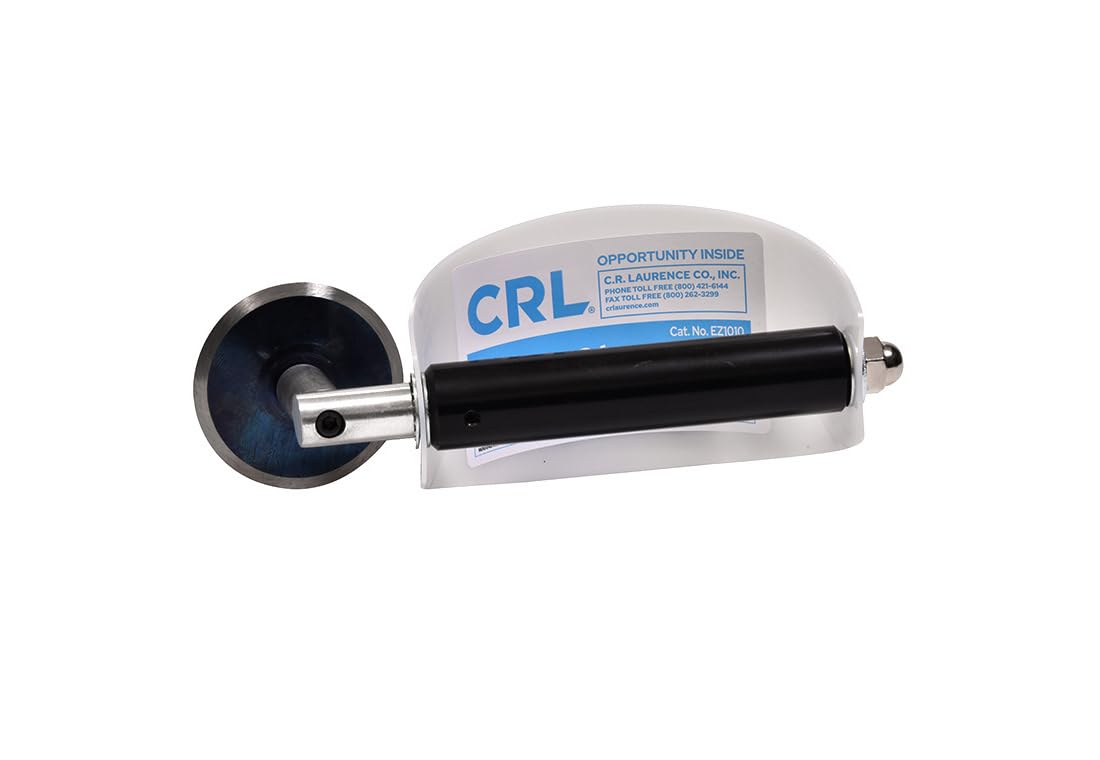
The glazier’s precision tool that slips flat against the glass to cut old adhesive out of the pocket.
This is a specialist tool for removing window panes from aluminum frames, rather than cutting windshields out of cars. The blade lies flat on the glass and slides into the glazing pocket (the groove that holds the glass in the frame), separating the glass from the frame without cracking the pane. It is extremely simple to use — you push it in, run it along the perimeter, and the old silicone, butyl tape (a sticky rubber sealant), or foam gives way. It weighs only 7.7 ounces, so you can handle it all day without fatigue. Crews who use it regularly say the quality holds up well, and it saves roughly 10 minutes per window compared to a manual knife. The durability feedback here is the honest caveat: several customers note that the tool breaks quickly, and opinions on value are mixed because the price feels high for a simple flat tool. For a glazier (a window glass specialist) replacing dozens of window panes a week, the time savings justify the cost. For a one-time DIY window repair, a utility knife and a heat gun might make more sense.
The real use case: this lives in a glazier’s bag, not an auto glass tech’s kit. If you are pulling car windshields, you need a different tool. If you are re-glazing storefront windows, this is purpose-built.
Reach for this if: you do window frame replacement regularly and want to cut removal time by ten minutes per pane.
Look elsewhere if: your primary work is automotive windshield removal — this does not cut urethane.
Understanding the Specs
Cold Knife vs. Air Knife
A cold knife is a manual long blade you pull by hand through the urethane sealant around a windshield. It gives you the most control and works on any vehicle, but it takes physical effort and time. An air knife runs off a compressor and vibrates through the sealant in seconds, but it costs more, needs compressed air, and often cannot reach the bottom bead of the urethane — meaning you still need a cold knife for that last bit.
Blade Swivel and Offset
An offset handle angles the blade away from the tool body, giving you extra clearance around deep dashboards and windshield frames. A swiveling tip rotates up to 90 degrees in either direction, which lets you reach into corners that a straight blade simply cannot access. Both features matter most on vehicles with tight cabin-to-windshield gaps or curved rear glass.
FAQ
Can I use a cold knife on a urethane-bonded windshield?
What is the difference between a lock strip tool and a cold knife?
How long does it take to remove a windshield with a manual cold knife?
Do suction cups work on curved windshields?
What does “offset design” mean on a windshield tool?
Can I break the windshield with a cold knife?
Do I need an air compressor for an air-powered windshield remover?
Are replacement blades easy to find for most windshield tools?
What does “B Model Series” mean on the PipeKnife Quickset tool?
How do I prevent the tool blade from loosening during use?
Final Thoughts: The Verdict
If you want one dependable pick, the windshield setting tool winner is