
Our readers keep the lights on and the garage heater humming. As an Amazon Associate, I earn from qualifying purchases.
Specs are compiled from manufacturer listings and verified buyer reviews and can change over time — please confirm the key details on the product page before buying.
Rear-wheel drive and winter is a tense combination — the back end wants to step out the second you touch the throttle on a patch of snow. The fix is a set of dedicated winter tires built to bite into ice and packed snow, not skate across it. This guide covers nine of the strongest contenders, from studdable workhorses to studless ice experts, each chosen for proven grip when the temperature drops.
I’m Mo Maruf — the founder and writer behind GoCarLife. This guide is built by comparing the manufacturers’ published specifications and the patterns across verified customer reviews, so you get each pick’s real strengths and trade-offs instead of marketing spin.
If you drive a coupe, sedan, or sport truck that sends power to the rear wheels, picking the right rubber is the best safety upgrade you can make — here is the straight read on the best winter tires for an rwd car.
Our Picks at a Glance

How To Choose The Best Winter Tires for an RWD Car
Rear-wheel-drive vehicles already have a traction disadvantage on low-friction surfaces because the driven axle carries less weight than the front axle on most cars. Winter tires compensate with softer rubber compounds that stay pliable below 45°F and tread patterns that snow-pack into the grooves for extra bite. Without that compound, all-seasons turn into hockey pucks in the cold.
Three-Peak Mountain Snowflake (3PMSF) Certification
This is the industry symbol that a tire meets severe-snow-service standards — not just a marketing logo. A 3PMSF-rated tire has demonstrated at least 10% better snow traction than a standard all-season during controlled testing. For an RWD car, this certification should be your baseline, not a bonus.
Studdable vs Studless Construction
Studdable tires have molded holes that let you insert metal studs for maximum ice grip, but many states restrict stud use during certain months. Studless winter tires like the Bridgestone Blizzak use silica-based compounds and microscopic biting particles (the Blizzak calls them “Bit Particles”) to grip ice without metal. For most daily drivers, a high-quality studless tire is quieter and more convenient.
Load Index and Speed Rating
The load index (for instance, 91 or 102) tells you how much weight each tire can support at maximum pressure. An RWD sports car or heavy sedan needs the correct load range — fitting a tire with a lower index than your car’s original spec is not safe. Speed ratings (T, H, S) indicate the maximum safe sustained speed; most winter tires are rated S (112 mph) or T (118 mph), which is fine for legal highway driving.
Quick Comparison
| Model | Best For | Load Capacity | Tire Weight | Diameter | Amazon |
|---|---|---|---|---|---|
| Cooper Evolution Winter 225/65R17★ Best Overall | Deep snow confidence | 1874 lbs | 26 lbs | 28.5 in | Amazon |
| Bridgestone Blizzak WS90 195/65R15Best Value | Premium ice performance | 1356 lbs | 19.4 lbs | 25 in | Amazon |
| Bridgestone Blizzak WS90 205/55R16Premium Pick | All-out snow and ice authority | 1356 lbs | 21.8 lbs | 24.9 in | Amazon |
| NEXEN Winguard Winspike 3 205/55R16 | Budget-friendly winter grip | — | 21.2 lbs | 24.9 in | Amazon |
| Firestone Winterforce 2 195/65R15 | Affordable studdable versatility | 1356 lbs | 25.1 lbs | 25 in | Amazon |
| General Tire Altimax Arctic 12 225/60R16 | Precise braking and handling | — | 26.5 lbs | 26.6 in | Amazon |
| Firestone Winterforce 2 205/55R16 | Lateral grip in slush | 1356 lbs | 19.9 lbs | 24.9 in | Amazon |
| Cooper Discoverer Snow Claw LT275/70R18 | Full-size truck winter hauling | 3640 lbs | 48.5 lbs | 33.4 in | Amazon |
In-Depth Reviews
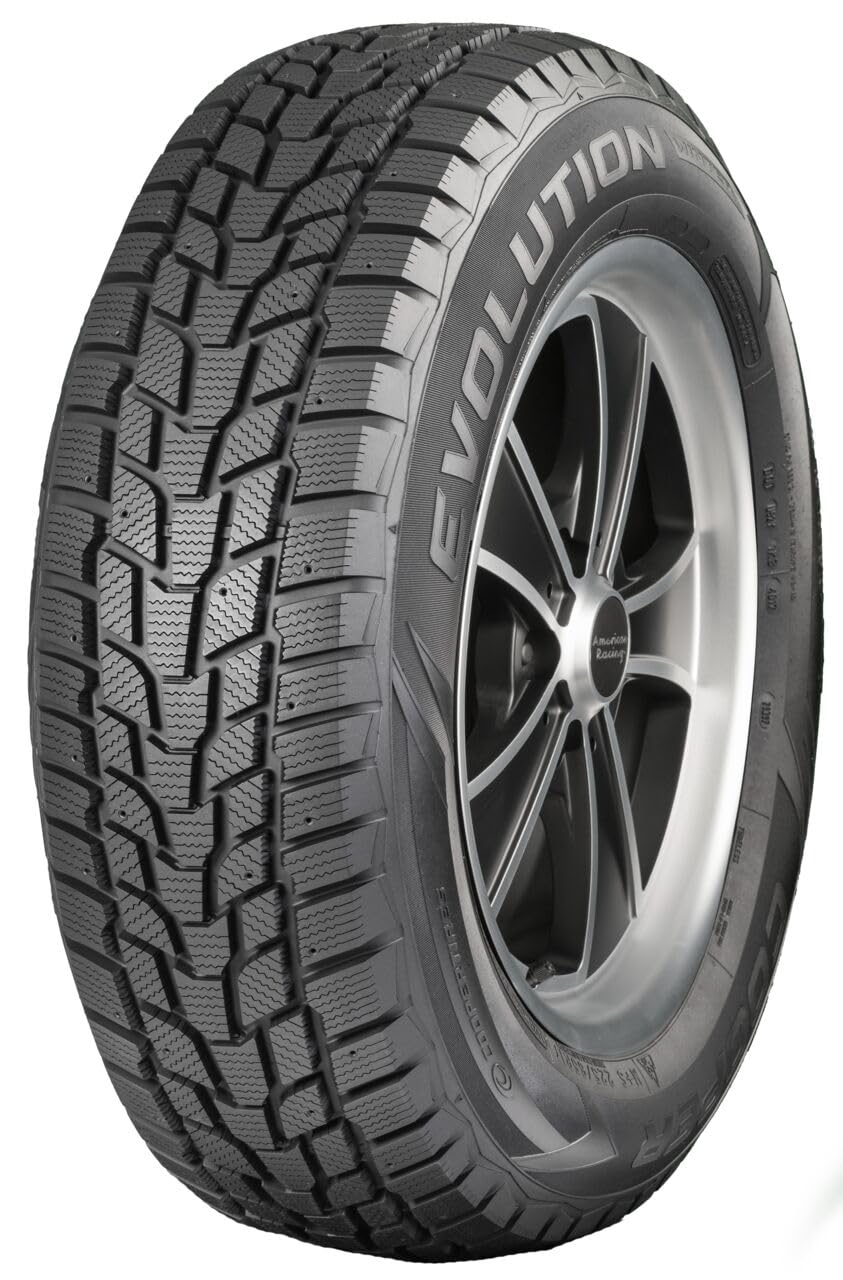
1. Cooper Evolution Winter 225/65R17 102T Tire
Our pick — over 4.5★ from 750+ verified ratings; the strongest balance of quality and price.
The deep-snow specialist that shrugs off a foot of powder without complaint.
This Cooper tire carries the Three-Peak Mountain Snowflake badge, meaning it has proven itself in controlled severe-snow testing. In real terms that translates into an ability to track straight through slush and packed snow where all-seasons would wash out — exactly the reassurance an RWD car needs. The studdable design adds an extra layer of ice insurance if your state allows metal studs. Buyers report it is “unstoppable in 8-inch snow until bumper hit,” a sentiment that lines up with the crowd consensus: snow performance and traction are the top two praise points.
At 26 pounds per tire and with a load capacity of 1874 pounds (load index 102), this is a substantial tire built for SUVs and heavier sedans. It is also noticeably heavier than the Nexen Winspike 3, at 26 pounds compared to 21.2 pounds, which speaks to the Cooper’s more aggressive, dense tread construction. The item diameter is 28.5 inches versus the Nexen’s 24.9 inches, so make sure your wheel wells have the clearance.
Where It Dominates
- Exceptional deep-snow bite — owners mention plowing through a foot of snow without drama
- Rated for 1874 pounds per tire, giving heavier RWD cars a sturdy safety margin
- Quiet on dry pavement for a studdable winter tire, according to multiple reviews
What To Consider
- At 26 lbs it is on the heavier side, which can slightly reduce fuel economy
- Requires aftermarket studs for maximum ice traction — an extra step
Reach for this if: you face real, deep snow regularly and want a studdable tire that feels planted on cold pavement without roaring.
Think twice if: your winter is mostly light ice and wet roads — a studless design may ride smoother and last longer on dry stretches.
2. Bridgestone Blizzak WS90 Winter/Snow Passenger Tire 195/65R15 91 H
The studless ice champion that turns a Corolla into a snowmobile.
Bridgestone’s Blizzak name carries serious weight in winter driving circles, and the WS90 lives up to it. The key technology here is what Bridgestone calls “Bit Particles” — microscopic materials molded into the tread compound that create thousands of tiny biting edges on the rubber surface as the tire wears. The result is impressive traction on ice without needing metal studs. Owners describe a Corolla going “through snow like nothing,” which speaks directly to an RWD driver’s biggest fear: getting stuck or spinning out at a light.
This is a studless ice and snow tire with a 91 load index (1356 pounds capacity) and an H speed rating. At 19.4 pounds it is notably lighter than the Cooper Evolution Winter (26 pounds), so unsprung weight on a smaller RWD sedan stays low. The trade-off owners consistently mention is the soft rubber compound wears quickly if driven on warm, dry roads — as one buyer puts it, “Remove in warm weather to avoid rapid wear.”
Bottom line on grip: For an RWD car that weighs under 3,500 lbs, this is about as good as studless winter traction gets. The compound trade-off means you swap them out faithfully every spring, but the confidence on ice is worth the seasonal chore.
Best suited for: the RWD sedan or coupe driver who wants premium ice performance without the hassle of studs.
Not ideal if: you need to drive through deep, unplowed snow regularly — the directional tread works best on packed surfaces.
3. Bridgestone Blizzak WS90 Winter/Snow Passenger Tire 205/55R16 91 H
The wider Blizzak that brings more contact patch to the party for heavier RWD cars.
This is essentially the same WS90 compound and Bit Particles technology as the 195-width version above, but in a 205/55R16 fitment that offers a wider footprint and a slight edge in lateral grip. For a heavier RWD sedan or a coupe with a bit more power, the extra rubber on the road helps put the power down without overwhelming the rear tires. Owners call it the “best tire for driving in snow” and note it provides “excellent traction in snow, wet snow, slush, and ice.”
The load index stays at 91 (1356 pounds per tire), so it fits the same weight class as the narrower variant, but the 21.8-pound weight is marginally higher than the 195’s 19.4 pounds. That is 1.9 pounds heavier than the Firestone Winterforce 2 in the same size (19.9 pounds), so unsprung mass remains reasonable. The soft-compound caveat follows over: “an incredibly soft rubber tire which is not made to last long on dry road or spring road conditions,” as one owner puts it.
What Stands Out
- Wider 205 tread improves steering feel and lateral bite on ice compared to narrower sizes
- Studless design means no state-restriction worries and quieter highway cruising
- Bit Particles technology delivers compound-level grip that actually improves as the tire wears in
Bear In Mind
- Soft compound wears fast if you run these year-round — seasonal storage is mandatory
- Some owners note the sidewall is relatively soft, so pothole impacts can be felt
Grab this for: a sporty RWD car where you want maximum ice confidence without stud legality concerns.
Look elsewhere if: your winter commute involves long stretches of dry pavement — the Blizzak’s compound will wear prematurely.
4. General Tire Altimax Arctic 12 Studable-Winter Radial Tire-225/60R16 102T XL

The budget-friendly studdable tire that brings premium braking feel to icy corners.
General Tire’s Altimax Arctic 12 has built a reputation as the tire that punches above its price bracket, and the customer consensus backs that — traction is praised most often by a wide margin (66 mentions), and value for money is the second most-discussed point. It is a studdable radial with an XL (extra load) rating at load index 102, making it suitable for heavier RWD cars that need a higher margin of safety. The 45-day trial and 72-month limited treadwear coverage are rare in this price tier and give you a real safety net if the fit or feel does not suit your car.
At 26.5 pounds and a 26.6-inch diameter, this tire sits in a similar weight class to the Cooper Evolution Winter but with a reputation for excellent stopping ability on snow and ice. Owners on front-wheel-drive sedans report it “drastically reduced stopping distance vs. best all-seasons,” and one buyer running it on a Prius even took it off-road in Nevada without durability issues. The alt-text and review data consistently point to a quiet ride — impressive for a studdable winter tire — though some owners note a slightly bouncier feel compared to all-seasons.
Grip verdict: If you want studdable flexibility at a mid-range price with warranty backing that few competitors match, the Altimax Arctic 12 is a smart choice for an RWD car that sees serious snow.
Pick it for: the combination of studdable capability, strong braking feel, and an XL load rating that suits heavier sedans or wagons.
skip it if: you prefer a full studless compound — this tire’s best feature is its metal-stud option, not its bare-rubber ice grip.
5. NEXEN Winguard Winspike 3 Winter Tire – 205/55R16 94T
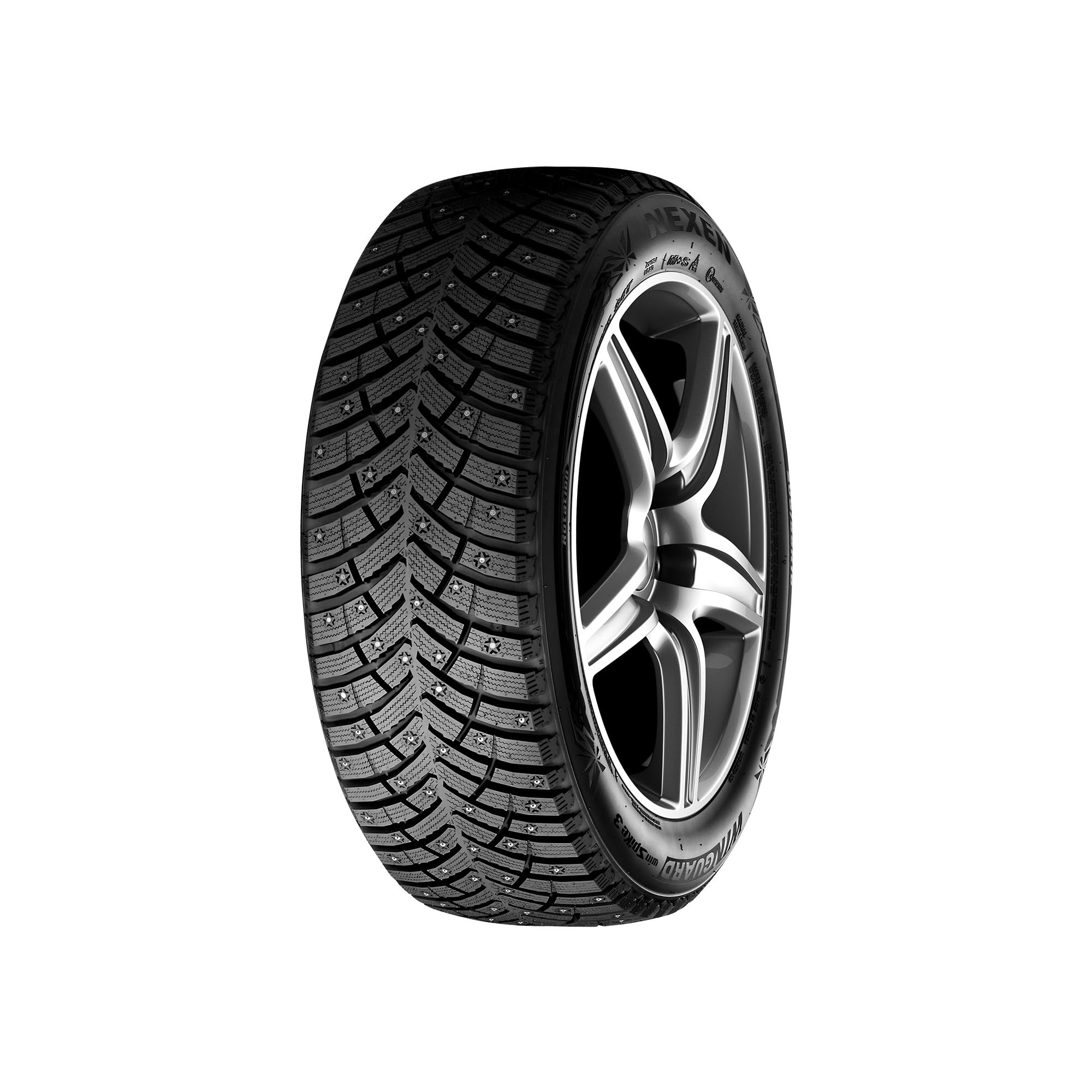
The affordable winter tire that earns its keep on ice while staying affordable.
At the entry-level price point, the Nexen Winspike 3 delivers a surprising amount of capability. It is Three-Peak Mountain Snowflake certified, comes with an XL (extra load) 94 load index, and uses a directional tread pattern with deep grooves that push water and slush out of the contact patch. The most telling owner experience? A buyer drove 27 miles on solid ice without slipping — that is the kind of real-world testimony that gives an RWD driver real confidence. The general consensus in the reviews is that these tires offer excellent performance in snowy conditions, with quality being the aspect owners praise most (78 mentions).
Compared to the Firestone Winterforce 2 in the same size, the Nexen weighs 21.2 pounds versus the Firestone’s 19.9 pounds, and carries a higher speed rating (T vs S), though it lacks the Firestone’s studdable flexibility. The option to add TSMI #12 studs exists, but owners note you can often skip them — the dense siping pattern already provides strong road bite on its own. The most notable downside is a small percentage of owners reporting inconsistent bead seating that led to slow air loss; it is not a common pattern but worth checking your tire pressure more frequently during the first month.
High Points
- Directional tread evacuates slush quickly, reducing hydroplaning risk on wet snow
- 94 XL load index provides a generous safety margin for heavier RWD cars
- Customers note 4+ seasons of use with proper seasonal rotation
Low Points
- A small number of reviewers point out bead defects that cause slow leaks
- Studdable option requires separate purchase of TSMI #12 studs
Best for: the budget-conscious RWD driver who still wants a 3PMSF-certified tire that handles ice without studs.
Consider the Firestone instead if: you need a proven studdable pattern for sustained ice driving and want a lower upfront price.
6. Firestone Winterforce 2 Winter/Snow Passenger Tire 195/65R15 91 S

The no-nonsense winter tire that gets a small RWD car up a snowy dirt road.
Firestone’s Winterforce 2 has been a reliable winter staple for years, and this 195/65R15 size is tailored for smaller RWD cars — think older BMW 3-series, Mazda Miata, or a Toyota Corolla. The load capacity of 1356 pounds (load index 91) is appropriate for lightweight cars, and the studdable tread gives you the option to add metal studs for black-ice country. Shoppers say a night-and-day difference compared to all-seasons, with one buyer driving a VW Jetta noting the tire “enables steep dirt road access day after snowfall.”
The aspects summary shows traction is the top positive point (5 mentions), though the tire aspect itself is marked as MIXED — meaning not every owner had a perfect experience. A small number of owners reported sidewall failures within a few months, so check for any bulges during mounting. That extra weight comes from the dense, studdable tread block design that prioritizes snow plowing over ride plushness.
Bottom line: For a lightweight RWD car that needs to handle moderate snow with the option of studs, this Firestone is a proven, no-frills choice. Just be thorough with your initial fit check.
Grab it for: a small RWD sedan that needs studdable capability at an affordable price point.
pass on it if: you want a lighter, studless compound — the Blizzak WS90 in 195/65R15 is 6 pounds lighter and rides quieter on dry roads.
7. Firestone Winterforce 2 Winter/Snow Passenger Tire 205/55R16 91 S
The snow-and-slush thumper that an 04 WRX owner called “Certified Rippers”.
In the 205/55R16 sizing, the Firestone Winterforce 2 trades the smaller car focus of the 195 width for a broader fitment suited to sportier RWD compacts and mid-size sedans. The load capacity stays at 1356 pounds (load index 91), but the tire weight drops to 19.9 pounds — noticeably lighter than the 25.1 pounds of the 195/65R15 variant, likely due to a different tread-depth target. The customer reviews are uniformly positive on this specific size, with owners describing it as “huge improvement in driving confidence” and noting excellent forward and lateral grip in wet and snowy conditions. A buyer in Northern Wisconsin reports the tires “hook very well in deep snow and also slush,” which is exactly the reassurance an RWD driver needs on unplowed side streets.
The narrative around this tire is consistent: it is a significant upgrade from the Winterforce 1 generation, and the aggressive tread pattern delivers predictable breakaway when you push it. Compared to the Nexen Winspike 3 in the same 205/55R16 size, the Firestone is lighter (19.9 vs 21.2 pounds) but carries a lower speed rating (S vs T). The Firestone also lacks the Nexen’s XL load rating, meaning it is not designed for extra-heavy loading — stick to the weight limits.
Why Drivers Like It
- 19.9 lb weight keeps unsprung mass low for sporty handling feel
- Studdable design gives ice-country owners a traction upgrade option
- Aggressive lateral-edge siping improves cornering grip on snow-packed roads
Trade-Offs
- S speed rating (112 mph) is fine for legal speeds but not track-day friendly
- Standard load rating means you should not overload the car with heavy cargo
Best for: a sporty RWD coupe or sedan that sees regular snow and slush and needs a proven, affordable studdable tire.
Consider the Nexen if: you want an XL load rating and a higher speed rating (T) for occasional highway cruising above 100 mph.
8. Cooper Discoverer Snow Claw Winter LT275/70R18 125/122R Tire

The 10-ply beast that turns a heavy RWD truck into a winter mountain goat.
This is a premium winter tire built for serious work. With a 125/122R load index (3640 pounds per tire) and an E (10-ply) load range, the Snow Claw is not messing around — it is designed for heavy-duty pickups and large SUVs that need to carry, tow, or haul through winter conditions. Cooper’s patented Snow Groove Technology uses tread features that trap snow against the pavement, using that packed snow for greater traction, handling, and stopping power — counterintuitive but proven: snow-on-snow grip is often better than rubber-on-snow. The tire also carries the Three-Peak Mountain Snowflake certification and is pinned for stud insertion.
Owners running these on a 2023 Ford Lightning and a 2007 Chevrolet 2500 HD report great traction in snow, a surprisingly smooth ride for a winter tire, and long-term quality that keeps them coming back — “I have purchased several pairs of these over the years, and I am very happy with the life and quality of the construction,” one repeat buyer says. At 48.5 pounds and 33.4 inches in diameter, this is a large, heavy tire that will fill the wheel wells of a full-size truck completely. The weight is roughly double that of the standard passenger-car winter tires on this list, so expect a corresponding hit to fuel economy when running these.
Biggest Strengths
- 3640 lb load capacity is the highest on this list — built for serious towing and hauling
- E (10-ply) rating means the sidewall resists cuts and punctures on unplowed access roads
- Snow Groove Technology provides traction by using trapped snow for extra grip
Price of Admission
- 48.5 lbs per tire adds significant unsprung mass and will impact ride quality on small bumps
- Niche sizing — only fits trucks and SUVs with 18-inch wheels and generous clearances
The one to buy if: you drive a heavy-duty RWD truck or large SUV and need a true winter tire that can handle deep snow, studs, and high load demands without complaint.
it’s not for you if: you drive a car or light crossover — this tire’s 33.4-inch diameter and 48.5-pound weight are overkill for anything short of a full-size truck.
Understanding the Specs
Load Index and Tire Capacity
The load index is a number (typically 91 to 125) that corresponds to a specific weight each tire can carry at maximum inflation. For example, a load index of 102 means that tire can support 1,874 pounds. For an RWD car, matching or exceeding your vehicle’s original load index is critical because the rear axle carries extra weight during acceleration and load changes. An XL (extra load) tire offers a higher margin, which is useful for heavier sedans or wagons.
Three-Peak Mountain Snowflake (3PMSF)
This marking on the sidewall means the tire has passed a government-standard severe snow traction test, proving it performs at least 10% better in snow than a standard all-season reference tire. For an RWD car, the 3PMSF badge is your assurance that the tread compound and pattern are designed to work below freezing. Tires without this badge may still be sold as “winter” tires but have not passed the standardized test.
Studdable vs Studless
A studdable tire has pre-molded holes that can accept small metal pins for extra bite on bare ice. Studless tires use advanced compounds — like the Bit Particles in the Bridgestone Blizzak — to achieve grip without metal. Studs improve ice braking by as much as 25 percent but are noisy and restricted in many states. Studless tires are quieter and can be used year-round (though the compound wears fast in heat), while studdable ones offer optional peak performance at the cost of noise.
Speed Rating (S, T, H)
The speed rating tells you the maximum speed the tire can safely sustain. An S rating (112 mph) and T rating (118 mph) are the most common on winter tires. For almost all street driving these are fine, but if you have a high-performance German sedan, you may want an H-rated (130 mph) winter tire to match the car’s capability. Always stay at or above the speed rating listed on your door jamb sticker.
FAQ
What size winter tires do I need for my RWD car?
Can I use winter tires year-round on an RWD car?
Do I need studded winter tires for my RWD car?
How many winter tires do I need — two or four?
What does XL (extra load) mean on a winter tire?
Can I install winter tires myself?
How do I store winter tires in the off-season?
What is the difference between the Firestone Winterforce 2 and the Winterforce 2 UV?
How do I know if my RWD car needs a higher load rating?
Can I mix studded and studless tires on the same axle?
Final Thoughts: The Verdict
For most RWD drivers, the winter tires for an rwd car winner is the Cooper Evolution Winter because it pairs deep-snow confidence with a studdable design and a 1,874-pound load rating that suits a wide range of sedans and SUVs — and the crowd of 750+ ratings backs it. If you want premium ice traction without studs, grab the Bridgestone Blizzak WS90. And for a heavy-duty truck that hauls through winter, the Cooper Discoverer Snow Claw is the one to reach for.
How We Picked
We do not accept paid placement. Every pick is matched to a real buyer and a real use-case; we do not hands-on test units.
Sources & Methodology
Specifications: manufacturer listings and product documentation. Review insights: verified customer reviews, as of July 2026. Pricing: not shown on this page (it changes often); check the current price via the retailer link.
As an Amazon Associate, GoCarLife earns from qualifying purchases. This does not affect which products we feature.