
Our readers keep the lights on and the garage heater humming. As an Amazon Associate, I earn from qualifying purchases.
Specs are compiled from manufacturer listings and verified buyer reviews and can change over time — please confirm the key details on the product page before buying.
You walk to the hitch, plug in, and nothing. No tail lights, no brake lights — just the faint sound of corrosion making the connection useless. That is the exact moment a flimsy or wrong trailer wiring plug costs you an afternoon.
I’m Mo Maruf — the founder and writer behind GoCarLife. This guide is built by comparing the manufacturers’ published specifications and the patterns across verified customer reviews, so you get each pick’s real strengths and trade-offs instead of marketing spin.
The best options on the market right now pair rugged materials with straightforward installation, and you’ll find the top wire plug for trailer setups rated by real owners who depend on a solid connection every time they tow.
Our Picks at a Glance
How To Choose The Best Wire Plug for Trailer
A trailer plug is the single point where your vehicle’s electrical system talks to your trailer’s lights and brakes. Picking the wrong one leaves you splicing wires twice. Focus on three things: the connector configuration, the materials used in the housing, and how the plug seals against the elements.
Pin Configuration: 4-Way vs 7-Way
A 4-way flat plug handles the basics — taillights, turn signals, brake lights, and ground. It is the standard for small utility trailers, boat trailers, and landscape trailers. A 7-way round connector adds electric trailer brakes, reverse lights, and auxiliary power (often used for charging a trailer battery). Most trucks with factory tow packages use the 7-way round style. Your choice depends entirely on what your trailer and tow vehicle each have.
Construction: Die-Cast Metal vs Plastic Housing
The housing material determines how long the plug survives on a road trailer. Die-cast metal (like the CURT 58671) resists cracking in cold weather and handles the vibration of highway towing without failing. Plastic housings are lighter and cheaper, but they can warp under heat or snap if the trailer hitch bumps a curb. Brass terminals inside the plug also resist corrosion far better than tin-plated or uncoated steel.
Weather Sealing and Strain Relief
An unsealed plug lets rain, road salt, and mud creep into the pins. That corrosion kills the electrical connection silently. Look for an IP68 waterproof rating on the plug itself, which means it survives dust and full water immersion. Strain relief — a clamp inside the plug that grips the wire jacket — matters just as much because vibration from the road can pull thin wires loose from the terminals.
Quick Comparison
| Model | Best For | Configuration | Housing Material | Weight | Amazon |
|---|---|---|---|---|---|
| CURT 58671★ Best Overall | Best Overall 4-Way | 4-Pin Round | Die-Cast Metal | 9.6 oz | Amazon |
| RV 7 Pin Plug (Oyviny)Premium Pick | Best Waterproof 7-Way | 7-Pin Round | Heavy Plastic | 5.9 oz | Amazon |
| MECMO 4-Pin ExtensionBest Extension | Best 4-Way Extension | 4-Pin Flat (48″) | PU/PVC Jacket | — | Amazon |
| Nilight 4-to-7 Adapter | Best Adapter Combo | 4-Flat to 7-Round | Heavy Plastic | 0.29 kg | Amazon |
| Poweka 7-Way Socket | Best Vehicle-Side Kit | 7-Way Round | Plastic | — | Amazon |
| Gubrdfrsod 7-Pin Cord | Best Heavy-Duty 7-Way | 7-Pin Round (48″) | PVC/Pure Copper | 0.64 kg | Amazon |
| Oyviny 7-to-4 Adapter | Best Truck-to-Trailer Bridge | 7-Blade to 4-Flat | Molded Plastic | 0.22 kg | Amazon |
| CheeMuii 8FT 7-Way Cord | Best 8-Foot Replacement | 7-Pin Round (96″) | Plastic/Rubber | 0.9 kg | Amazon |
| CheeMuii 8FT Cord + Junction Box | Best Full Harness Kit | 7-Pin Round (8′) w/ Box | Heavy Plastic | 1.23 kg | Amazon |
In‑Depth Reviews
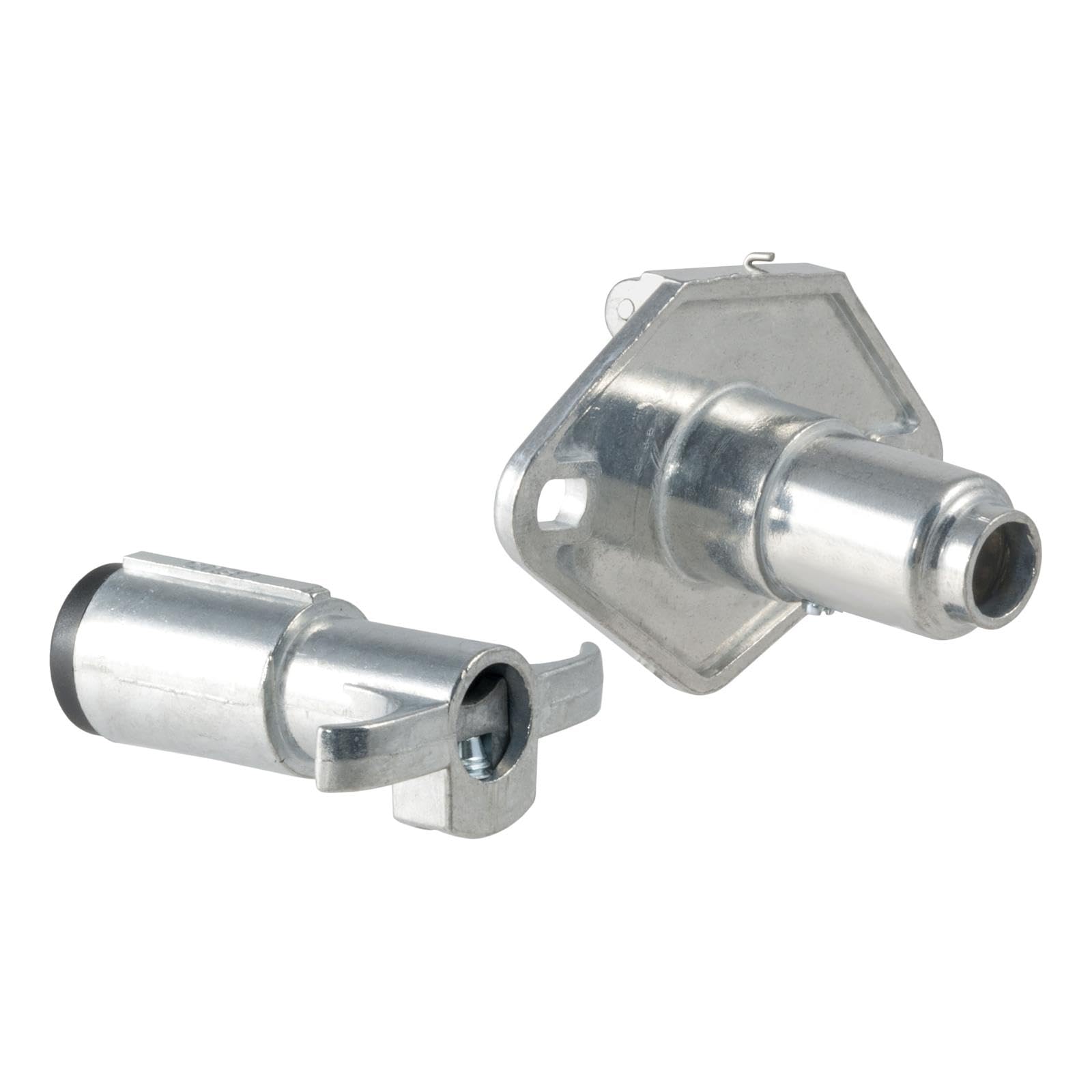
1. CURT 58671 Vehicle-Side and Trailer-Side 4-Pin Round Wiring Harness Connectors
Our pick — over 4.5★ from 750+ verified ratings; the strongest balance of quality and price.
The die-cast metal 4-pin that shrugs off corrosion and road salt.
Where cheap plastic plugs crack and warp within a season, this CURT connector uses a solid die-cast metal housing that survives years of weather and vibration. The ergonomic side tabs make unplugging from the vehicle socket genuinely easier when your fingers are cold or greasy, and the locking tabs click the plug into the socket so bumps on the road don’t wiggle the connection loose. It handles the basics — taillights, brake lights, and turn signals — with concealed terminals that keep rain and dirt away from the splice points.
At 9.6 ounces, this is a heavier, more substantial plug than the 5.9-ounce plastic 7-pin options you see in the list. The weight comes from the metal construction, which owners say feels reassuringly solid compared to the “plastic junk sold in stores.” The recurring note from buyers is to measure your existing plug first — the metal body is larger than standard rubber or plastic connectors and won’t fit every application. Several buyers report cutting the 4-foot harness section and splicing it into their existing wiring with great results, suggesting the wire quality matches the connector’s durability.
What owners praise
- Die-cast metal construction resists cracking and warping where plastic fails
- Locking tabs keep the connection secure even on rough, bumpy roads
- Side grip tabs make plugging and unplugging noticeably easier
The one gotcha
- Metal housing is larger than standard plugs — verify it fits your mounting space before ordering
Reach for this if: you need a 4-pin that will outlast your trailer and don’t mind a slightly larger, heavier plug that delivers metal-grade durability.
Think twice if: your trailer’s plug recess is tight or shallow — the metal body is bulkier than rubber connectors and may not fit.
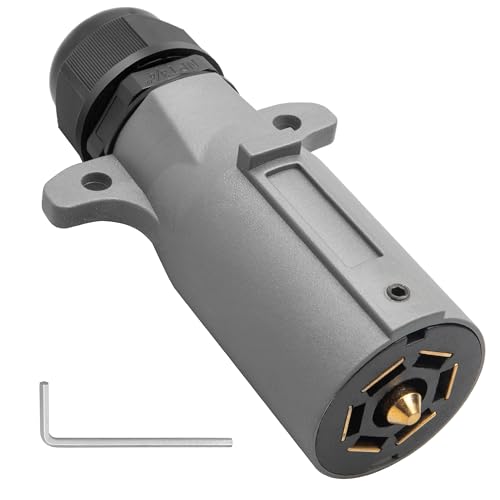
2. RV 7 Pin Trailer Plug with IP68 Waterproof Seal (Oyviny)
The 7-way that arrives waterproof and saves you a shop visit.
This Oyviny 7-pin round plug leads with an IP68 waterproof seal — a proper detachable compression nut and rubber grommet at the wire inlet (3/4-inch NPT) keep moisture out of the terminals completely. Owners note that the brass terminals inside deliver solid conductivity, and the handle hooks on either side give you real grip when seating or pulling the plug from your truck’s socket. The wire inlet accepts a wide range of cable diameters, though a few buyers add heat shrink to get a perfectly snug seal on thinner wires.
The crowd favorite line here is that the plug saved one owner in labor by being straightforward enough to wire themselves. The screw strain relief clamp inside holds the wire jacket tight so road vibration doesn’t pull the strands loose from the brass terminals — a common failure point on cheaper 7-way plugs. It walks the line between heavy-duty plastic and lightweight portability at just 5.9 ounces, at 5.9 ounces versus the CURT’s 9.6 ounces, making it the right choice for anyone who prioritizes easy handling over metal body heft.
The strengths
- IP68 waterproof seal with compression nut stops rain and road spray from reaching the terminals
- Brass terminals resist corrosion and deliver reliable conductivity
- Handle hooks and screw strain relief make installation and daily use simpler
The trade-off
- Plastic housing feels less sturdy than die-cast metal; one owner described it as less durable than factory units
Choose this for: a fully waterproof 7-pin that you can install yourself without a shop visit or special tools.
Look elsewhere if: you need a metal-bodied plug for extreme abuse or a perfect watertight fit with very thin trailer wiring.
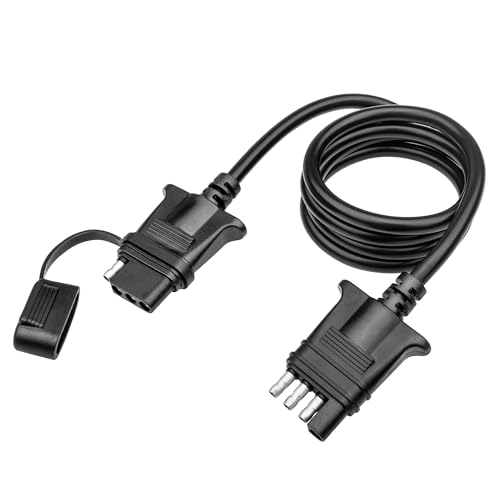
3. MECMO 4 Pin Flat Trailer Extension Cable 48″
A plug-and-play 4-foot bridge for tight or extended hitches.
This 4-pin flat extension cable solves the problem of a trailer connector that is just a few inches too short to reach the vehicle socket. The 48-inch male-to-female cord uses pure copper 18-gauge wire and a heavy-duty weatherproof PU cable sheath that resists abrasion better than the thin PVC found on budget cords. The female end includes a dust cover (an important detail often overlooked) to protect the terminals when the extension is not plugged in.
Several owners cut the cable in half to create separate male and female ends for custom splicing projects, which speaks to the wire quality inside the sheath. The reinforced cable joint at each connector is the weak point on most extensions, but this one addresses it with an over-molded boot that distributes bending stress. Compared to the CURT metal connector above, this is purely a utility part — it does not add durability, it adds reach, and it does that job very well.
Best for: a quick, no-splice fix when your trailer cord is too short to reach the truck’s socket without straining the connection.
4. Nilight 4 Way Flat to 7 Way Round Blade Trailer Adapter

Converts your truck’s 4-flat connector to a full 7-way brake-ready plug.
If your tow vehicle has a 4-way flat connector but your trailer needs a 7-way round plug (for electric brakes or reverse lights), this Nilight adapter bridges that gap without permanent wiring changes. The mounting bracket and included hardware let you bolt the adapter to your trailer hitch or bumper, keeping the conversion permanent rather than dangling. The spring-loaded cover over the 7-way socket seals the contacts against dust and moisture when the trailer is disconnected.
What owners praise most is the “plug and play” nature — the 4-way flat socket on one end accepts your existing vehicle connector, and the 7-way round blade end fits any standard trailer plug. It weighs 0.29 kg and the heavy-duty plastic body has held up well for most users, though a few note the plug can work loose on extremely rough terrain. At this price point, it beats buying a new vehicle-side harness.
Bottom line: the easiest way to add 7-way capability to a 4-flat vehicle without cutting any factory wires.
5. Poweka 7-Way RV Trailer Light Connector Socket Kit
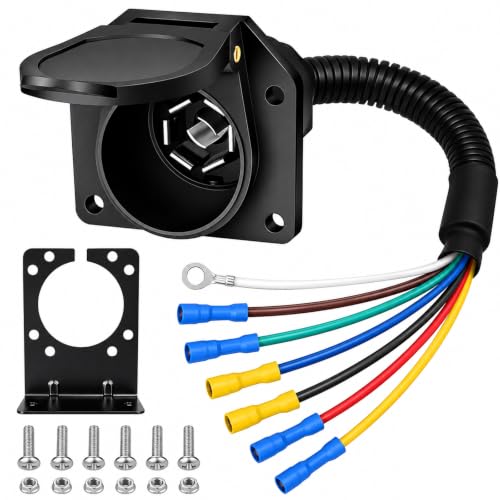
A prewired 7-blade socket kit for installing a fresh vehicle-side connection.
This Poweka kit arrives with the socket, a prewired pigtail harness with color-coded leads, a mounting bracket, screws, nuts, and even a ring terminal on the ground wire. That means you are not hunting for extra hardware at the last minute. The spring-loaded dust cover on the socket keeps debris out of the blade terminals when you are not towing, and the tin-plated 7-blade terminals maintain stable conductivity. Owners say the fit is “perfect” for most truck and RV applications, with several using it as a direct replacement for a worn factory socket.
The honest trade-off is in the materials. A few owners mention the plastic housing and mounting bracket feel less sturdy than a factory-installed socket, and the included wire gauge is on the thinner side. For a light-duty RV or utility trailer used occasionally, it works great. For a heavy equipment trailer that lives on salted roads, you might want the heavier-duty Gubrdfrsod or CURT metal options.
Real talk: the included parts make this the easiest vehicle-side install in the list, but the plastic feels mid-grade compared to metal-bodied competitors.
6. Gubrdfrsod 4 FT 7 Pin Trailer Plug Heavy Duty Cord

Pure copper wire inside a 48-inch cord that handles road grime.
This Gubrdfrsod 7-pin cord uses a mix of 10AWG and 14AWG pure copper wire, with the heavier 10AWG gauge reserved for the ground and power wires that carry the most current. The double-prong terminals inside the plug grip the socket prongs from both sides for a stronger connection than the single-prong design found on many budget plugs. The PVC outer jacket resists abrasion and stays flexible in cold weather, and a rain-proof dust cap covers the plug when it is not in use.
The main thing to watch here is the wiring color code. While the majority of customers note a direct color match to their old camper or trailer wiring, a notable group found the color coding did not follow the standard RV scheme. Check your trailer’s wiring against the included diagram before splicing everything together. At this price, it is a solid heavy-duty 7-pin replacement as long as you verify the pinout.
The verdict: pure copper conductors and double-prong terminals make this a legit upgrade over cheap 7-pin cords — just double-check the wire colors before you cut.
7. Oyviny 7 Way to 4 Way Trailer Plug Adapter (11.6 Inches)

The 11-inch flex adapter that fits trucks with tight hitch gaps.
Many full-size trucks come with a 7-way round plug but no 4-way flat connector — making it impossible to tow a small utility or boat trailer without an adapter. This Oyviny adapter gives you a molded 7-way round plug on one end and a standard 4-pin flat connector on the other, with an 11.6-inch black nylon wire loom that adds flexibility. Several owners driving a 1998 Dodge Ram 1500 and a 2020 Mercedes Sprinter confirm it fits the tight space between the hitch receiver and the truck’s factory 7-way plug.
The molded construction makes this sturdier than adapters with separate crimp-on connectors, and the rubber dust cover on the 4-pin end protects those flat terminals when you are not towing. At 0.22 kg, it is light enough to store in the glove box. The only real limitation is the fixed 11.6-inch length — if your truck’s plug is mounted far from the hitch, you might need the MECMO 4-foot extension cable as well.
One to grab if: your 7-way truck plug is too close to the hitch to fit a standard adapter without bending the wires.
8. CheeMuii 8 FT 7 Way Trailer Wiring Harness Kit

An 8-foot replacement cord for long trailers and extended hitches.
When your existing trailer cord is frayed at the plug or just too short to reach the vehicle without stretching, this CheeMuii 8-foot cord gives you the extra 4 feet you need. The 7 color-coded wires inside use a double-prong design for a more secure connection at the plug end, and the molded cable-to-plug joint eliminates the weak spot where cheap cords usually fail. The outer jacket feels well-insulated and resists weather, though a few owners describe it as slightly thinner than the factory cord it replaced.
The console is that the wiring instructions matter here. While many reviewers point out a direct swap that fixed intermittent brake light issues, the mixed feedback on color coding and installation means you should verify each wire’s function with a multimeter before finalizing your connections. The 0.9 kg weight is heavier than the 4-foot Gubrdfrsod cord, which makes sense given the additional length.
Best for: replacing a short 7-pin cord when your trailer’s plug sits far from the hitch or you need to route the cable through a frame channel.
9. CheeMuii 7 Way Trailer Wiring Harness Kit with Junction Box (8 FT)

A complete 7-wire harness with junction box for clean, organized splices.
This kit bundles the 8-foot 7-pin cord with a weather-resistant junction box, saving you the hassle of buying and mounting one separately. The junction box has 7 color-coded terminals that match the wire functions, making the wiring process straightforward even if you have never crimped trailer wires before. The box itself is built from heavy-duty plastic and sits under the trailer frame well, though some owners mention the absence of a rubber seal between the lid and the box base, which can let moisture seep in if mounted in a direct spray zone.
The kit weighs 1.23 kg, reflecting the additional heft of the junction box. Owners consistently call it “nice quality” and “easy to install,” with several noting the clear instructions helped them get the wiring right on the first attempt. If you are wiring a trailer from scratch or replacing a corroded original harness, this is the most complete package in the list — no separate shopping for a junction box, terminals, or mounting hardware.
The whole-package call: the junction box with pre-labeled terminals eliminates guesswork, but add a bead of silicone around the lid edge if your trailer sees heavy rain or pressure washing.
Understanding the Specs
AWG Wire Gauge
AWG stands for American Wire Gauge — it is the thickness of the copper wire inside the cable. A lower number means thicker wire: 10AWG wire is thicker and carries more current than 14AWG. Thicker wire reduces voltage drop over longer distances, which matters most for trailer brakes and the auxiliary power circuit. A 7-way harness often uses 10AWG for the main power and ground wires, and 14AWG for the light circuits. If your trailer has electric brakes, make sure the blue brake wire is at least 12AWG.
IP68 Waterproof Rating
IP stands for Ingress Protection. The first digit (6) means the connector is fully dust-tight — no particles get in. The second digit (8) means it can be submerged in water deeper than 1 meter for a sustained period without leaking. For a trailer plug, this rating guarantees the brass or copper terminals stay dry even when you drive through a deep puddle or wash the trailer with a pressure washer. Plugs without an IP rating rely on a simple rubber boot that degrades over time.
Die-Cast vs Plastic Housing
Die-cast metal is made by pouring molten zinc or aluminum into a steel mold under high pressure. The result is a housing that is denser, heavier, and much stronger than injection-molded plastic. Metal housings resist cracking in sub-zero temperatures and survive the vibration of highway towing without fatigue. Plastic housings are cheaper, lighter, and corrosion-proof — but they can snap if the plug is pinched between the hitch and a curb, and the mounting tabs often break before the connector’s first winter.
Strain Relief Clamp
Inside the plug body, a strain relief clamp is a small metal or plastic piece that screws down onto the outer jacket of the trailer wire. Its job is to transfer pulling force from the wire to the plug body instead of to the individual terminal connections. Without a strain relief clamp, a snagged cord can pull the copper wires loose from the brass terminals — a failure that is hard to diagnose because the plug looks fine from the outside.
FAQ
What is the difference between a 4-way and 7-way trailer plug?
Can I replace a 4-pin flat plug with a 7-pin round plug?
How do I wire a 7-pin trailer plug to my vehicle?
What does it mean if my trailer plug has IP68 waterproof rating?
How long do trailer wiring plugs last?
Why do my trailer lights work on one vehicle but not another?
Can I extend a trailer wiring cable without splicing?
Are heavy-duty trailer plugs worth the extra weight?
What wire gauge do I need for a 7-pin trailer plug?
Can I use a 7-way to 4-way adapter permanently?
Final Thoughts: The Verdict
For the majority of shoppers, the wire plug for trailer that balances durability, ease of installation, and real-world weather resistance is the CURT 58671 — its die-cast metal body and locking tabs make it the last 4-pin connector you will buy. If you need a fully waterproof 7-pin for an RV or boat trailer, the Oyviny 7-pin plug with IP68 seal is the crowd favorite for good reason. And for wiring a new trailer from scratch, the CheeMuii 8-foot harness kit with junction box gives you every part in one box — no extra trips to the hardware store.
How We Picked
We do not accept paid placement. Every pick is matched to a real buyer and a real use-case; we do not hands-on test units.
Sources & Methodology
Specifications: manufacturer listings and product documentation. Review insights: verified customer reviews, as of July 2026. Pricing: not shown on this page (it changes often); check the current price via the retailer link.
As an Amazon Associate, GoCarLife earns from qualifying purchases. This does not affect which products we feature.