
Our readers keep the lights on and the garage heater humming. As an Amazon Associate, I earn from qualifying purchases.
Specs are compiled from manufacturer listings and verified buyer reviews and can change over time — please confirm the key details on the product page before buying.
Messy wires under the hood are not just an eyesore — they are a risk. Heat, abrasion, and moisture can turn a tidy harness into a short-circuit disaster. The right wire loom wraps your cables in a protective sleeve that fights off engine bay heat and keeps everything organized for years. You need a loom that stays put, resists heat, and looks professional — here are the most durable, easy-to-use options that actually deliver.
I’m Mo Maruf — the founder and writer behind GoCarLife. This guide is built by comparing the manufacturers’ published specifications and the patterns across verified customer reviews, so you get each pick’s real strengths and trade-offs instead of marketing spin.
Get your engine bay organized with the Best wiring looms for cars that deliver real heat protection, easy install, and a clean finish you can be proud of.
Our Picks at a Glance

How To Choose The Best Wiring Looms for Cars
Choosing a wiring loom for your car is different from picking one for your home entertainment center. An engine bay faces constant heat, vibration, and the risk of chafing against sharp metal edges. The right loom protects your wiring investment and makes future troubleshooting far easier.
Material and Temperature Rating
The material of the loom determines how much heat it can handle. Woven polypropylene sleeves generally withstand up to around 302°F (150°C), which is enough for most under-hood applications away from the exhaust itself. Standard polyethylene split-loom tubing usually handles a lower range, typically -40°F to 200°F. If you are routing wires directly near a manifold, you may need a higher-temperature-rated sleeve or you should keep a safe air gap.
Split vs. Wrap-Around Design
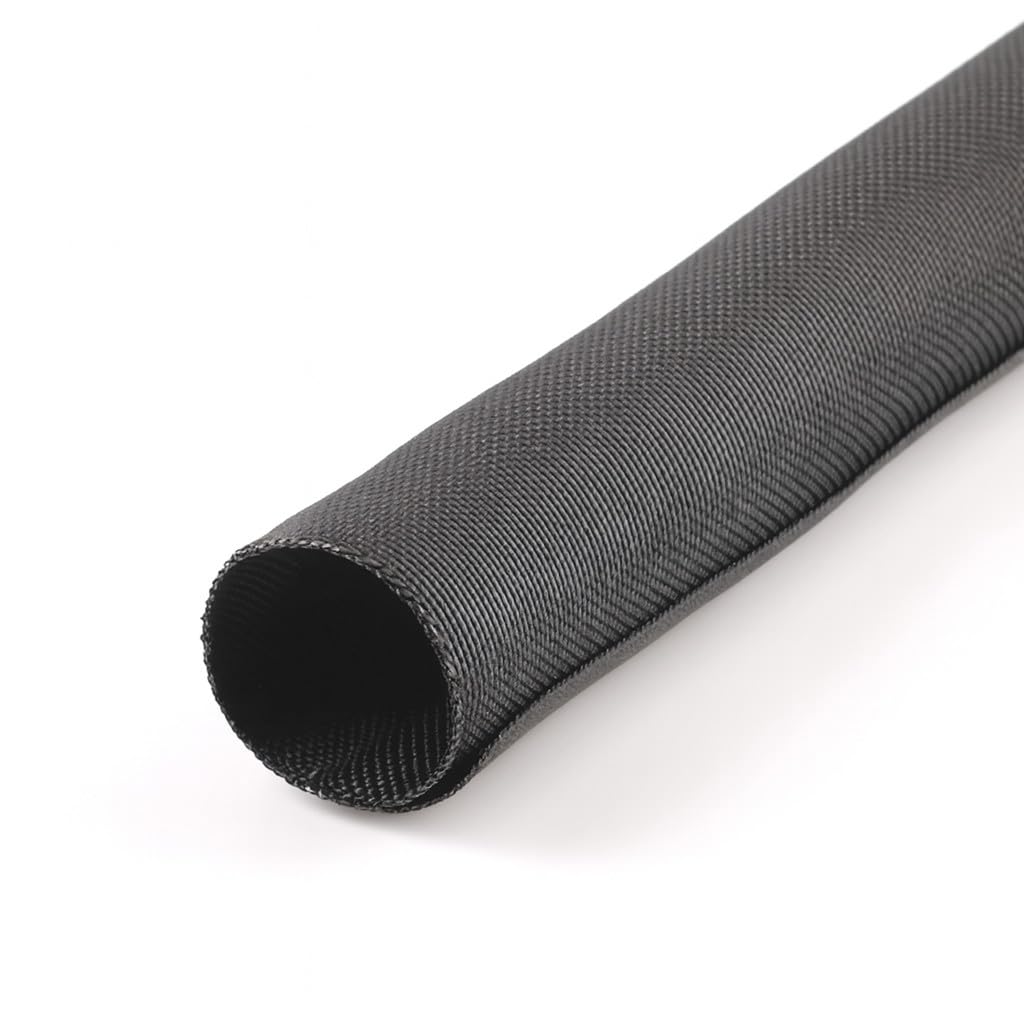
A split loom has a slit along its entire length, allowing you to press wires into the slit without unplugging anything from the harness. This is a huge time-saver. A woven wrap-around sleeve works similarly but uses a braided construction that is generally more flexible around tight bends. Both let you add or remove wires later. A standard non-split tube requires you to thread the wire through the entire length, which is almost impossible once the harness is installed.
Length and Diameter
Matching the diameter to your wire bundle is important. A 3/8-inch inner diameter works for a few 18-gauge wires, while 1/2-inch or 3/4-inch is needed for thicker harness sections. Most looms come in 25-foot or 50-foot spools. 25 feet versus 50 feet is a common choice — you want enough to cover the full route without splicing pieces together.
Quick Comparison
| Model | Best For | Length | Material | Temp Rating | Amazon |
|---|---|---|---|---|---|
| MGI SpeedWare Woven Mesh★ Best Overall | Overall Best | 25 ft | Polypropylene | 302°F (150°C) | Amazon |
| teziicus Split-SleevePremium Runner-Up | Premium Runner-Up | 25 ft | PET Polyethylene | — | Amazon |
| YesBes Wire Loom | Best Value Kit | 50 ft | Polyethylene | 200°F | Amazon |
| VOWAGH 14 Fuse Harness | Budget Wiring System | N/A | Copper | — | Amazon |
| Auto Parts Prodigy 21-Circuit | Full Classic Harness | N/A | Polyethylene | — | Amazon |
| EMPI Wire Loom Kit | VW Buggy or Trike | N/A | Copper | — | Amazon |
| Speedway Motors 22-Circuit | Professional Build | N/A | GXL Copper | — | Amazon |
In‑Depth Reviews
1. MGI SpeedWare Woven Mesh Split-Sleeve Wire Loom
Our pick — over 4.5★ from 550+ verified ratings; the strongest balance of quality and price.
The woven mesh that cuts cleanly and refuses to fray like the rest.
The defining strength of this loom is its heat resistance — it is rated for temperatures up to 302°F (150°C), which means it can handle the heat under most hoods without turning brittle. The split design gives you a 25% overlap around the wires, so you can wrap a harness without disconnecting anything. Owners note it is noticeably more flexible than the rigid plastic split loom they had before, making it far easier to route around a fender or firewall.
The 25-foot length at a 1/2-inch diameter is enough for a full engine bay job on most cars. Buyers report using it on multiple vehicles in different sizes, calling it the “best split loom” they have tried because it cuts clean without excessive fraying. The few who mention fraying note that a quick pass with a lighter or a wrap of tape solves the ends completely.
Owners Celebrate
- High heat tolerance (302°F) keeps it safe near hot engine components.
- Soft woven polypropylene is far more flexible than hard plastic for tight routing.
- Split design allows easy install over existing harnesses without unplugging wires.
- Cuts cleanly with scissors and holds up well inside the engine bay.
Honest Trade-Offs
- Cut ends can fray slightly — a bit of heat or tape finishes them neatly.
- The 25-foot length means you might need a second spool for very large projects.
Reach for this if: You want a heat-rated, flexible sleeve that is easy to cut and install without tools, and you care about a clean, fray-free look under the hood.
Look elsewhere if: You need a full 50-foot run of loom right out of the package for a single very large harness job.
2. teziicus Split-Sleeve Wire Loom
A PET-based split sleeve that stands up to heat cycles better than standard plastic.
This loom steps up the material game with a premium PET (polyethylene) construction that is flame-retardant, dustproof, and wear-resistant. Owners mention it offers “excellent heat resistance for a jet ski engine bay” — a hot, humid environment that would degrade cheap plastic sleeves quickly. The split design wraps around wires with a 25% overlap for expansion, so you can slide it over an existing harness or add wires later without pulling connectors.
At 25 feet and 1/2 inch diameter, it matches the MGI on length but draws praise for its professional appearance. Owners say it provides a clean, tidy look that is “superior to cheap plastic sleeves” and recommend pairing it with cloth friction tape for an even better hold. The main difference here is the material story: PET is generally stiffer than polypropylene, but the weave here stays flexible and does not kink during installation.
What wins people over: The combination of flame-retardant PET construction and a 24-month warranty instills confidence for anyone building a serious project. The look is clean, and it holds up to repeated heat and cool cycles without cracking. The recurring gripe: Users note that getting the right size for your wire count matters — a 1/2 inch sleeve fits a bundle of wires snugly, but going too small can make the split difficult to close.
Best for: Builders who want a flame-retardant professional look and prioritize long-term durability in harsh engine bay conditions.
Think twice if: You need a very flexible material that conforms to extremely tight, repeated 90-degree bends — woven PET is tougher, but not as supple as polypropylene.
3. YesBes Wire Loom (3/8″, 1/2″, 3/4″ x 50 ft )
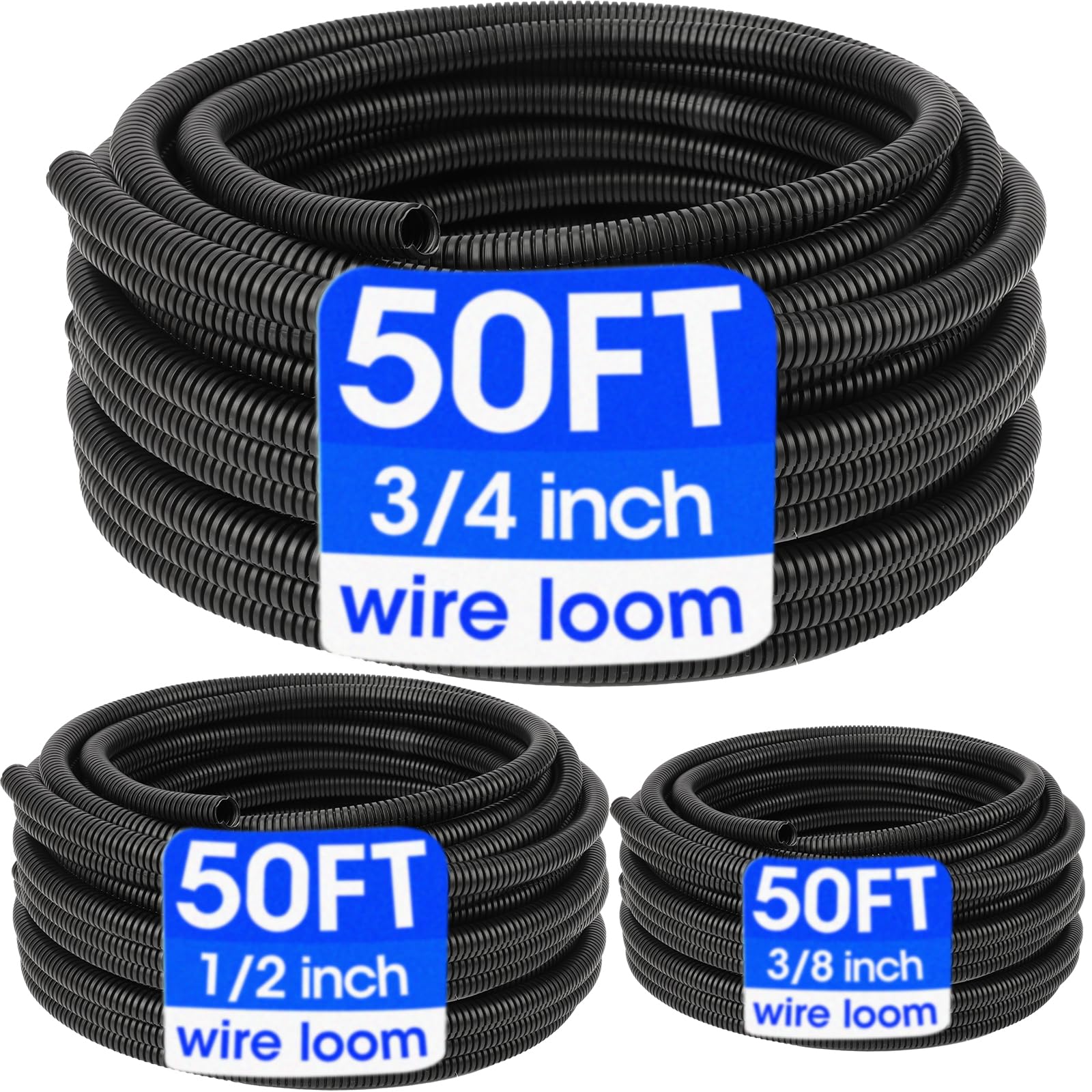
50 feet of split loom across three sizes — enough for an entire car harness and home projects.
Most looms cap at 25 feet, but this kit delivers a full 50 feet of tubing in three diameters (3/8, 1/2, and 3/4 inch), giving you the flexibility to protect thin sensor wires and thick power cables from the same box. The polyethylene material is rated for an operating temperature range of -40°F to 200°F, which is safe for use under the hood as long as you keep it away from the exhaust manifold. Buyers find it more flexible than older hard plastic split loom, especially in the smaller diameters, and appreciate that it comes with installation tools for each size.
The main trade-off is thickness — owners note the plastic “could be a little thicker” but still consider it a good product overall. For the price, you get 50 feet of tubing, while the woven options are 25 feet, making it the clear value pick if you have a big harness to cover or are wiring a project car on a tighter budget.
The value case: This is 50 feet of loom, while most competitors offer 25 feet, plus you get three sizes in one buy. The honest concession: The thinner wall means it is less abrasion-resistant than the woven sleeves above — fine for routing inside a frame rail or behind a dash, but show caution on edges that rub against metal.
Grab this if: You are wiring an entire project car from scratch and need lots of loom in different sizes to cover everything in one order.
skip it if: Your main concern is extreme heat near exhaust, or you need a non-split woven sleeve that expands and contracts around sharp bends.
4. VOWAGH 14 Fuse 12-14 Circuit Wiring Harness

A complete fuse-box and wiring kit for a simple hot rod or race car on a tight budget.
This is not just loom — it is a full 14-fuse harness system designed for street rods, hot rods, and race cars. It uses GXL copper wire with main circuits measuring 9 feet each, plus a built-in modular flasher and 40 Amp relay that can be repositioned. The fuse block itself measures 5 inches across and 4 3/8 inches wide, with a cover that has a fuse legend.
The honest truth from buyers is that the value is fair for the price, but there are significant caveats. The most discussed aspect is the wiring itself, which receives mixed reviews. Customers note that the wires are not labeled and that no wiring diagram is included. Many buyers who have electrical experience found it usable — one noted it was “not bad for the price” after fixing a relay wired in reverse. A few others received units missing pieces. This is a budget solution for someone who knows how to trace circuits, not a plug-and-play harness for a beginner.
Who this fits: An experienced builder wiring a simple race car who can check continuity and trace wires. The GXL copper wire and included relay are real assets. The reality check: Lacks labeling and instructions. A user who knows automotive wiring can make this work, but a first-timer will struggle.
Reach for this if: You have automotive electrical experience and want an inexpensive 14-circuit starting point with real copper wire.
Look elsewhere if: You expect a labeled, diagram-included, plug-and-play harness — this needs hands-on work and electrical expertise.
5. Auto Parts Prodigy Universal 21-Circuit Wiring Harness

A 21-circuit harness with GM-style color coding that dramatically simplifies a classic car build.
This is a full replacement harness for restoration projects. It includes dedicated circuits for everything from headlights and wipers to power windows and an electric fuel pump. The wires are GXL 125 high-temp cross-linked polyethylene jacketed, which is resistant to grease, oil, gas, and acid. Builders have used this on cars from a 1953 Chrysler New Yorker to a 1955 Chevy Belair and an 1986 S10, making it a genuinely universal option. The wires are extra long and clearly printed, though some owners note the darker wires could use white ink instead of black.
The biggest drawback is the instructions — the most talked-about negative aspect is the lack of a clear schematic or missing diagrams. Experienced users say the installation is straightforward if you understand automotive wiring, but a beginner will struggle. The fuse panel connections are described as cheap and requiring some “massaging” to fit well. That said, the quality of the wire and the sheer scope of the kit make it a standout value .
What wins people over: The wire labeling is the most-praised aspect, followed closely by value. Owners call it “well-made” and appreciate the extra length on every circuit. The honest trade-off: The instructions are thin, and a few fuse positions may be mislabeled — plan to double-check every circuit with a multimeter during installation.
Best for: An intermediate-level builder restoring a classic car who knows how to read a wiring diagram and values quality wire over detailed instructions.
Think twice if: You are a first-timer hoping for a step-by-step guide — the lack of a clear schematic will frustrate you without external help.
6. EMPI 00-9466-0 Wire Loom Kit
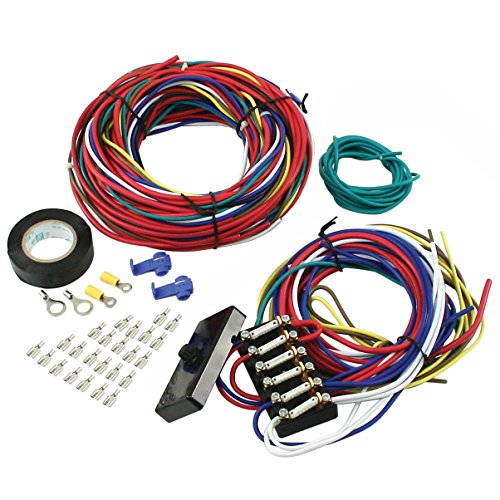
The go-to wiring kit for Dune Buggies, Trikes, and Kit Cars based on Volkswagen platforms.
EMPI is a name that has been around VW-based builds for decades. This kit is specifically designed for Volkswagen and VW-based Dune Buggies, but works equally well for trikes and other special applications. Reviewers point out it includes “plenty of wire lengths to do a very nice job” and consider it “perfect for rewiring the old dune buggy.” The kit arrives new in package with the EMPI brand and includes everything you need for a basic rewiring project — owners describe it as “easy to use” and note it “comes with everything you need.”
The main feedback from owners is that nothing in the kit is labeled, so you have to figure out each wire’s purpose on your own. Some had to consult multiple wiring diagrams to complete the job, and one owner swapped in a different fuse box to use blade-type fuses instead of the included style. If you are building a custom buggy from scratch, plan to bring your own labeling system and a willingness to trace circuits.
Who this is for: VW enthusiasts rewiring a classic dune buggy, trike, or kit car. The copper wire lengths are generous and the EMPI quality is trusted. The catch: Wires are unlabeled and the included fuse box uses an older fuse style — you may want to upgrade it.
Perfect for: Anyone building a VW-based off-road vehicle who wants a complete wiring foundation from a brand that has been in the scene for decades.
Skip if: You want a step-by-step wiring diagram or labeled wires — this kit relies on your ability to identify circuits yourself.
7. Speedway Motors Universal 22-Circuit Automotive Wiring Harness
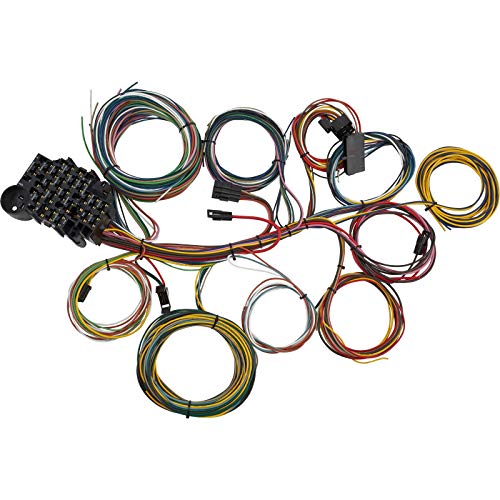
A pro-grade 22-circuit harness that boasts a pre-wired GM column plug and TV-show pedigree.
This kit appeared on Season 4 of “Car Masters: Rust to Riches” — a solid reference point for its credibility. It is designed for smooth plug-and-play integration with 1968-96 GM tilt steering columns, using a pre-wired ribbon plug that eliminates guesswork. The GXL insulated wires are color-coded and labeled every 6 inches, which owners find incredibly helpful for identification. The fuse block has an OEM-style layout with an integrated flasher unit mount.
The 22-circuit system includes generous 17-foot tail light leads, making it easy to route wires to the back of a full-size truck or van. Builders installing it into a 1972 F-250 and a 1965 Buick Special both praised the clear instructions and separated wire sections (instrument cluster, rear, engine, starter). The only note is that the included crimp connectors are not heat-shrink or waterproof — you will want to use a Delphi tool and proper heatshrink connectors for a truly professional finish.
What Builders Love
- Wires clearly labeled every 6 inches drastically simplifies installation.
- GM column plug makes it a direct fit for 1968-96 tilt columns without adapters.
- 17-foot tail light leads are long enough for trucks, vans, and large cars.
- Includes floor dimmer, switches, and horn relay, saving you extra purchases.
Room for Improvement
- Included crimp connectors are not waterproof — upgrade to heat-shrink style for reliability.
- Some owners mention the brake light wire route requires a double-check of the included diagram.
Reach for this if: You are building a show-quality classic or custom vehicle and want labeled wires, a GM-tilt-column plug, and a kit that professionals trust.
Look elsewhere if: You need a waterproof connector kit right from the start — budget for buying your own heat-shrink connectors separately.
Understanding the Specs
Temperature Rating
The temperature rating tells you how much engine-bay heat the loom can survive without melting or cracking. Woven polypropylene sleeves handle up to around 302°F (150°C), which is good for most areas away from the exhaust manifold. If you are routing directly next to an exhaust manifold, keep a gap or look for a sleeve with a higher rating.
Split vs. Woven Construction
Split loom has a single slit along the tube so you can press wires in without disconnecting them. Woven mesh sleeves create a flexible braid that expands and contracts and can handle tighter bends. Neither is “better” — split loom is faster to install, while woven mesh is more flexible and often looks cleaner in exposed engine bays. Both designs allow you to add wires later.
FAQ
Can I use split loom tubing near the exhaust manifold?
What size wiring loom do I need for a bundle of wires?
How do I stop the cut ends of woven loom from fraying?
Is a full harness kit like the 21- or 22-circuit worth it for a restoration?
Can I add wires later with a split loom?
What is the difference between GXL and standard primary wire in a harness kit?
Will a universal wiring harness work with a Ford or Mopar column?
How much wiring loom do I need for a typical engine bay?
Can I use a wiring loom kit for home or marine applications?
Does the Speedway Motors harness work with a non-GM engine swap?
Final Thoughts: The Verdict
If you want one dependable pick, the wiring looms for cars winner is the MGI SpeedWare Woven Mesh because it combines a high 302°F heat rating with easy cutting and a clean, fray-resistant finish. If you want a full plug-and-play harness for a professional restoration, grab the Speedway Motors 22-Circuit. And for the best bang-per-foot, the YesBes 50-foot multi-size kit covers every wire in the garage for a single price.
How We Picked
We do not accept paid placement. Every pick is matched to a real buyer and a real use-case; we do not hands-on test units.
Sources & Methodology
Specifications: manufacturer listings and product documentation. Review insights: verified customer reviews, as of July 2026. Pricing: not shown on this page (it changes often); check the current price via the retailer link.
As an Amazon Associate, GoCarLife earns from qualifying purchases. This does not affect which products we feature.