
Our readers keep the lights on and the garage heater humming. As an Amazon Associate, I earn from qualifying purchases.
Specs are compiled from manufacturer listings and verified buyer reviews and can change over time — please confirm the key details on the product page before buying.
If your head measures 63 cm around, most bike helmets stop at L/XL and simply won’t close. You need a shell that actually reaches XXL so it fits your head without pinching your temples or riding up on your forehead. This guide names the real XXL helmets that protect you properly, not the ones that just claim to be big.
I’m Mo Maruf — the founder and writer behind GoCarLife. This guide is built by comparing the manufacturers’ published specifications and the patterns across verified customer reviews, so you get each pick’s real strengths and trade-offs instead of marketing spin.
Here are the best XXL bike helmet options across riding styles, from motocross to e-bike commuting, all proven to fit heads that standard sizes leave behind. xxl bike helmet
Our Picks at a Glance


How To Choose The Best XXL Bike Helmet
An XXL helmet needs to do more than just be big. It needs to distribute your head weight properly, pass the same crash standards as a medium shell, and stay put when you hit a pothole or a jump. Here are the three things that separate an honest XXL from a glorified large.
Measure Your Crown, Not Your Ears
Helmet sizing is all about head circumference measured across your brow ridge and the widest part of your skull. A true XXL starts around 63-64 cm. Ignore “hat size” or “one size fits most” claims — if the listing does not publish a circumference range up to 64 cm or higher, it is probably not a real XXL.
Certifications Matter More Than Vents
Look for DOT (FMVSS 218), ECE 22.06, or CPSC certification written in the spec sheet. These standards test impact absorption, strap strength, and coverage zone — all critical when your head has more mass in motion. A helmet that only says “meets safety standards” without naming a specific certification is a red flag.
Weight Distribution and Chin Strap Quality
A larger shell is heavier by default. The best XXL helmets offset that weight with double-ring or quick-release buckles that let you dial the fit precisely. A helmet that wobbles or rides up at speed is unsafe regardless of its size label.
Quick Comparison
| Model | Best For | Weight | Certification | Shell Material | Amazon |
|---|---|---|---|---|---|
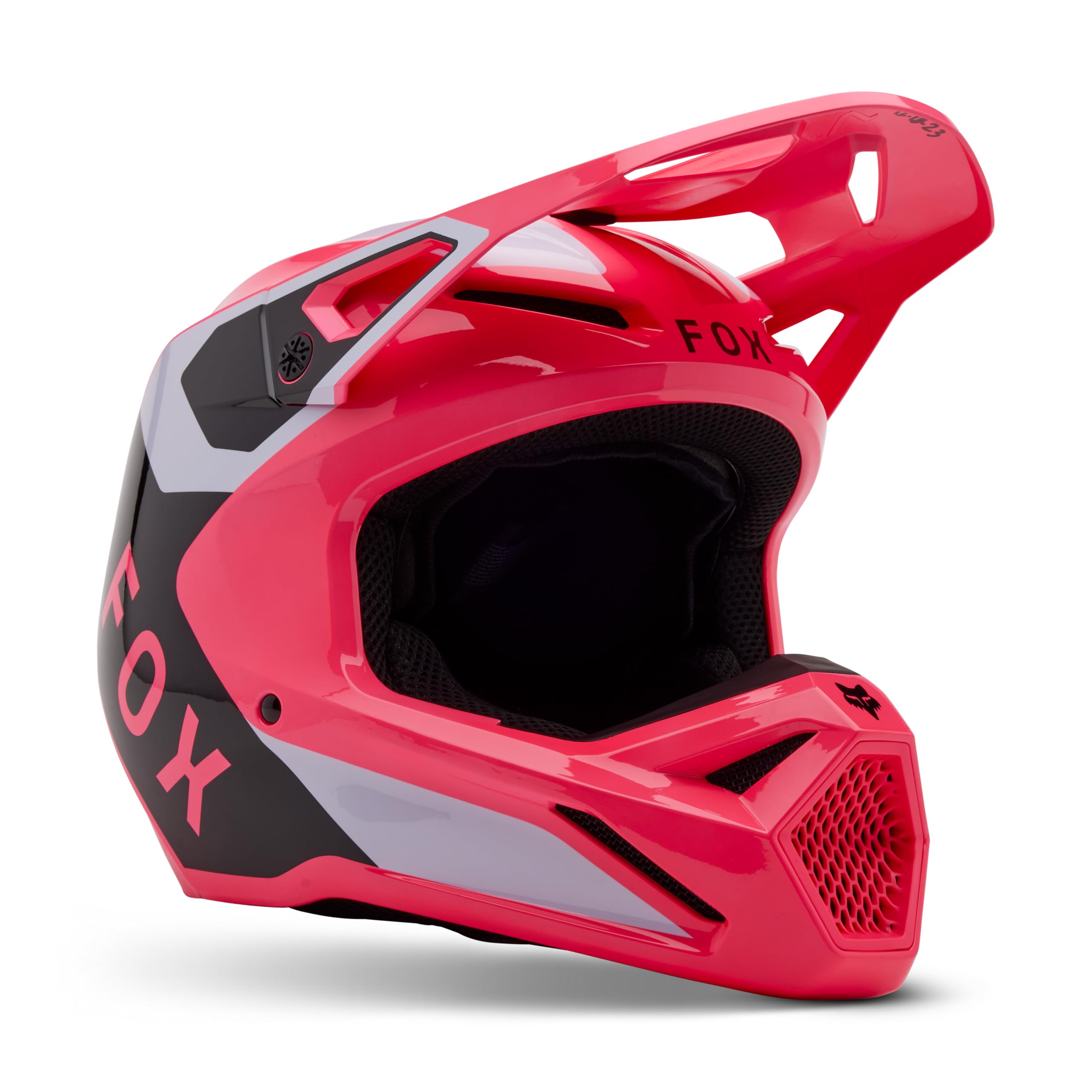
| Fox Racing V Core MIPS★ Best Overall | Motocross / Dirt Bike | 5 lb | DOT, ECE22.06 | ABS, Polycarbonate | Amazon |
| TSG EvolutionSkate Icon | Skate / BMX / E-Skate | 1.01 lb | Triple Certified | ABS | Amazon |
| Fox Racing V1Big Head Value | Motocross / Dirt Bike | 1 kg | DOT, ECE22.06 | ABS, EPS | Amazon |
| ILM Smart E3-12LS | E-Bike / Commuting | 465 g | NTA-8776, CE, CPSC | PC, EPS | Amazon |
| OUMURS (Gray) | ATV / Dirt Bike | 1400 g | DOT FMVSS-218 | ABS | Amazon |
| OUMURS (Matte Black) | ATV / Dirt Bike | 2.61 kg | FMVSS 218 | ABS | Amazon |
| Lumos Ultra | Commuting / Road | 390 g | CPSC | PC | Amazon |
| HAX Force | Street Motorcycle | 4.6 lb | DOT, ECE 22.06 | ABS, PC | Amazon |
| POC Kortal | Mountain Bike | 0.44 kg | — | EPS | Amazon |
In‑Depth Reviews
1. Fox Racing V Core MIPS Motocross Helmet
Our pick — over 4.5★ from 450+ verified ratings; the strongest balance of quality and price.
The crowd-favorite Fox shell that earned its 4.7-star reputation with 400+ owners.
This is the pick that dominates the conversation for a reason. It meets DOT and ECE22.06 standards — two of the toughest certifications — and adds MIPS, a low-friction layer inside the helmet that reduces rotational forces during angled impacts. That matters a lot when you are hitting dirt at speed. The shell uses a blend of injection-molded polycarbonate and ABS, which keeps the weight manageable despite the 5-pound build. Buyers report that the helmet “stayed on, did its job” in a real fall, which is the only review that really counts.
Ventilation is a strong point here. Nine intake vents and four exhaust vents move hot air out fast, so you are not pouring sweat on a hot trail ride. The magnetic visor release is a nice touch — it stays put over bumps but pops away in a crash to reduce neck strain. Sizing is the honest warning: a few owners mention it runs snug, so measure carefully and go up if you are between sizes. Unlike the budget helmets later on the list, this one gives you a multi-density EPS liner with 4 shell and 5 EPS sizes, which is rare in a sub- motocross helmet.
The look is pure motocross style — a sleek matte black finish that draws consistent praise in owner reviews. Quality is the most-mentioned aspect, with fit running a close second. The weight is higher than the TSG Evolution (5 lb vs 1.01 lb), so it is built for impact absorption rather than all-day road cycling. For trail riding, enduro, or aggressive dirt bike use at the XXL range, this is the helmet that checks every box.
Built for the Trail
- DOT + ECE22.06 dual certification
- MIPS reduces rotational forces in angled crashes
- 9 intake vents for hot-weather riding
- Magnetic visor detaches to protect neck in a crash
Before You Buy
- 5 lb is heavy compared to commuter helmets
- Runs snug — size up if between sizes
- Designed for motocross, not road cycling
Reach for this if: you ride dirt, trail, or motocross and want maximum protection in a true XXL with MIPS.
Think twice if: you need a lightweight commuter lid for pavement or e-bike cruising.
2. TSG Evolution Bike & Skate Helmet
A 25-year design legend that wraps low around the base of your skull.
The TSG Evolution is the helmet that skateboarders, BMX riders, and aggressive inline skaters trust because it covers the full back and sides of your head without blocking your field of vision. The Low Fit design drops lower than a typical round dome, which is exactly what you need when you slam backward on a ramp or rail. It is triple certified — meeting the American skateboarding standard, the American bike standard, and the European bike-and-skateboard standard — so it is legal on any pavement surface.
Weighing 1.01 lb (0.46 kg), it is dramatically lighter at 1.01 lb versus the Fox V Core MIPS at 5 lb — making it the better choice for all-day park sessions or e-skate commuting. The ABS outer shell resists cracks in cold weather, and the 14 vents with airflow channels keep your head cool during aerobic skating. Owners consistently highlight the fit for big heads as the top reason to buy, with one calling it “amazin” and noting the extra set of pads included in the box. The Snug Fit technology creates a contact ring around your head so there is no wobble during jumps.
One honest nitpick: the strap is a long continuous loop that you have to cut to avoid excess dangling. And a few owners note that the satin finish shows weird spots when wet that vanish when it dries. But for a skate/BMX helmet that actually fits a 63+ cm head and looks like a classic park helmet instead of a mushroom top, the Evolution is the standard.
Low fit done right: wraps the occipital area without obstructing upward vision — critical for skateparks and BMX jumps.
Pack an extra set of pads: the included two-size pad kit lets you fine-tune the fit, which is rare at this price range.
Who it fits: skateboarders, rollerbladers, BMX park riders, and e-skate commuters who need a certified, lightweight shell in XXL.
Who should pass: motocross riders, because the single-impact EPS is not designed for repeated high-speed dirt crashes.
3. Fox Racing V1 Motocross Dirt Bike Helmet
The same Fox DNA as the V Core, stripped back to a lower price point.
The V1 shares the same DOT and ECE22.06 certifications as the higher-priced V Core, and it layers in MIPS for rotational impact protection. The key difference is the shell construction — the V1 uses a single-piece ABS+EPS build rather than the multi-density shell of the V Core, which keeps the price lower. At 1 kg, it weighs 1 kg (about 2.2 lb) versus the V Core at 5 lb, so it is noticeably easier on your neck during a long trail day.
But the sizing situation is the main conversation point here. The most-discussed aspect is fit — and it is mixed. Multiple owners mention the V1 runs a size smaller than expected. The review pages are loud about it: “As suggested by other reviews… Go up a size.” The XXL fits more like an XL for some buyers, so if you are at the top of the XXL range (64+ cm), you might find it tight in the cheek pads. That said, the build quality earns top marks as the most-praised aspect, and the comfort is a strong second. The double D-ring closure is standard motocross and very secure.
Ventilation is excellent — one owner noted feeling wind through their hair at speed, which is rare for a motocross shell. Noise is present but typical for an off-road helmet; earplugs fix it. Overall, this is the entry-point Fox for XXL riders who want MIPS without paying V Core money, assuming the fit works for your head shape.
Fit warning is real: order a full size up from your usual motocross size, especially if you have a round or full face.
Ventilation surprise: airflow is genuinely good for a sealed dirt helmet — 85°F trail rides stay manageable.
Best for: budget-conscious motocrossers who want MIPS and dual certification without the premium price.
Skip if: your head measures beyond 64 cm, because the XXL runs small and the fit may be too snug even after sizing up.
4. ILM Smart Adult Bike Helmet E3-12LS

The e-bike commuter lid that brakes and signals for you.
This is not just a helmet — it is a lighting system built into a certified shell. The ILM E3-12LS carries NTA-8776, CE, and CPSC triple certification, meaning it is tested for e-bike speeds up to 28 mph and covers more of your head than a standard bike helmet. The smart lighting is the headline: tilt your head left more than 15 degrees and the left turn signal stays on for 10 seconds. Emergency braking triggers the rear lights to jump to 100% brightness as a warning to traffic behind you.
The shell is polycarbonate with EPS impact foam, and at 465 g it is very light for a helmet with integrated electronics. Owners call the XXL fit “perfect” and note that the detachable black visor eliminates the need for sunglasses during daylight rides. The lights auto-adjust based on ambient brightness — they turn on at night or in low light after you switch them on. The remote controller pairs via the included wireless remote, and you recharge the whole system via USB-C (up to 10 hours of battery life depending on the mode you use).
A fair trade-off: ventilation is not as open as a standard bike helmet. A few owners found it gets warm on hot rides because the shell has fewer vents. The rubber cover for the charging port also drew a note about rain exposure. For an urban e-bike commuter who rides at dawn, dusk, or night and wants drivers to actually see their turn intentions, the ILM is the smartest XXL helmet on this list.
Smart Safety
- Auto turn signals and brake lights keep you visible to cars
- Triple certified for e-bike speeds (NTA-8776, CE, CPSC)
- USB-C rechargeable, 10-hour battery
- Detachable visor blocks sun and debris
Real Considerations
- Less airflow than open bike helmets — can get warm
- Charge port rubber cover does not seal tightly against rain
- Rear light is red/blue — some owners flag it looks like emergency vehicle lighting
Reach for this if: you commute by e-bike at night and want turn signals that actually work without a handlebar mount.
Look elsewhere if: you ride in extreme heat — the limited venting will leave you sweating.
5. OUMURS ATV Dirt Bike Helmet (Gray, XXL)

One box, four items — helmet, goggles, gloves, and mask for under.
OUMURS packs a complete riding kit into a single purchase, and the XXL variant covers 63-64 cm (24.75 to 25.125 inches). The shell is ABS with an EPS liner, and it holds DOT FMVSS-218 certification, meaning it meets the same basic impact standard as helmets costing three times as much. The quick-release buckle makes entry and exit fast, which is appreciated when you are gearing up for a quick ATV lap or a dirt bike session.
Quality is the most-praised feature by a wide margin — over 50 owners single it out. The gloss gray finish looks sharp and pairs well with grey electric bikes and ATVs. Multiple air vents keep fresh air flowing, and the design reduces wind noise compared to older ABS shells. The included goggles are decent for the price point, though the gloves are the weakest part of the kit — several owners describe them as uncomfortable or “trash” and recommend replacing them.
The sizing warning is real: the XXL runs small, especially if you have a fuller face. The cheek pads press in harder than expected. The advice repeated in the reviews is to go up one size if you are uncertain. The helmet weighs 1400 g (about 3 lb), which is middle of the pack — heavier than the TSG Evolution but lighter than the Fox V Core. For the price, this is a strong entry-level kit that gets you on the trail with everything you need except a bike.
Read the sizing note carefully: if your head is at the top end of XXL or you have a round face, the cheek pads may pinch — size up or swap pads.
The goggles are the real keeper: UV-resistant and windproof, they are the accessory that actually works well from the start.
Best for: first-time dirt riders or ATV users who need a full kit on a budget and want DOT certification.
Not for: riders who expect premium glove quality or need a helmet that fits heads above 64 cm.
6. OUMURS ATV Dirt Bike Helmet (Matte Black, XXL)

Slightly heavier, slightly more protective-feeling than the gray kit.
This is the matte black version of the OUMURS with a different model number (HD-806) and a notably heavier build at 2.61 kg (about 5.75 lb). It still holds FMVSS 218 certification and uses ABS with EPS lining, but the thicker shell gives it a more substantial feel on your head. Included in the box are the same four items: helmet, goggles, gloves, and a face mask. The matte black finish is a crowd-pleaser — it looks stealth and pairs naturally with black ATVs and dirt bikes.
What wins owners over is the quality and value. The build quality is the most-praised aspect, with over 40 owners calling it well-made for the price. The quick-release buckle is notably better than what you find on many sub- helmets — one owner compared it favorably to a Sedici helmet costing three times as much. The airflow is “amazing” according to one review, and the fit for bigger heads (including riders with a lot of hair) is a common positive note.
The durability side is where the conversation gets honest. The fit is marked as mixed, and multiple customers note the helmet loosened up after a few wears — one owner wished they had ordered a size down. There are scattered reports of the helmet or gloves cracking, so treat this as a helmet for lighter-duty riding rather than daily abuse. The included gloves remain the weak link, described as “trash” by more than one reviewer. For a budget ATV helmet with a great look and a solid buckle, the matte OUMURS works — just measure carefully and consider the loosening over time.
Strong for the Price
- DOT FMVSS 218 certified ABS+EPS shell
- Quick-release buckle beats many helmets at triple the price
- Matte black finish looks premium
- Includes goggles, gloves, and mask
Heads Up
- 2.61 kg is heavy — feels it on longer rides
- Fit loosens over time — consider sizing down
- Durability questions around shell and gloves
Works for: occasional ATV riders and teens who want a complete kit with a clean matte finish and a great buckle.
Not for: daily riders who need long-term structural durability or a helmet that holds its snug fit after 20+ rides.
7. Lumos Ultra Bike Helmet
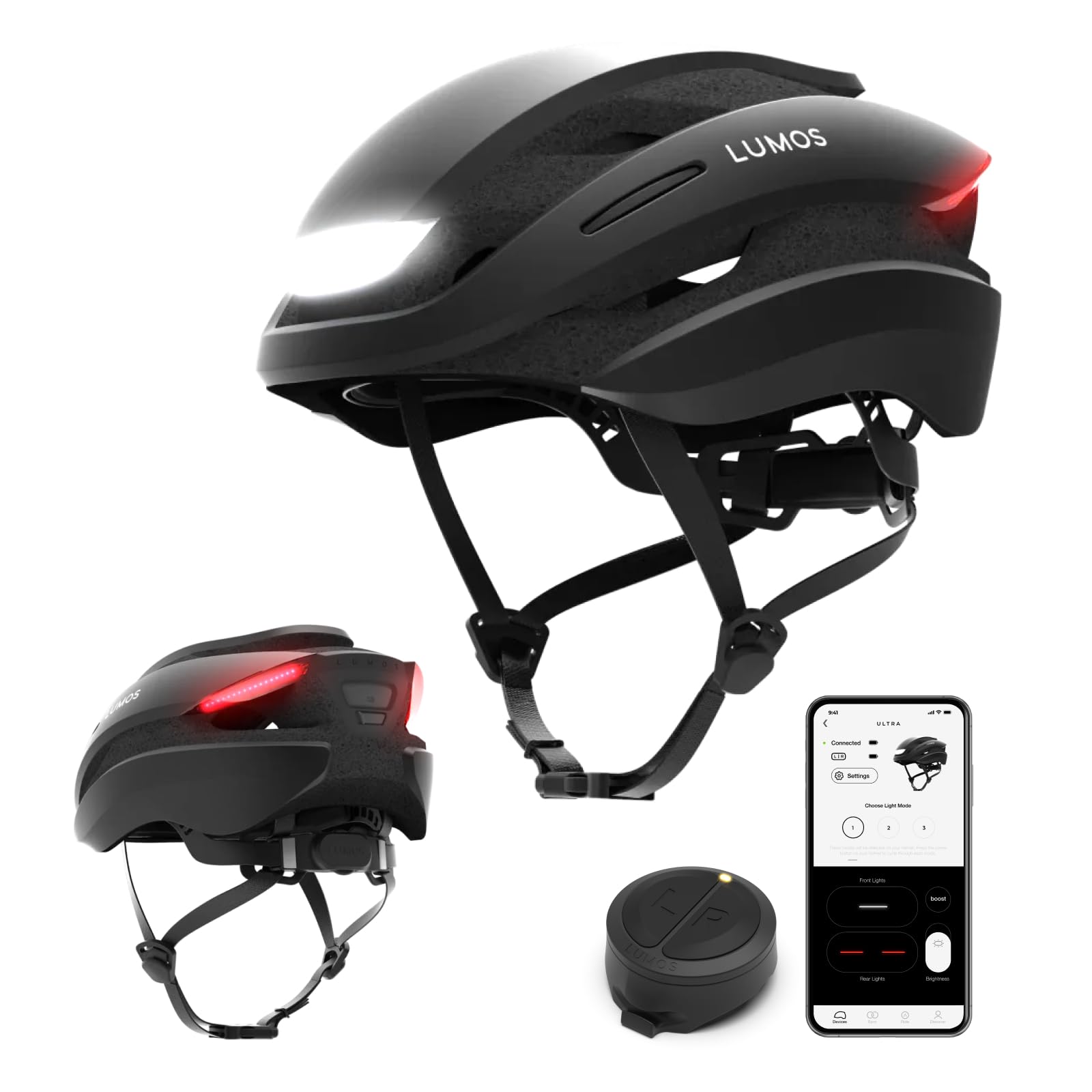
The city commuter helmet with 360-degree light visibility that is TÜV-certified.
The Lumos Ultra is designed for one job: making you visible to drivers at every angle. It integrates front and rear LED lights with turn signals controlled by a wireless Remote Lite that clips to your handlebar. The lights are bright enough that reviewers point out drivers noticing their turn intentions — a rare compliment for a helmet light system. TÜV certification backs up the visibility claim, meaning an independent lab tested the light output and coverage.
At 390 g, it is the lightest helmet on this list by a margin — at 390 g versus the ILM smart helmet at 465 g and a fraction of the motocross shells. That makes a big difference on a daily commute where you are carrying your helmet into the office or grabbing it for a quick errand. The CPSC certification covers the impact protection side, and select models add MIPS for rotational force reduction. Battery life runs up to 10 hours depending on the lighting mode you select, and USB-C charging means you can top it up with the same cable you use for your phone.
The honest trade-off is that the battery life gets a mixed verdict from owners — expect 3-4 hours on the brightest mode. A sun shield is also missing, which some riders mentioned as a wish-list item. The charcoal black finish without MIPS (a multi-directional impact protection system that reduces rotational forces in a crash) is the standard variant; the MIPS version costs more. For a commuter who rides in traffic and wants a sleek, lightweight shell with integrated signals, the Lumos Ultra is the top choice. It is not designed for motocross or mountain biking, but for pavement duty it is tough to top.
Visibility is the real deal: TÜV certification on the lights means they meet an actual brightness standard, not just marketing.
Battery note: bright mode drains faster than you expect — charge after every few commutes, not once a week.
Ideal for: daily road commuters and recreational cyclists who ride in traffic and want turn signals without a handlebar mount.
Skip if: you ride trail, motocross, or need a helmet for speeds above 28 mph — this is CPSC-rated, not DOT.
8. HAX Force Full Face Motorcycle Helmet

A full-face street helmet that does not punish big heads at highway speeds.
The HAX Force is a full-face motorcycle helmet designed for street bikes and e-bikes, and it carries both DOT and ECE 22.06 certification — the newer, more stringent European standard. The XXL size covers 63-64.5 cm (24.8–25.2 inches), which is a real XXL. The shell is an ABS+PC composite that keeps the weight at a reasonable 4.6 lb for a full-face, and the aerodynamic shape reduces wind resistance and noise at speed.
Fit is the most-praised feature, with nearly 60 owners raving about the tailored feel. The dual-lens system includes a UV-protective outer visor and a retractable inner sun visor, so you are not swapping shields on a sunny day. It is also ready for Bluetooth intercoms and Pinlock anti-fog inserts (both sold separately). Owners describe it as “quiet at 75 MPH” and note that the padding stays breathable even in hot traffic. The removable hypoallergenic liner is machine-washable, which matters for summer riding.
Visibility gets a mixed reception. The visor does not fog easily, which is good, but some owners mention a “slight lift” at higher speeds — the aerodynamic shape is good but not perfect. A medium runs large per one owner, so check the HAX size chart carefully. The matte black and red color scheme is aggressive and draws consistent appearance praise. For the price, this is the strongest full-face option for XXL street riders who want modern safety standards and a quiet ride.
Loaded with Features
- DOT + ECE 22.06 certifications
- Retractable inner sun visor — no sunglass swap
- Quiet at 75 MPH — rare at this price
- Bluetooth and Pinlock ready
Watch Out For
- Wind lift at speed — not a track race helmet
- Sizing can run large — measure carefully
- Three vents only — less airflow than open-face helmets
Best for: street bike and e-bike riders who want a full-face XXL helmet with dual certification and a sun visor.
Not for: off-road or motocross riders — this is a street shell, not designed for dirt crash angles.
9. POC Kortal MTB Helmet

The mountain bike helmet that fits an XXL head without the mushroom look.
POC built the Kortal for trail riding and enduro, and it is one of the few helmets that extends coverage around the temples and the back of the head without making you look like a bobblehead. The EPS liner is lightweight at 0.44 kg (about 15.5 oz), which is impressive for a helmet with extended rear coverage. It fits true to size for some, but the sizing chart runs small — the advice from owners is consistent: if you are between sizes, go up.
The adjustable visor and integrated goggle clip make the Kortal practical for MTB use. A built-in sun visor blocks glare without adding weight. Owners consistently call it light, breathable, and comfortable, with one noting that there is no “mushroom hat” feel — the profile stays low and trail-appropriate. The crash protection rating is singled out by multiple buyers who trust POC’s reputation after life-saving experiences with previous POC helmets.
The quality and fit are the two highest-praised aspects, but the sizing negativity is real — multiple reviews flag that the chart leads you to order too small. The price increase over recent years was also noted by one owner, who felt the helmet would be a five-star product at a lower price point. For MTB riders who need a true XXL that does not look like a dome and offers real extended coverage for the back of the head, the Kortal is the specialist pick.
Extended coverage that works: extra protection at the temples and occipital area without the extra weight you expect.
Sizing double-check needed: the chart runs small — measure your head and order one size larger than the chart suggests.
Ideal for: mountain bikers and enduro riders who prioritize low weight, extended rear coverage, and a goggle-compatible design.
Think twice if: you are price-sensitive — the price point is premium, and value-conscious buyers may find the value threshold irrelevant at this cost.
Understanding the Specs
Head Circumference (XXL Sizing)
This is the single number that determines whether a helmet fits. A true XXL covers roughly 62-64 cm (24.5–25.2 inches). Measure around your brow about half an inch above your eyebrows. If a listing does not publish its circumference range, treat the “XXL” label with caution — some brands call a 61 cm shell XXL, which is actually just a large by honest standards.
Safety Certifications (DOT, ECE, CPSC)
DOT (FMVSS 218) is the US standard for motorcycle helmets. ECE 22.06 is the newer European standard that tests impact at higher speeds and angled drops. CPSC covers bicycle helmets and tests at lower speeds (up to about 14-15 mph). For e-bikes, look for NTA-8776, which tests at higher speeds (up to 28 mph). A helmet with multiple certifications has passed a wider range of tests.
Shell Material (ABS vs Polycarbonate vs Composite)
ABS (Acrylonitrile Butadiene Styrene) is a tough thermoplastic — affordable, impact-resistant, but heavier. Polycarbonate (PC) is lighter and can be molded into more aerodynamic shapes. A blend (ABS+PC) tries to balance weight and durability. Carbon fiber or fiberglass composites are lighter and stronger but cost significantly more. For XXL helmets, weight matters because a larger shell carries more mass — a 5 lb helmet puts more strain on your neck than a 2 lb one.
MIPS (Multi-Directional Impact Protection System)
MIPS is a low-friction layer inside the helmet that allows the outer shell to slide slightly relative to your head during an angled impact. This reduces rotational forces that can cause brain injuries. It is especially valuable in off-road and motocross helmets where crashes are more likely at awkward angles. Not all helmets need MIPS — a well-designed standard helmet still protects well — but it adds a margin of safety that serious riders appreciate.
FAQ
What head circumference does a true XXL bike helmet cover?
Do I need DOT certification for a bicycle helmet?
Can I use a motocross helmet for street riding?
How long does a bike helmet last before I should replace it?
Will an XXL motocross helmet fit on my e-bike commute?
What is the difference between ECE 22.05 and ECE 22.06?
Is MIPS worth the extra money on an XXL helmet?
Can I wash the padding inside my bike helmet?
Do I need a special helmet for an e-bike versus a regular bike?
Why do some XXL helmets weigh more than others?
Final Thoughts: The Verdict
For most riders, the xxl bike helmet winner is the Fox Racing V Core MIPS because it combines the most trusted motocross brand, dual DOT + ECE 22.06 certification (both safety standards that mean it passes impact tests for street and track use), MIPS protection, and a proven 4.7-star crowd consensus across nearly 500 owners — all in a shell that actually reaches XXL. If you commute on pavement and want integrated turn signals that drivers see, grab the Lumos Ultra. And for skatepark or BMX riders who need a certified, low-fit shell at 1.01 lb, the TSG Evolution is the one to reach for.
How We Picked
We do not accept paid placement. Every pick is matched to a real buyer and a real use-case; we do not hands-on test units.
Sources & Methodology
Specifications: manufacturer listings and product documentation. Review insights: verified customer reviews, as of July 2026. Pricing: not shown on this page (it changes often); check the current price via the retailer link.
As an Amazon Associate, GoCarLife earns from qualifying purchases. This does not affect which products we feature.